Reaction equation

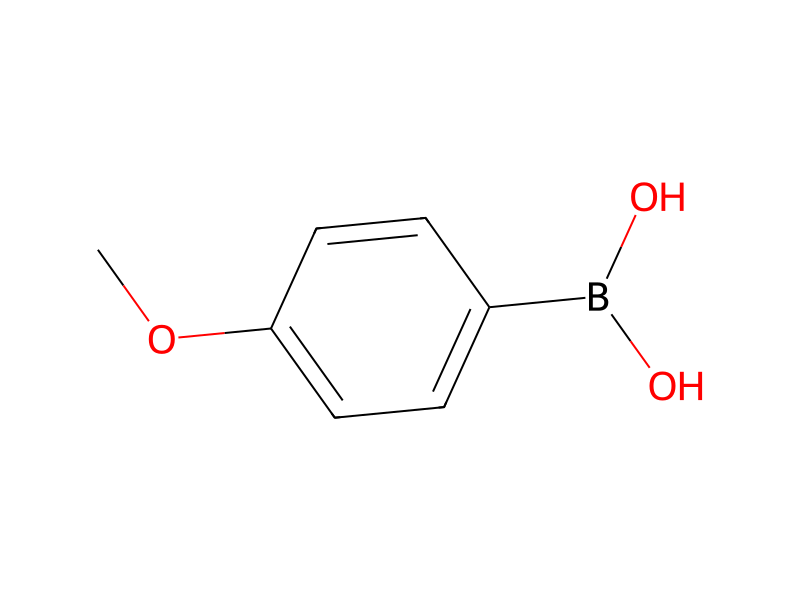
Cl[C:2]1[CH:7]=[C:6](Cl)[N:5]=[C:4]([CH3:9])[N:3]=1.[CH3:10][O:11][C:12]1[CH:17]=[CH:16][C:15](B(O)O)=[CH:14][CH:13]=1.O.[C:22](=[O:25])([O-])[O-].[K+].[K+]>O1CCOCC1.[Pd].C(O)C>[CH3:10][O:11][C:12]1[CH:17]=[CH:16][C:15]([C:2]2[CH:7]=[C:6]([C:12]3[CH:17]=[CH:16][C:15]([O:25][CH3:22])=[CH:14][CH:13]=3)[N:5]=[C:4]([CH3:9])[N:3]=2)=[CH:14][CH:13]=1Participants
Reactant 4



Product 1

Reagents, catalysts & solvents 3



Procedure
The 4,6-dichloro-2-methylpyrimidine 22 (0.10 g, 0.6 mmol) is dissolved in dioxane (1 mL). 4-Methoxy-phenylboronic acid (0.32 g, 2.1 mmol) is added, followed by water (0.01 mL), ethanol (0.01 mL), potassium carbonate (0.40 g, 2.9 mmol), and tetrakistriphenyl-phosphino)palladium (0.13 g, 0.11 mmol). The mixture is stirred under nitrogen and subjected to microwave (170° C. for 5 min). The resulting orange suspension is filtered, the solids are washed with more dioxane, and the resulting solution is concentrated and purified by silica gel chromatography (5% to 25% ethyl acetate in hexanes) to yield the 4,6-bis-(4-methoxy-phenyl)-2-methyl-pyrimidine 23 as an oil. 1H-NMR (400 MHz, CDCl3) δ=8.03 (d, J=8.8 Hz, 2H), 7.70 (s, 1H), 6.95 (d, J=8.8 Hz, 2H), 3.82 (s, 6H), 2.77 (s, 3H). MS calculated for C19H19N2O2 (M+H+) 306.15, found 306.9.
Workup
- custom(170° C. for 5 min)
- filtrationThe resulting orange suspension is filtered
- washthe solids are washed with more dioxane
- concentrationthe resulting solution is concentrated
- custompurified by silica gel chromatography (5% to 25% ethyl acetate in hexanes)
Sources & evidence
- ORD record
- ord-fc8e854a05004062a4b4880b79b989f8
- Source dataset
- uspto-grants-2010_06
- Patent number
- US07745445B2
Linked notes
Loading…