HomeMCPWorkbenchSkills
HomeWorkbenchNotificationsMe
llms.txt · MCP GuidePrivacy Policy · Terms of Service · Supportv1.8.3
  1. Home
  2. /Reaction

2-Methylbenzenesulfonic acid → HCID 59485828, compound

HRID 1972203
Print

Reaction equation

HRID 1972203 reaction equation
[F:1][C:2]([F:24])([F:23])[C:3]1[CH:4]=[C:5]([C@H:9]2[C@H:13]([CH2:14][O:15]C3CCCCO3)[O:12][C:11](=[O:22])[NH:10]2)[CH:6]=[CH:7][CH:8]=1.[Cl:25][C:26]1[CH:39]=[CH:38][C:29]([O:30][C:31]2[CH:36]=[N:35][C:34](Br)=[CH:33][N:32]=2)=[CH:28][CH:27]=1.CNCCNC.C(=O)([O-])[O-].[K+].[K+].C1(C)C(S(O)(=O)=O)=CC=CC=1>CO.[Cu]I.C(#N)C>[Cl:25][C:26]1[CH:39]=[CH:38][C:29]([O:30][C:31]2[N:32]=[CH:33][C:34]([N:10]3[C@@H:9]([C:5]4[CH:6]=[CH:7][CH:8]=[C:3]([C:2]([F:1])([F:23])[F:24])[CH:4]=4)[C@H:13]([CH2:14][OH:15])[O:12][C:11]3=[O:22])=[N:35][CH:36]=2)=[CH:28][CH:27]=1
ParticipantsConditionsProcedureWorkupSources & evidenceReaction notes

Participants

9

Reactant 5

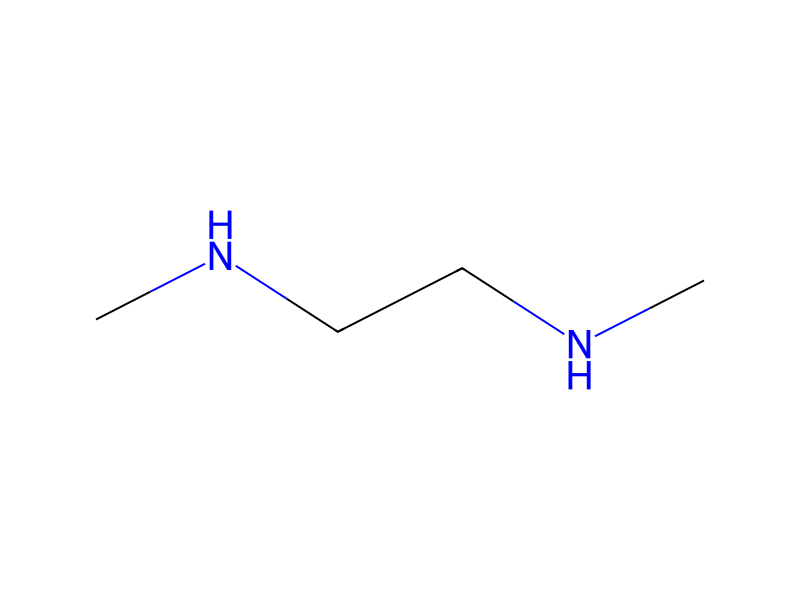
HCID 69252-Methylbenzenesulfonic acidHCID 8070N,N'-DimethylethylenediamineHCID 11430Potassium CarbonateHCID 594856832-(4-Chlorophenoxy)-5-bromopyrazineHCID 59485728HCID 59485728, compound

Product 1

HCID 59485828HCID 59485828, compound

Reagents, catalysts & solvents 3

HCID 24350Copper(1+) iodide; Copper(I) iodide; Cuprous iodide; Cuprous iodide (CuI)CatalystHCID 887MethanolSolventHCID 6342AcetonitrileSolvent

Conditions

Temperature
110 °C

Procedure

(4S,5R)-4-(3-(trifluoromethyl)phenyl)-5-((tetrahydro-2H-pyran-2-yloxy)methyl)-oxazolidin-2-one (prepared as in Example 64, Steps A and B) (54 mg, 0.16 mmol) was added to a 10 mL reaction vessel with a screw cap and charged with acetonitrile (0.5 mL), 2-(4-chlorophenoxy)-5-bromopyrazine (47 mg, 0.16 mmol), copper (I) iodide (14 mg, 0.074 mmol), N,N′-dimethylethylenediamine (0.014 mL, 0.15 mmol), and potassium carbonate (44 mg, 0.32 mmol). The vessel was sealed, evacuated and back-filled with nitrogen twice, and then heated to 110° C. in a microwave for 30 min. The reaction mixture was cooled to room temperature, quenched with 1 M HCl, and extracted with ethyl acetate. The organic layer was dried, filtered and concentrated to give the crude intermediate which was immediately dissolved in methanol (5 mL) and treated with excess toluenesulfonic acid for 1 h. The reaction was quenched with 1 mL triethylamine, then concentrated to dryness and purified on silica gel (30% ethyl acetate/hexanes) to give the title compound as a white solid. 1H NMR (acetone-d6) 600 MHz δ (ppm) 8.91 (d, J=1.3 Hz, 1H), 8.05 (d, 1.3 Hz, 1H), 7.83 (s, 1H), 7.76 (d, J=7.6 Hz, 1H), 7.67 (d, J=7.8 Hz, 1H), 7.63 (t, J=7.7 Hz, 1H), 7.43 (d, J=8.8 Hz, 2H), 7.18 (d, J=8.8 Hz, 2H), 5.86 (d, J=5.0 Hz, 1H), 4.61 (ddd, J=5.4, 3.5, 3.0, 1H), 4.58 (t, J=5.7 Hz, 1H), 4.02 (ddd, J=12.4, 5.5, 3.5 z, 1H), 3.94 (ddd, J=12.3, 5.9, 3.5 Hz, 1H); HPLC-MS calculated C21H15ClF3N3O4S (M+H+): 466.1, found 466.1.

Workup

  1. customcap
  2. customThe vessel was sealed
  3. customevacuated
  4. additionback-filled with nitrogen twice
  5. temperatureThe reaction mixture was cooled to room temperature
  6. customquenched with 1 M HCl
  7. extractionextracted with ethyl acetate
  8. customThe organic layer was dried
  9. filtrationfiltered
  10. concentrationconcentrated
  11. customto give the crude intermediate which
  12. customThe reaction was quenched with 1 mL triethylamine
  13. concentrationconcentrated to dryness
  14. custompurified on silica gel (30% ethyl acetate/hexanes)

Sources & evidence

ORD record
ord-b809b21d8546472c8c71d37ab2504d0b
Source dataset
uspto-grants-2013_04
DOI
10.6084/m9.figshare.5104873.v1
Patent number
US08431607B2

Reaction notes

On this pageParticipantsConditionsProcedureWorkupSources & evidenceReaction notes