HomeMCPWorkbenchSkills
HomeWorkbenchNotificationsMe
llms.txt · MCP GuidePrivacy Policy · Terms of Service · Supportv1.8.0
  1. Home
  2. /Reaction

p-Xylyl bromide → Carbon Dioxide

HRID 1987449
Notes
Print preview

Reaction equation

HRID 1987449 reaction equation
[Na].[CH3:2][CH:3]([C:9](OCC)=O)[C:4]([O:6]CC)=[O:5].[CH3:14][C:15]1[CH:22]=[CH:21][C:18](CBr)=[CH:17][CH:16]=1.[OH-].[K+]>C(O)C.O>[CH3:14][C:15]1[CH:22]=[CH:21][C:18]([CH2:9][CH:3]([CH3:2])[C:4]([OH:6])=[O:5])=[CH:17][CH:16]=1.[C:4](=[O:6])=[O:5]
ParticipantsProcedureWorkupSources & evidenceReaction notes

Participants

8

Reactant 4

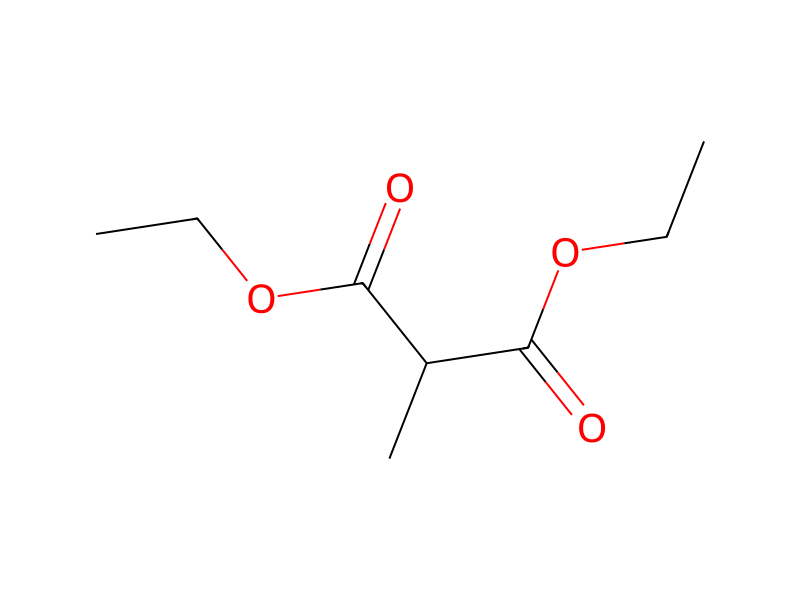
HCID 7721p-Xylyl bromideHCID 11857Diethyl methylmalonateHCID 14797Potassium HydroxideHCID 5360545Sodium

Product 2

HCID 280Carbon DioxideHCID 4613139ZJBQYRLHEYPLEL-UHFFFAOYSA-N

Reagents, catalysts & solvents 2

HCID 702
Ethanol
Solvent
HCID 962WaterSolvent

Procedure

In a three-necked round-bottom 2000 ml flask equipped with a reflux condenser, a pressure-equalizing dropping funnel, and magnetic stirring bar, 18.9 g (0.82 mol) of sodium metal was dissolved in 450 ml of dry ethanol. To the resulting solution, 137 g (0.79 mol) of diethyl 2-methylmalonate was added dropwise within 15 minutes. This mixture was stirred for 15 minutes; then, 146 g (0.79 mol) of p-methylbenzyl bromide was added with vigorous stirring at a rate that allowed the reaction mixture to maintain a gentle reflux. Additionally, this mixture was refluxed for 4 hours, then cooled to room temperature. A solution of 151 g of potassium hydroxide in 500 ml of water was added. This mixture was refluxed for 2 hours to saponificate the ester formed. Ethanol and water were distilled off. To the residue, 500 ml of water, and then 12 M HCl (to pH 1) were added. Crude 2-(4-methylphenyl)-2-methylmalonic acid precipitated along with potassium chloride. This precipitate was filtered off and washed with 500 ml of CH2Cl2. The solution obtained was evaporated to dryness to give crude substituted methylmalonic acid. This acid was decarboxylated by heating for 2 hours at 180° C. to form crude 3-(4-methylphenyl)-2-methylpropionic acid (and CO2 as a byproduct). The crude 3-(2-bromophenyl)-2-methylpropionic acid was used without further purification. A mixture of this acid and 200 ml of SOCl2 was refluxed for 3 hours. Then, thionyl chloride was distilled off in vacuum. Fractional distillation gave the title product, b.p. 93-95° C./1 mm Hg. Yield, 181 g (72%) of a colorless oil.

Workup

  1. customIn a three-necked round-bottom 2000 ml flask equipped with a reflux condenser
  2. stirringwith vigorous stirring at a rate that
  3. temperatureto maintain a gentle reflux
  4. temperatureAdditionally, this mixture was refluxed for 4 hours
  5. temperatureThis mixture was refluxed for 2 hours
  6. customformed
  7. distillationEthanol and water were distilled off
  8. additionTo the residue, 500 ml of water, and then 12 M HCl (to pH 1) were added
  9. customCrude 2-(4-methylphenyl)-2-methylmalonic acid precipitated along with potassium chloride
  10. filtrationThis precipitate was filtered off
  11. washwashed with 500 ml of CH2Cl2
  12. customThe solution obtained
  13. customwas evaporated to dryness
  14. customto give crude substituted methylmalonic acid
  15. temperatureby heating for 2 hours at 180° C.

Sources & evidence

ORD record
ord-08431a3740374d8280d3bf78e7c3ad34
Source dataset
uspto-grants-2009_06
DOI
10.6084/m9.figshare.5104873.v1
Patent number
US07550544B2

Reaction notes

Loading…

On this pageParticipantsProcedureWorkupSources & evidenceReaction notes