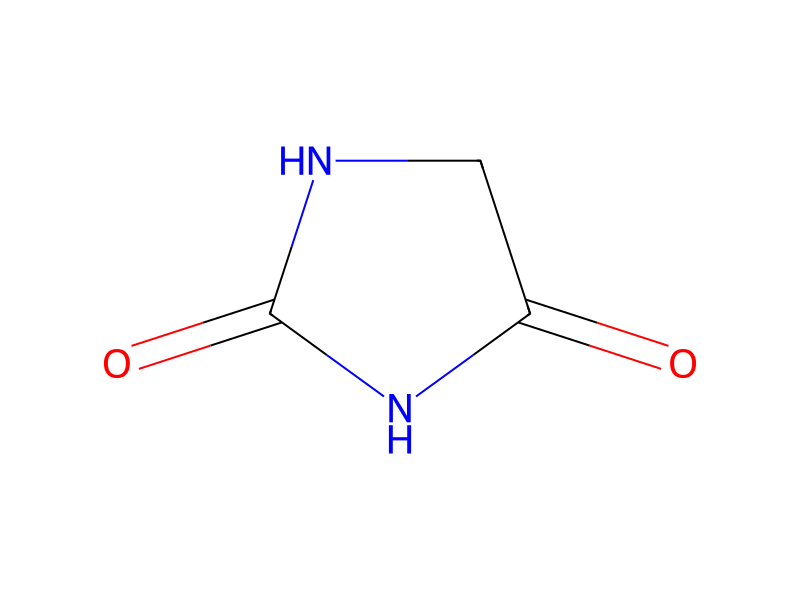
[Cl:1][C:2]([Cl:6])([Cl:5])[S:3]Cl.C(N(CC)CC)C.[NH:14]1[CH2:20][C:18](=[O:19])[NH:17][C:15]1=[O:16]>C(OCC)(=O)C>[Cl:1][C:2]([Cl:6])([Cl:5])[S:3][N:14]1[CH2:20][C:18](=[O:19])[N:17]([S:3][C:2]([Cl:6])([Cl:5])[Cl:1])[C:15]1=[O:16]At about 0° C., 37.2 g (0.2 mole) of trichloromethylsulfenyl chloride and subsequently 20.2 g (0.2 mole) of triethylamine are dripped, while stirring thoroughly, into a suspension of 10 g (0.1 mole) of hydantoin in 150 ml of anhydrous ethyl acetate. After stirring for 90 minutes at room temperature, the precipitated triethylamine hydrochloride is filtered off and washed with 100 ml of ethyl acetate. The filtrate is concentrated and the residue is crystallized by trituration with n-pentane. There is obtained 36.1 g (90.5% of theory) of 1,3-bis-(trichloromethylthio)-hydantoin; m.p.: 142° C.