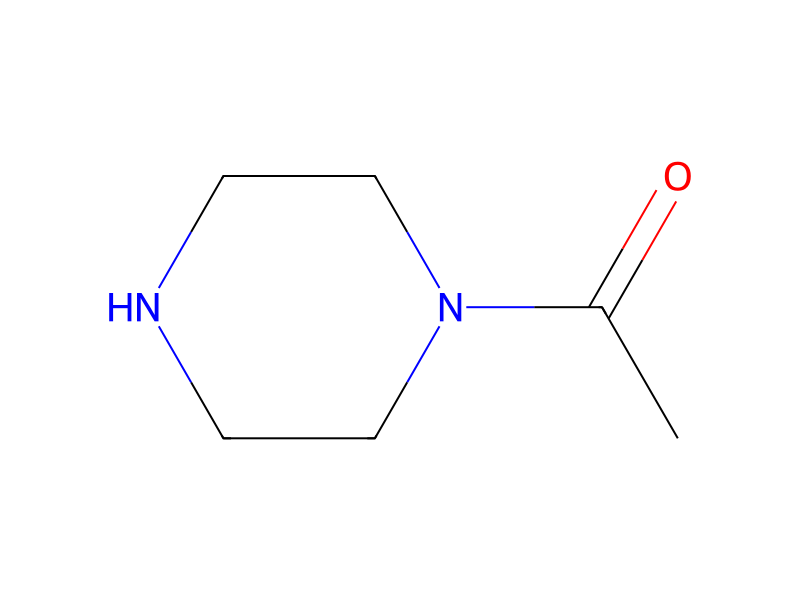
[Cl:1][C:2]1[CH:7]=[CH:6][C:5]([C:8]2[N:16]([CH2:17][C:18]([OH:20])=O)[C:11]3=[N:12][CH:13]=[CH:14][CH:15]=[C:10]3[N:9]=2)=[CH:4][CH:3]=1.C(N1C=CN=C1)(N1C=CN=C1)=O.[C:33]([N:36]1[CH2:41][CH2:40][NH:39][CH2:38][CH2:37]1)(=[O:35])[CH3:34]>O1CCCC1>[C:33]([N:36]1[CH2:41][CH2:40][N:39]([C:18](=[O:20])[CH2:17][N:16]2[C:11]3=[N:12][CH:13]=[CH:14][CH:15]=[C:10]3[N:9]=[C:8]2[C:5]2[CH:4]=[CH:3][C:2]([Cl:1])=[CH:7][CH:6]=2)[CH2:38][CH2:37]1)(=[O:35])[CH3:34]A suspension of 2-(4-chlorophenyl)-3H-imidazo[4,5-b]pyridine-3-acetic acid (4.0 g, 0.014 mole), 1,1'-carbonyldiimidazole (2.26 g, 0.014 mole) and dry tetrahydrofuran (80 ml) was stirred at room temperature for 3 hr with a stream of nitrogen bubbling through it. A solution of 1-acetylpiperazine (4.49 g, 0.035 mole) in tetrahydrofuran (10 ml) was added and the resulting suspension was heated at 60° C. overnight. The solvent was evaporated under reduced pressure and the residue was triturated in water (100 ml), filtered, and the filter cake rinsed with water. The solid was dissolved in hot isopropyl alcohol, filtered hot, and allowed to cool to room temperature. The resulting solid was collected by filtration and dried under high vacuum at 50° C. to yield 3.18 g (57%) of title compound, mp 217°-219° C.