HomeMCPWorkbenchSkills
HomeWorkbenchNotificationsMe
llms.txt · MCP GuidePrivacy Policy · Terms of Service · Supportv1.8.3
  1. Home
  2. /Reaction

Potassium Phosphate, Tribasic → 1-Isopropyl-3-[5-(1-methyl-1H-tetrazol-5-yl)-thiophen-2-yl]-6-nitro-1H-indole

HRID 2079881
Print

Reaction equation

HRID 2079881 reaction equation
[CH:1]([N:4]1[C:12]2[C:7](=[CH:8][CH:9]=[C:10]([N+:13]([O-:15])=[O:14])[CH:11]=2)[C:6](B2OC(C)(C)C(C)(C)O2)=[CH:5]1)([CH3:3])[CH3:2].Br[C:26]1[S:30][C:29]([C:31]2[N:35]([CH3:36])[N:34]=[N:33][N:32]=2)=[CH:28][CH:27]=1.P([O-])([O-])([O-])=O.[K+].[K+].[K+]>O1CCOCC1.O.C(OCC)(=O)C.[Pd].[Pd].C(=CC(C=CC1C=CC=CC=1)=O)C1C=CC=CC=1.C(=CC(C=CC1C=CC=CC=1)=O)C1C=CC=CC=1.C(=CC(C=CC1C=CC=CC=1)=O)C1C=CC=CC=1.C1(P(C2CCCCC2)C2CCCCC2)CCCCC1>[CH:1]([N:4]1[C:12]2[C:7](=[CH:8][CH:9]=[C:10]([N+:13]([O-:15])=[O:14])[CH:11]=2)[C:6]([C:26]2[S:30][C:29]([C:31]3[N:35]([CH3:36])[N:34]=[N:33][N:32]=3)=[CH:28][CH:27]=2)=[CH:5]1)([CH3:2])[CH3:3]
ParticipantsConditionsProcedureWorkupSources & evidenceReaction notes

Participants

9

Reactant 3

HCID 62657Potassium Phosphate, TribasicHCID 570705885-(5-Bromo-thiophen-2-yl)-1-methyl-1H-tetrazoleHCID 671015251-isopropyl-6-nitro-3-(4,4,5,5-tetramethyl-[1,3,2]dioxaborolan-2-yl)-1H-indole

Product 1

HCID 574422001-Isopropyl-3-[5-(1-methyl-1H-tetrazol-5-yl)-thiophen-2-yl]-6-nitro-1H-indoleYield 42.9%

Reagents, catalysts & solvents 5

HCID 75806
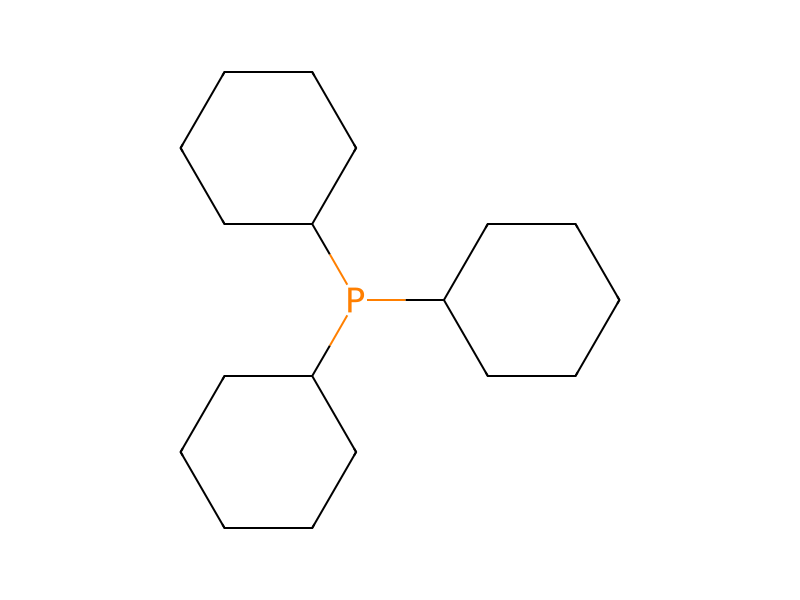
Tricyclohexylphosphine
Catalyst
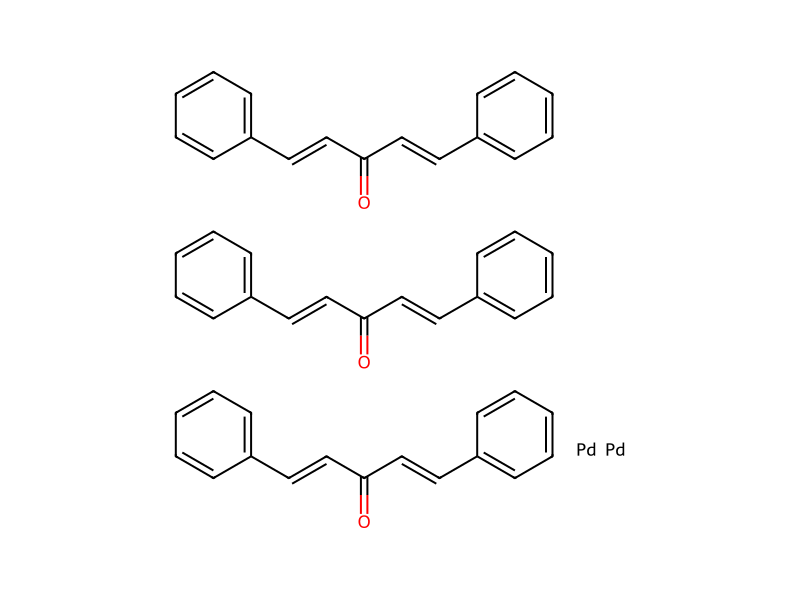
HCID 9832798Tris(dibenzylideneacetone) dipalladiumCatalyst
HCID 962WaterSolvent
HCID 8857Ethyl AcetateSolvent
HCID 312751,4-DioxaneSolvent

Conditions

Temperature
100 °C

Procedure

Method CC In a 501 mL flask fitted with a reflux condenser, combine 1-isopropyl-6-nitro-3-(4,4,5,5-tetramethyl-[1,3,2]dioxaborolan-2-yl)-1H-indole (4, R1=i-Pr) (700 mg, 2.1 mmol), 5-(5-Bromo-thiophen-2-yl)-1-methyl-1H-tetrazole (466 mg, 1.9 mmol), tris-(dibenzylideneacetone) di-palladium (0) (17 mg, 0.019 mmol), and tricyclohexylphosphine (13 mg, 0.0047 mmol) in dioxane (5.5 mL). Degas under nitrogen atmosphere three times; then add 1.3M aqueous potassium phosphate (2.5 mL, 3.2 mmol) in a 50 mL flask fitted with a reflux condenser. Heat the reaction mixture to 100° C. for 4 hours. Cool the reaction mixture to room temperature and dilute with water (20 mL) and ethyl acetate (20 mL); then separate layers. Extract the aqueous layer three times with ethyl acetate (10 mL). Combine the organics; dry over MgSO4; remove the solids by filtration; and concentrate the filtrate in vacuo. Purify by silica gel column chromatograph eluting with ethyl acetate in hexanes to afford 0.3 g (39%) of the title material. 1H NMR (CDCl3) δ 8.39 (s, 1H), 8.09 (d, 1H, J=9.1 Hz), 8.02 (d, 1H, J=9.1 Hz), 7.78 (d, 1H, J=3.9 Hz), 7.75 (s, 1H), 7.28 (d, 1H, J=3.9 Hz), 4.79 (quin., 1H, J=6.5 Hz), 4.37 (s, 3H), 1.62 (d, 6H, J=6.5 Hz).

Workup

  1. customMethod CC In a 501 mL flask fitted with a reflux condenser
  2. customDegas under nitrogen atmosphere three times
  3. customfitted with a reflux condenser
  4. temperatureCool the reaction mixture to room temperature
  5. extractionExtract the aqueous layer three times with ethyl acetate (10 mL)
  6. dry with materialdry over MgSO4
  7. customremove the solids
  8. filtrationby filtration
  9. concentrationand concentrate the filtrate in vacuo
  10. customPurify by silica gel column chromatograph
  11. washeluting with ethyl acetate in hexanes

Sources & evidence

ORD record
ord-677a6bd1905a47b598e0de8929d4dd07
Source dataset
uspto-grants-2011_04
DOI
10.6084/m9.figshare.5104873.v1
Patent number
US07932284B2

Reaction notes

On this pageParticipantsConditionsProcedureWorkupSources & evidenceReaction notes