HomeMCPWorkbenchSkills
HomeWorkbenchNotificationsMe
llms.txt · MCP GuidePrivacy Policy · Terms of Service · Supportv1.8.3
  1. Home
  2. /Reaction

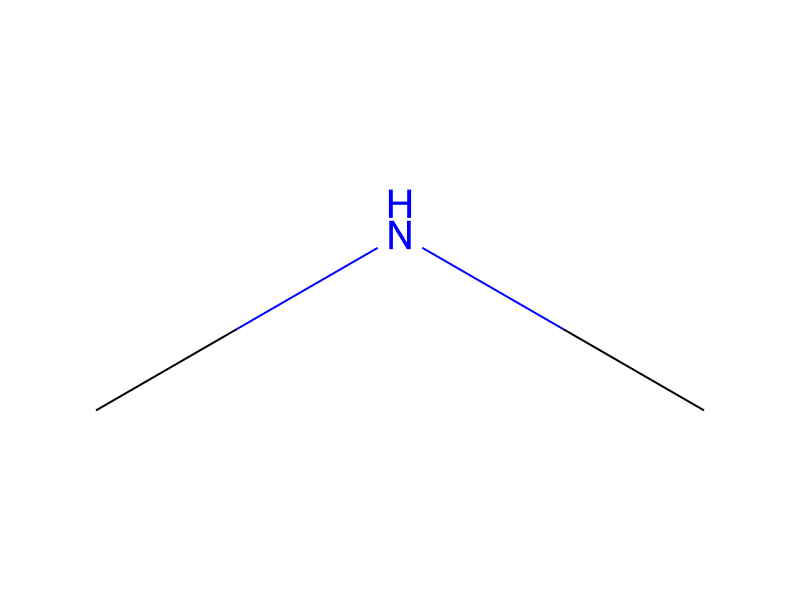
Dimethylamine → HCID 10176453, compound

HRID 2084041
Print

Reaction equation

HRID 2084041 reaction equation
Cl[CH2:2][C:3]([C:5]1[CH:13]=[C:12]2[C:8]([CH:9]=[CH:10][N:11]2C(=O)C(C)(C)C)=[CH:7][CH:6]=1)=O.C([O-])(O)=O.[Na+].[CH3:25][NH:26][CH3:27].[H-].[H-].[H-].[H-].[Li+].[Al+3]>C1COCC1.O>[CH3:25][N:26]([CH2:2][CH2:3][C:5]1[CH:13]=[C:12]2[C:8]([CH:9]=[CH:10][NH:11]2)=[CH:7][CH:6]=1)[CH3:27]
ParticipantsProcedureWorkupSources & evidenceReaction notes

Participants

7

Reactant 4

HCID 674DimethylamineHCID 516892Sodium BicarbonateHCID 98568621-(6-(2-Chloroacetyl)-1H-indol-1-yl)-2,2-dimethylpropan-1-oneHCID 21226445Aluminium lithium hydride

Product 1

HCID 10176453HCID 10176453, compoundYield 87%

Reagents, catalysts & solvents 2

HCID 962
Water
Solvent
HCID 8028TetrahydrofuranSolvent3×

Procedure

To a stirred solution of 6-Chloroacetyl-1-pivaloylindole (300 mg, 1.08 mmol) in THF (5 ml) were added successively, at room temperature, NaHCO3 (453.6 mg, 5.4 mmol) and a solution of 2M N,N-Dimethylamine in THF (2.7 ml, 5.4 mmol). The reaction mixture was then refluxed for four hours. After cooling to room temperature, the mixture was diluted with water (15 ml) and the organic layer extracted twice with dichloromethane (2×50 ml). After washing sequentially with water and brine, the organic layer was dried over sodium sulfate, and the solvent removed in vacuo. LiAlH4 (10.8 ml, 1M in THF, 10.8 mmol) was added to a solution of the crude product in THF (5 ml) and the reaction mixture heated at reflux overnight. After cooling to room temperature, the reaction mixture was quenched with Rochelle's salt (1 M, 3 mL) and silica gel and passed through a frit using methanolic ammonia in dichloromethane (0-10%). The 5% fraction was further purified by flash chromatography (silica gel, 3% methanolic ammonia in dichloromethane) yielding the product (176 mg, 87%) of the title product.

Workup

  1. temperatureThe reaction mixture was then refluxed for four hours
  2. extractionthe organic layer extracted twice with dichloromethane (2×50 ml)
  3. washAfter washing sequentially with water and brine
  4. dry with materialthe organic layer was dried over sodium sulfate
  5. customthe solvent removed in vacuo
  6. temperaturethe reaction mixture heated
  7. temperatureat reflux overnight
  8. temperatureAfter cooling to room temperature
  9. customthe reaction mixture was quenched with Rochelle's salt (1 M, 3 mL) and silica gel
  10. customThe 5% fraction was further purified by flash chromatography (silica gel, 3% methanolic ammonia in dichloromethane)

Sources & evidence

ORD record
ord-7746af2d4cd04a1db92757cd4b627939
Source dataset
uspto-grants-2004_04
DOI
10.6084/m9.figshare.5104873.v1
Patent number
US06716837B1

Reaction notes

On this pageParticipantsProcedureWorkupSources & evidenceReaction notes



