Reaction equation

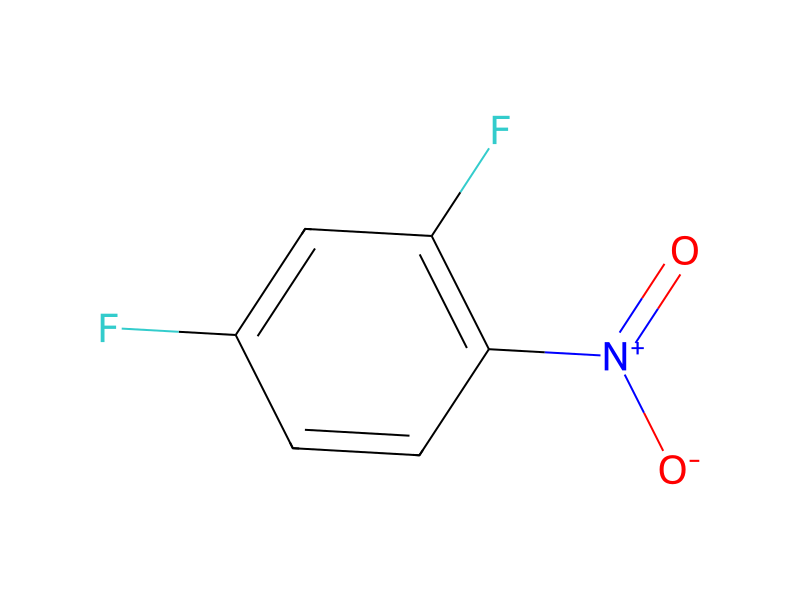
[C:1]1([C:3](=[CH:5][CH:6]=[CH:7][CH:8]=1)[OH:4])[OH:2].C(=O)([O-])[O-].[K+].[K+].F[C:16]1[CH:21]=[C:20]([F:22])[CH:19]=[CH:18][C:17]=1[N+:23]([O-:25])=[O:24]>C(#N)C.[Cl-].[Na+].O.C(Cl)Cl>[F:22][C:20]1[CH:19]=[CH:18][C:17]([N+:23]([O-:25])=[O:24])=[C:16]([CH:21]=1)[O:2][C:1]1[CH:8]=[CH:7][CH:6]=[CH:5][C:3]=1[OH:4]Participants
7






Conditions
- Temperature
- 28 °C
Procedure
Catechol (103.8 g, 0.94 mol) and potassium carbonate (129.9 g, 0.94 mol) are added to a solution of 2,4-difluoronitrobenzene (50.0 g, 0.314 mol) in acetonitrile. The reaction mixture is stirred at 28° C. for 24 hours, poured into brine and extracted with ether. The organic extract is washed with brine, dried over anhydrous sodium sulfate and concentrated in vacuo to obtain a brown gum. Flash chromatography of the gum using silica gel and a 10% hexanes in methylene chloride solution gives the title product as a yellow solid (43 g) which is identified by 1HNMR spectral analysis.
Workup
- extractionextracted with ether
- extractionThe organic extract
- washis washed with brine
- dry with materialdried over anhydrous sodium sulfate
- concentrationconcentrated in vacuo
- customto obtain a brown gum
Sources & evidence
- ORD record
- ord-3ac0287e59ea458f9d86f75740575bec
- Source dataset
- uspto-grants-1995_06
- Patent number
- US05424280
Linked notes
Loading…