Reaction equation

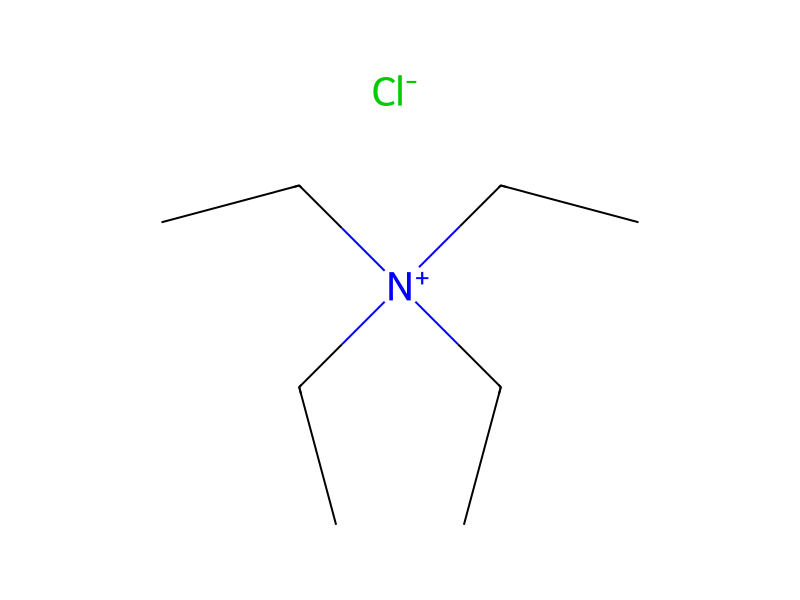
[NH2:1][C:2]1[NH:7][C:6]2[C:8]3[CH2:14][CH2:13][CH2:12][CH2:11][C:9]=3[S:10][C:5]=2[C:4](=O)[N:3]=1.CN(C)C1C=CC=CC=1.O=P(Cl)(Cl)[Cl:27]>[Cl-].C([N+](CC)(CC)CC)C.C(#N)C>[Cl:27][C:4]1[C:5]2[S:10][C:9]3[CH2:11][CH2:12][CH2:13][CH2:14][C:8]=3[C:6]=2[N:7]=[C:2]([NH2:1])[N:3]=1Participants
Reactant 3



Product 1

Reagents, catalysts & solvents 2

Conditions
- Temperature
- 110 °C
Procedure
In a 15 mL flask, 2-amino-6,7,8,9-tetrahydro-1H-benzo[4,5]thieno[3,2-d]pyrimidin-4-one (0.2 g, 0.9 mmol) and tetraethyl ammonium chloride (0.3 g, 1.8 mmol) were dried under vacuum at 100° C. for 12 h. Addition of acetonitrile (1.80 mL), dimethylaniline (0.12 mL, 0.9 mmol) and POCl3 (0.50 mL, 5.42 mmol) followed, and the reaction mixture was heated to 110° C. for 15 min. The solution was concentrated and ice was added along with CHCl3 (5 mL). The aqueous layer pH was adjusted to pH=7 with saturated (satd.) aq. NaHCO3 and extraction from that layer proceeded with CHCl3 (3×20 mL). The combined organic layers were dried (Na2SO4) and concentrated. The resultant residue was purified by FCC (50% EtOAc/hexanes) to afford the desired product as a pale yellow solid (88 mg). Certain substrates were found to be unstable at higher temperatures, in which case prolonged heating at lower temperature (in a range such as from about 50° C. to about 60° C.) sufficed. MS: 240.0. 1H NMR (400 MHz, CDCl3) δ ppm 5.08 (s, 2H), 2.90-2.83 (m, 2H), 2.74-2.67 (m, 2H), 1.98-1.91 (m, 2H), 1.91-1.83 (m, 2H).
Workup
- concentrationThe solution was concentrated
- additionice was added along with CHCl3 (5 mL)
- extractionThe aqueous layer pH was adjusted to pH=7 with saturated (satd.) aq. NaHCO3 and extraction from that layer
- dry with materialThe combined organic layers were dried (Na2SO4)
- concentrationconcentrated
- customThe resultant residue was purified by FCC (50% EtOAc/hexanes)
Sources & evidence
- ORD record
- ord-065a77a06e4b4413b330c39ec0c82c00
- Source dataset
- uspto-grants-2012_06
- Patent number
- US08193178B2
Linked notes
Loading…