HomeMCPWorkbenchSkills
HomeWorkbenchNotificationsMe
llms.txt · MCP GuidePrivacy Policy · Terms of Service · Supportv1.8.3
  1. Home
  2. /Reaction

Hydrazine hydrate (1:1) → HCID 178506258, compound

HRID 2174799
Print

Reaction equation

HRID 2174799 reaction equation
[Cl:1][C:2]1[C:7]([Cl:8])=[CH:6][CH:5]=[CH:4][C:3]=1[CH2:9][N:10]1[C:14]2[CH:15]=[C:16]([N:22]3[CH2:27][CH2:26][O:25][CH2:24][CH2:23]3)[CH:17]=[C:18]([C:19]([NH2:21])=O)[C:13]=2[N:12]=[C:11]1[C:28]([F:31])([F:30])[F:29].COC(OC)[N:35]([CH3:37])C.O.[NH2:41]N>>[Cl:1][C:2]1[C:7]([Cl:8])=[CH:6][CH:5]=[CH:4][C:3]=1[CH2:9][N:10]1[C:14]2[CH:15]=[C:16]([N:22]3[CH2:23][CH2:24][O:25][CH2:26][CH2:27]3)[CH:17]=[C:18]([C:19]3[N:21]=[CH:37][NH:35][N:41]=3)[C:13]=2[N:12]=[C:11]1[C:28]([F:29])([F:30])[F:31]
ParticipantsConditionsProcedureWorkupSources & evidenceReaction notes

Participants

4

Reactant 3

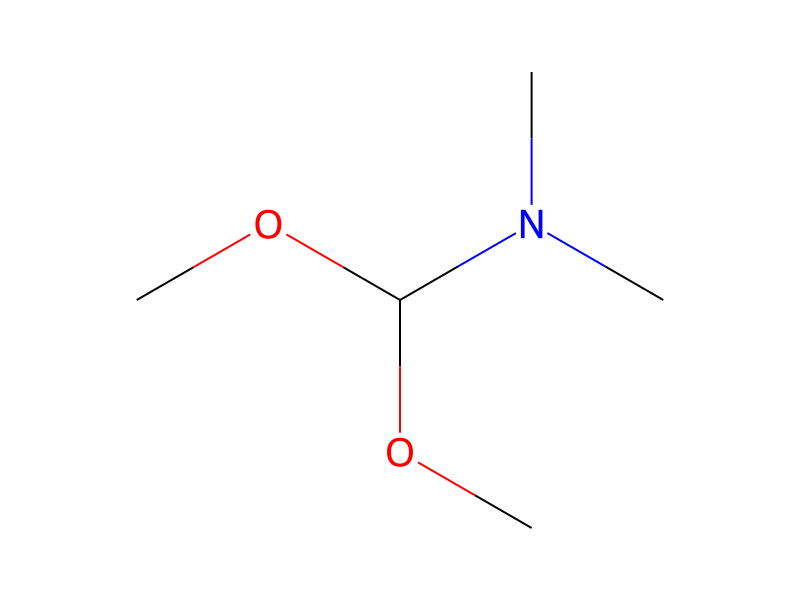
HCID 24654Hydrazine hydrate (1:1)HCID 78373Dimethylformamide dimethyl acetalHCID 669767431-[(2,3-dichlorophenyl)methyl]-6-(4-morpholinyl)-2-(trifluoromethyl)-1H-benzimidazole-4-carboxamide

Product 1

HCID 178506258HCID 178506258, compoundYield 27.6%

Conditions

Temperature
105 °C

Procedure

A suspension of 1-[(2,3-dichlorophenyl)methyl]-6-(4-morpholinyl)-2-(trifluoromethyl)-1H-benzimidazole-4-carboxamide, prepared as described in Example 56, step a (389 mg, 0.822 mmol) in N,N-dimethylformamide dimethyl acetal (9 mL, 67.2 mmol) was stirred at 105° C. for 1 hour. The reaction was concentrated under reduced pressure and the residue was suspended in Acetic Acid (7 mL). After the addition of hydrazine monohydrate (0.181 mL, 5.75 mmol) the reaction mixture was heated at 100° C. for 1 hour. The solvent was concentrated under vacuum and the residue was dissolved in DMSO and purified by reverse phase-HPLC (20-95% AcCN in water plus 0.1% TFA) (some residual solid filtered off). The fractions containing product were combined, neutralized by the addition of aq NaHCO3 sat sol and the organic evaporated (some compound lost during transfer). The precipitate in the aqueous residue was collected by filtration, washed with water and dried in a vacuum oven (45° C.) overnight to give the desired product (115 mg, 0.227 mmol, 27.6% yield) as a white powder. 1H NMR (400 MHz, CHLOROFORM-d) δ ppm 13.05 (br. s., 1H), 8.12 (s, 1H), 8.00 (d, J=2.27 Hz, 1H), 7.47 (dd, J=8.08, 1.26 Hz, 1H), 7.10 (t, J=7.96 Hz, 1H), 6.59 (d, J=2.27 Hz, 1H), 6.37 (dd, J=7.83, 1.01 Hz, 1H), 5.62 (s, 2H), 3.79-3.92 (m, 4H), 3.17-3.30 (m, 4H). MS (ES+) m/e 497 [M+H]+.


Workup

  1. customprepared
  2. concentrationThe reaction was concentrated under reduced pressure
  3. temperaturewas heated at 100° C. for 1 hour
  4. concentrationThe solvent was concentrated under vacuum
  5. dissolutionthe residue was dissolved in DMSO
  6. custompurified by reverse phase-HPLC (20-95% AcCN in water plus 0.1% TFA) (some residual solid
  7. filtrationfiltered off)
  8. additionThe fractions containing product
  9. additionneutralized by the addition of aq NaHCO3
  10. customthe organic evaporated (some compound
  11. filtrationThe precipitate in the aqueous residue was collected by filtration
  12. washwashed with water
  13. customdried in a vacuum oven (45° C.) overnight

Sources & evidence

ORD record
ord-b44a749033f44edb9b5bf2feefa999e7
Source dataset
uspto-grants-2015_06
DOI
10.6084/m9.figshare.5104873.v1
Patent number
US09062003B2

Reaction notes

On this pageParticipantsConditionsProcedureWorkupSources & evidenceReaction notes