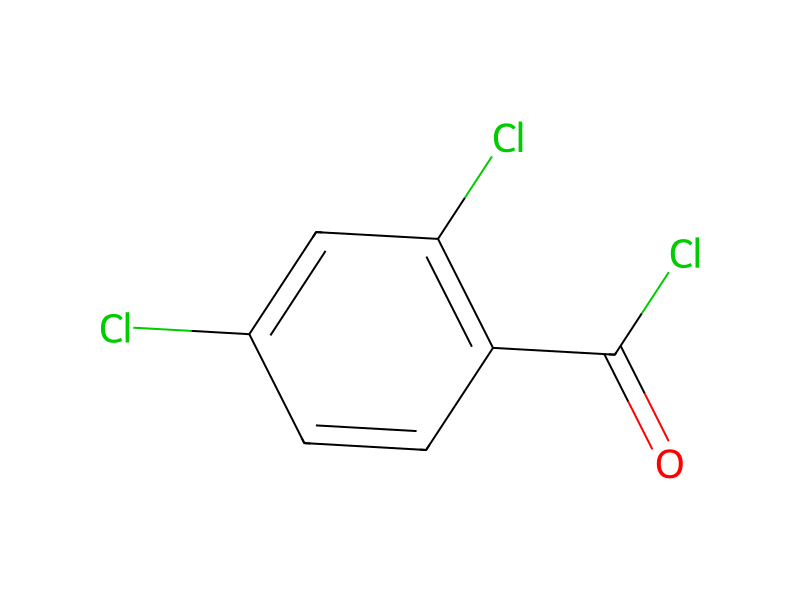
[CH3:1][O:2][C:3](=[O:16])[CH:4]([NH:12][CH2:13][C:14]#[CH:15])[CH2:5][C:6]1[CH:11]=[CH:10][CH:9]=[CH:8][CH:7]=1.C(N(CC)CC)C.[Cl:24][C:25]1[CH:33]=[C:32]([Cl:34])[CH:31]=[CH:30][C:26]=1[C:27](Cl)=[O:28]>C(Cl)Cl>[CH3:1][O:2][C:3](=[O:16])[CH:4]([N:12]([C:27](=[O:28])[C:26]1[CH:30]=[CH:31][C:32]([Cl:34])=[CH:33][C:25]=1[Cl:24])[CH2:13][C:14]#[CH:15])[CH2:5][C:6]1[CH:11]=[CH:10][CH:9]=[CH:8][CH:7]=1A solution of 3-Phenyl-2-prop-2-ynylamino-propionic acid methyl ester (75 mg, 0.346 mmol) in anhydrous CH2Cl2 (2 mL) was cooled to 0° C. in an ice bath, then triethylamine (0.1 mL) and 2,4-dichlorobenzoyl chloride (0.06 mL, 0.45 mmol) were added. The mixture was stirred at room temperature for 3 h. Excess of benzoyl chloride was quenched by adding ice-cold water and then the reaction mixture was partitioned between water and CH2Cl2. The organic layer was separated, dried (Na2SO4), and concentrated. The residue was purified by silica gel column chromatography using ethyl acetate and hexane (1:3) as eluent to obtain 2-[(2,4-Dichloro-benzoyl)-prop-2-ynyl-amino]-3-phenyl-propionic acid methyl ester as a syrup, 125 mg (93%).