4-Ethylbenzoic Acid → Methyl 3-methyl-1H-indole-6-carboxylate
Reaction equation

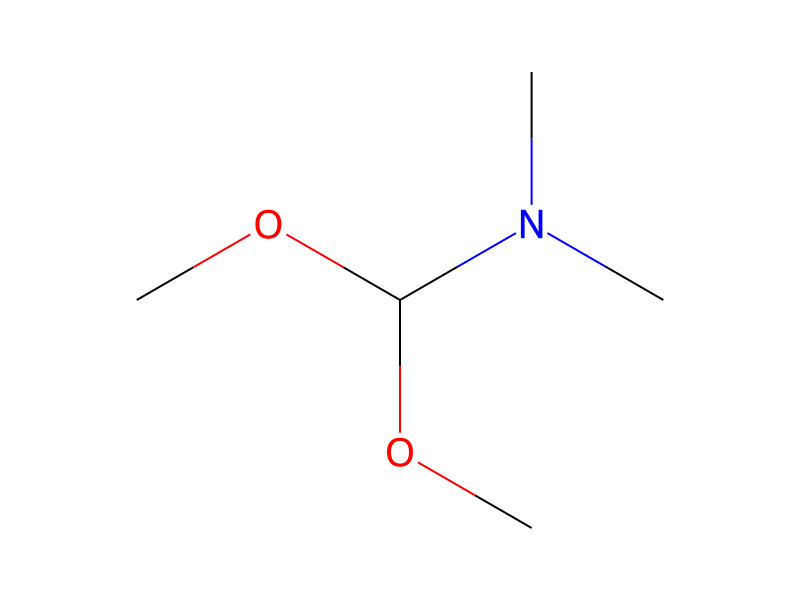
[CH2:1]([C:3]1[CH:12]=[CH:11][C:6]([C:7]([O:9][CH3:10])=[O:8])=[CH:5][C:4]=1[N+:13]([O-])=O)[CH3:2].[CH2:16](C1C=CC(C(O)=O)=CC=1)C.COC(OC)N(C)C>CN(C)C=O>[CH3:10][O:9][C:7]([C:6]1[CH:5]=[C:4]2[C:3]([C:1]([CH3:16])=[CH:2][NH:13]2)=[CH:12][CH:11]=1)=[O:8]Participants
Reactant 3


Product 1

Reagents, catalysts & solvents 1

Conditions
- Temperature
- 130 °C
Procedure
Methyl 4-ethyl-3-nitrobenzoate (5.0 g), which had been prepared through nitration followed by methyl-esterification of 4-ethylbenzoic acid, is dissolved in N,N-dimethylformamide (50 ml), to which is added N,N-dimethylformamide dimethyl acetal (8.45 g), and stirred under heat at 130° C. for 3 hours. The reaction mixture is concentrated under reduced pressure, and the resulting red oily residue is dissolved in methanol (50 ml), to which is added palladium-carbon (5%, 0.400 g), and stirred in a hydrogen atmosphere at room temperature for 2.5 hours. Then, this is further stirred at 50° C. for 2 hours and thereafter at room temperature for 3 days. The catalyst is removed through filtration, and the filtrate is concentrated under reduced pressure. The resulting residue is recrystallized from t-butyl methyl ether to obtain a pale yellow crystal of the intended product (2.4 g).
Workup
- concentrationThe reaction mixture is concentrated under reduced pressure
- dissolutionthe resulting red oily residue is dissolved in methanol (50 ml), to which
- additionis added palladium-carbon (5%, 0.400 g)
- stirringstirred in a hydrogen atmosphere at room temperature for 2.5 hours
- stirringThen, this is further stirred at 50° C. for 2 hours
- customThe catalyst is removed through filtration
- concentrationthe filtrate is concentrated under reduced pressure
- customThe resulting residue is recrystallized from t-butyl methyl ether
Sources & evidence
- ORD record
- ord-5796ee6911634b7bb8355b7b1550defd
- Source dataset
- uspto-grants-2002_06
- Patent number
- US06410584B1
Reaction notes
Loading…