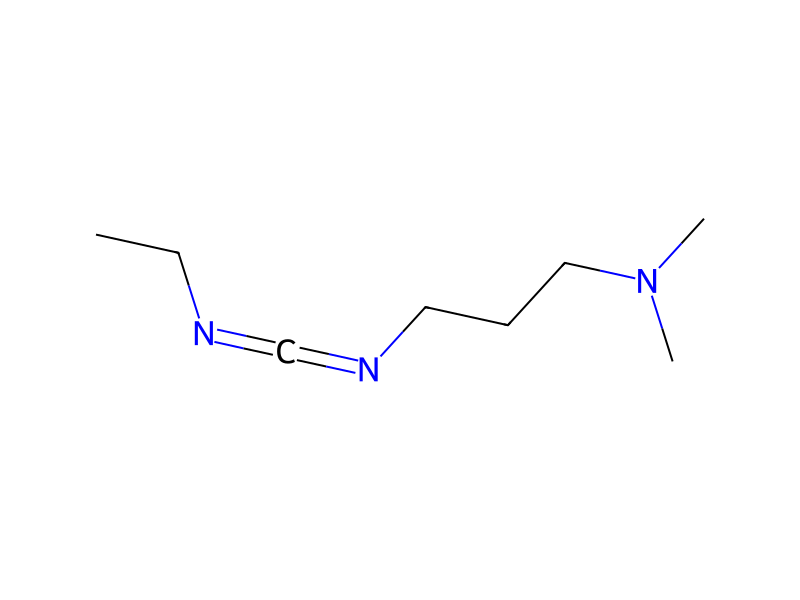
1-Ethyl-3-(3'-dimethylaminopropyl)carbodiimide → 5-[3-(1H-indazol-5-yl)-1,2,4-oxadiazol-5-yl]-2-[(1-methylethyl)oxy]benzonitrile
HRID 2189774
Reaction equation

[C:1]([C:3]1[CH:4]=[C:5]([CH:9]=[CH:10][C:11]=1[O:12][CH:13]([CH3:15])[CH3:14])[C:6]([OH:8])=O)#[N:2].CCN=C=NCCCN(C)C.C1C=CC2N(O)N=NC=2C=1.O[NH:38][C:39]([C:41]1[CH:42]=[C:43]2[C:47](=[CH:48][CH:49]=1)[NH:46][N:45]=[CH:44]2)=[NH:40]>CN(C=O)C>[NH:46]1[C:47]2[C:43](=[CH:42][C:41]([C:39]3[N:38]=[C:6]([C:5]4[CH:9]=[CH:10][C:11]([O:12][CH:13]([CH3:15])[CH3:14])=[C:3]([CH:4]=4)[C:1]#[N:2])[O:8][N:40]=3)=[CH:49][CH:48]=2)[CH:44]=[N:45]1Participants
6