HomeMCPWorkbenchSkills
HomeWorkbenchNotificationsMe
llms.txt · MCP GuidePrivacy Policy · Terms of Service · Supportv1.8.3
  1. Home
  2. /Reaction

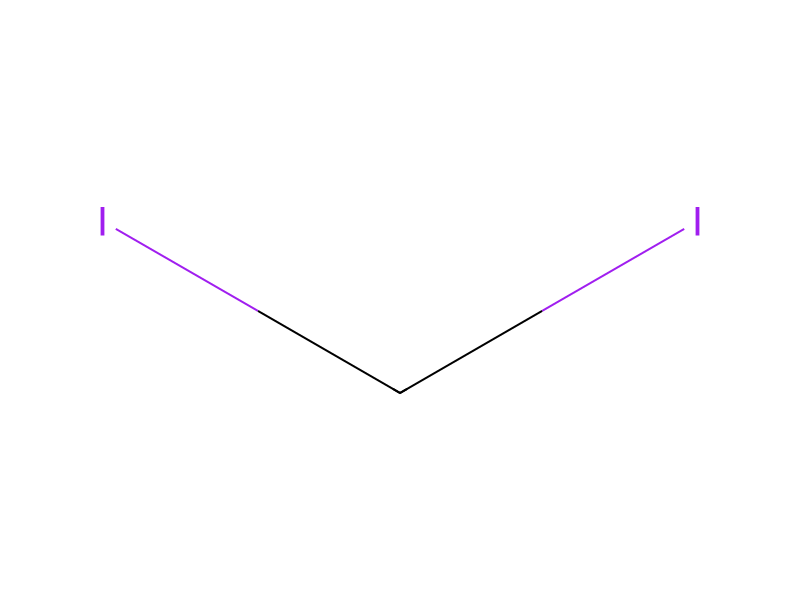
Diiodomethane → Ethyl 3-cyclopropyl-2,2-difluoropropanoate

HRID 2190958
Print

Reaction equation

HRID 2190958 reaction equation
[CH2:1]([Zn]CC)C.FC(F)(F)C(O)=O.ICI.[F:16][C:17]([F:26])([CH2:23][CH:24]=[CH2:25])[C:18]([O:20][CH2:21][CH3:22])=[O:19]>C(Cl)Cl>[CH:24]1([CH2:23][C:17]([F:26])([F:16])[C:18]([O:20][CH2:21][CH3:22])=[O:19])[CH2:1][CH2:25]1
ParticipantsConditionsProcedureWorkupSources & evidenceReaction notes

Participants

6

Reactant 4

HCID 6346DiiodomethaneHCID 6422Trifluoroacetic acidHCID 14049931Ethyl 2,2-difluoropent-4-enoateHCID 178418750HCID 178418750, compound

Product 1

HCID 50997080Ethyl 3-cyclopropyl-2,2-difluoropropanoate

Reagents, catalysts & solvents 1

HCID 6344
Dichloromethane
Solvent
4×

Conditions

Temperature
-5 °C

Procedure

A solution of diethyl zinc (500 mL, 1.0 M in hexanes) in methylene chloride (700 mL) was chilled to −10° C. under nitrogen in a cooling bath. A solution of trifluoroacetic acid (57 g, 0.5 mol) in methylene chloride (50 mL) was added dropwise over 1 hour 45 minutes. The mixture was stirred for 30 minutes at −5° C. A solution of diiodomethane (133.9 g, 0.5 mol) in methylene chloride (50 mL) was added to the mixture over a period of 20 minutes. The mixture became homogenous upon stirring for 30 minutes at 0° C. A solution of ethyl 2,2-difluoropent-4-enoate (40 g, 0.244 mol) in methylene chloride (50 mL) was added dropwise over a period of 25 minutes and the cooling bath was removed. The mixture was stirred for 1 hour at room temperature and then for 15 hours at reflux. The reaction was quenched by addition of saturated aqueous ammonium chloride (500 mL) and stirring for 30 minutes. The biphasic mixture was poured into 500 mL of saturated aqueous ammonium chloride and the organic layer was separated. The aqueous layer was extracted with methylene chloride (3×300 mL) and the combined organic extracts were dried over magnesium sulfate and filtered. The solvent was removed from the filtrate under reduced pressure to afford ethyl 3-cyclopropyl-2,2-difluoropropanoate (43.5 g, quant), as light yellow oil, which was used in the Example 4 without further purification. 1H-NMR (400 MHz, CDCl3): δ=0.12-0.22 (m, 2H), 0.49-0.59 (m, 2H), 0.75-0.91 (m, 1H), 1.37 (t, J=8 Hz, 3H), 1.95-2.05 (m, 2H), 4.34 (q, J=8 Hz, 2H).

Workup

  1. stirringupon stirring for 30 minutes at 0° C
  2. customthe cooling bath was removed
  3. stirringThe mixture was stirred for 1 hour at room temperature
  4. temperaturefor 15 hours at reflux
  5. customThe reaction was quenched by addition of saturated aqueous ammonium chloride (500 mL)
  6. stirringstirring for 30 minutes
  7. additionThe biphasic mixture was poured into 500 mL of saturated aqueous ammonium chloride
  8. customthe organic layer was separated
  9. extractionThe aqueous layer was extracted with methylene chloride (3×300 mL)
  10. dry with materialthe combined organic extracts were dried over magnesium sulfate
  11. filtrationfiltered
  12. customThe solvent was removed from the filtrate under reduced pressure

Sources & evidence

ORD record
ord-a44340d2b0814ddd8f67e9a38e8b37c1
Source dataset
uspto-grants-2012_12
DOI
10.6084/m9.figshare.5104873.v1
Patent number
US08324417B2

Reaction notes

On this pageParticipantsConditionsProcedureWorkupSources & evidenceReaction notes
