Diethyl Malonate → Diethyl 2-(2-nitrobenzylidene)malonate
Reaction equation

[N+:1]([C:4]1[CH:11]=[CH:10][CH:9]=[CH:8][C:5]=1[CH:6]=O)([O-:3])=[O:2].[C:12]([O:20][CH2:21][CH3:22])(=[O:19])[CH2:13][C:14]([O:16][CH2:17][CH3:18])=[O:15].C(=O)([O-])O.[Na+]>C(OC(=O)C)(=O)C>[N+:1]([C:4]1[CH:11]=[CH:10][CH:9]=[CH:8][C:5]=1[CH:6]=[C:13]([C:14]([O:16][CH2:17][CH3:18])=[O:15])[C:12]([O:20][CH2:21][CH3:22])=[O:19])([O-:3])=[O:2]Participants
5
Reactant 3
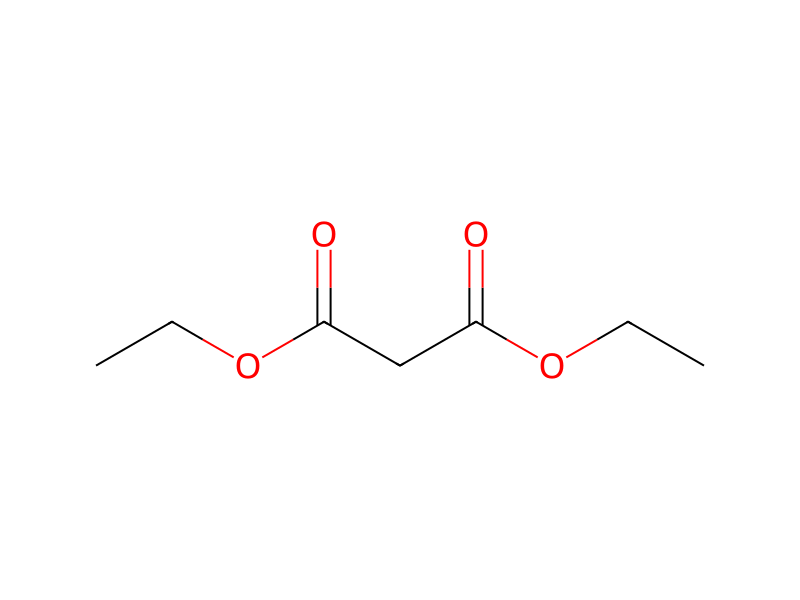


Product 1

Reagents, catalysts & solvents 1

Procedure
32.3 g (0.21 mol) of 2-nitrobenzaldehyde and 35.0 g (0.21 mol) of diethyl malonate were added to 100 mL of acetic anhydride at room temperature. 27.0 g (0.32 mol) of sodium hydrogen carbonate was added to this mixture, and the resulting mixture was allowed to react overnight at 100° C. The reaction mixture was concentrated under reduced pressure to approximately a half of the original volume, and ice water was added to this reaction mixture. The reaction mixture was extracted with ethyl acetate. The organic phase was washed with an aqueous solution of sodium hydrogen carbonate and water in this order, and was dried and concentrated under reduced pressure. The residue was purified by column chromatography (ethyl acetate:n-hexane=1:9 to 1:4), and thus 37.0 g (yield: 59%) of the title compound was obtained as light yellow crystals.