HomeMCPSkillsWorkbenchOpenChem
HomeWorkbenchNotificationsMe
llms.txt · skill.md · MCP GuidePrivacy Policy · Terms of Service · Supportv1.8.4
  1. Home
  2. /Reaction

Acetonitrile--water (1/1) → 6-(1,4-Dioxaspiro[4.5]dec-8-yloxy)-2-(trifluoromethyl)pyrimidine-4-carbonitrile

HRID 2200809
Print

Reaction equation

Cl[C:2]1[CH:7]=[C:6]([O:8][CH:9]2[CH2:18][CH2:17][C:12]3([O:16][CH2:15][CH2:14][O:13]3)[CH2:11][CH2:10]2)[N:5]=[C:4]([C:19]([F:22])([F:21])[F:20])[N:3]=1.C[C:24]#[N:25].O>CN(C)C=O.[C-]#N.[Zn+2].[C-]#N.C1C=CC([P]([Pd]([P](C2C=CC=CC=2)(C2C=CC=CC=2)C2C=CC=CC=2)([P](C2C=CC=CC=2)(C2C=CC=CC=2)C2C=CC=CC=2)[P](C2C=CC=CC=2)(C2C=CC=CC=2)C2C=CC=CC=2)(C2C=CC=CC=2)C2C=CC=CC=2)=CC=1>[O:16]1[C:12]2([CH2:17][CH2:18][CH:9]([O:8][C:6]3[N:5]=[C:4]([C:19]([F:22])([F:21])[F:20])[N:3]=[C:2]([C:24]#[N:25])[CH:7]=3)[CH2:10][CH2:11]2)[O:13][CH2:14][CH2:15]1
ParticipantsConditionsProcedureWorkupSources & evidenceReaction notes

Participants

6

Reactant 2

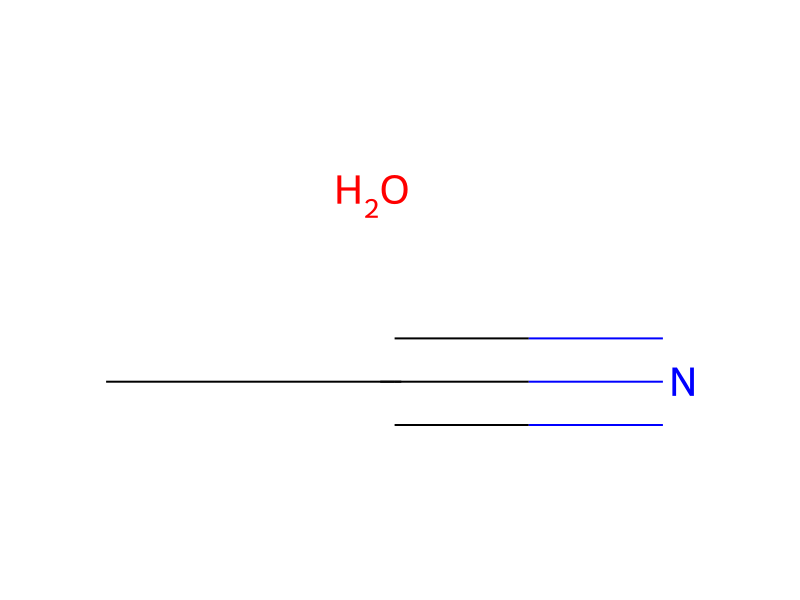
HCID 18373917Acetonitrile--water (1/1)HCID 86676919Chloro-6-(1,4-dioxaspiro[4.5]dec-8-yloxy)-2-(trifluoromethyl)pyrimidine

Product 1

HCID 712579806-(1,4-Dioxaspiro[4.5]dec-8-yloxy)-2-(trifluoromethyl)pyrimidine-4-carbonitrile

Reagents, catalysts & solvents 3

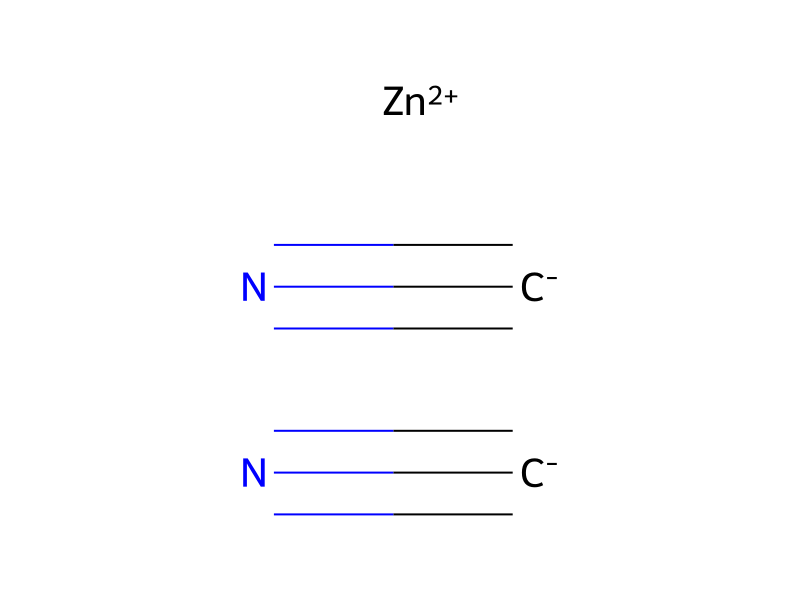
HCID 11186Zinc cyanide (Zn(CN)2)Catalyst
HCID 178418397
HCID 178418397, compound
Catalyst
HCID 6228DimethylformamideSolvent

Conditions

Temperature
140 °C

Procedure

4-Chloro-6-(1,4-dioxaspiro[4.5]dec-8-yloxy)-2-(trifluoromethyl)pyrimidine (described in Example 1, Step 1) (27.1 mg, 0.0800 mmol) was stirred in N,N-dimethylformamide (1.3 mL). Zinc cyanide (23 mg, 0.20 mmol) was adde, followed by tetrakis(triphenylphosphine)palladium(0) (11 mg, 0.0096 mmol). The solution was flushed with nitrogen (subsurface). The vial was sealed, and the solution was heated at 140° C. for 10 minutes in a microwave reactor. LCMS showed no remaining starting material and showed a new peak that did not ionize. The product was isolated by preparative LC using a Waters Fraction-Linx instrument and a 30 mm×100 mm Sunfire C18 column; 62% CH3CN—H2O (0.1% TFA), 0.5 min, 4.5 min gradient to 82%; 60 mL/min; detector set at 254 nm; retention time=3.8 min. The solvent was removed by rotary evaporation to give 21 mg. 1H NMR (400 MHz, acetone-d6): δ 7.78 (s, 1H); 5.41 (m, 1H, OCH); 3.94 (s, 4H, OCH2); 1.9-2.1 (m, 4H); 1.83 (m, 2H); 1.67 (m, 2H). 13C NMR (100 MHz, acetone-d6): δ 171.6 (s, OC); 142.1 (s, C—N); 117.8 (s, CH); 115.8 (s, CN); 108.2 (s, O2C); 76.1 (s, OCH); 65.0 (s, OCH2); 31.7 (s, CH2); 28.6 (s, CH2); two quartets were not resolved due to insufficient number of scans. The compound of Example 54 was then obtained by following the steps described for Example 45.

Workup

  1. customThe solution was flushed with nitrogen (subsurface)
  2. customThe vial was sealed
  3. customThe product was isolated by preparative LC
  4. customThe solvent was removed by rotary evaporation
  5. customto give 21 mg

Sources & evidence

ORD record
ord-f9398ffb0f56485aace6f470dcc037df
Source dataset
uspto-grants-2016_06
DOI
10.6084/m9.figshare.5104873.v1
Patent number
US09359358B2

Reaction notes

On this pageParticipantsConditionsProcedureWorkupSources & evidenceReaction notes