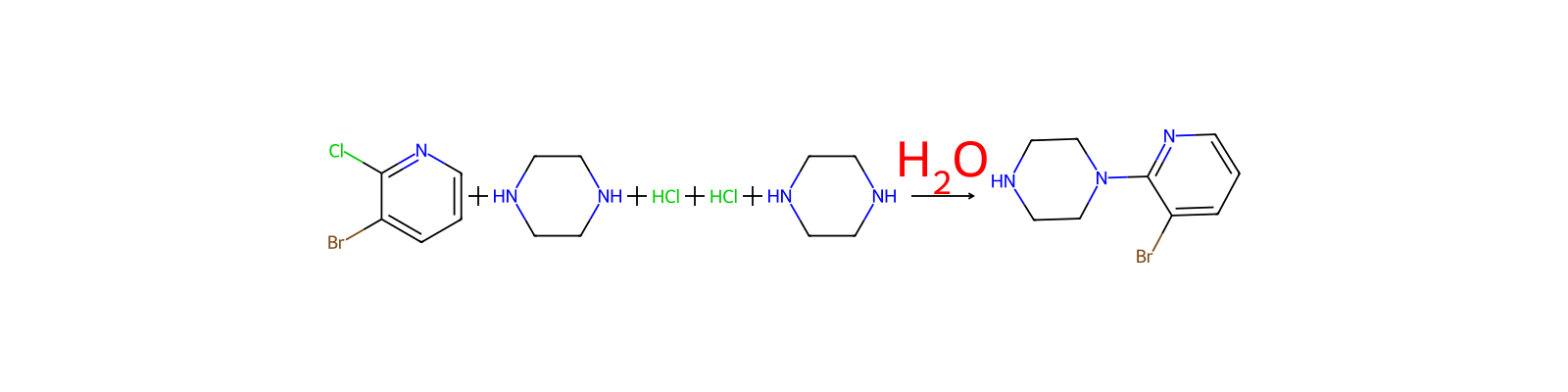
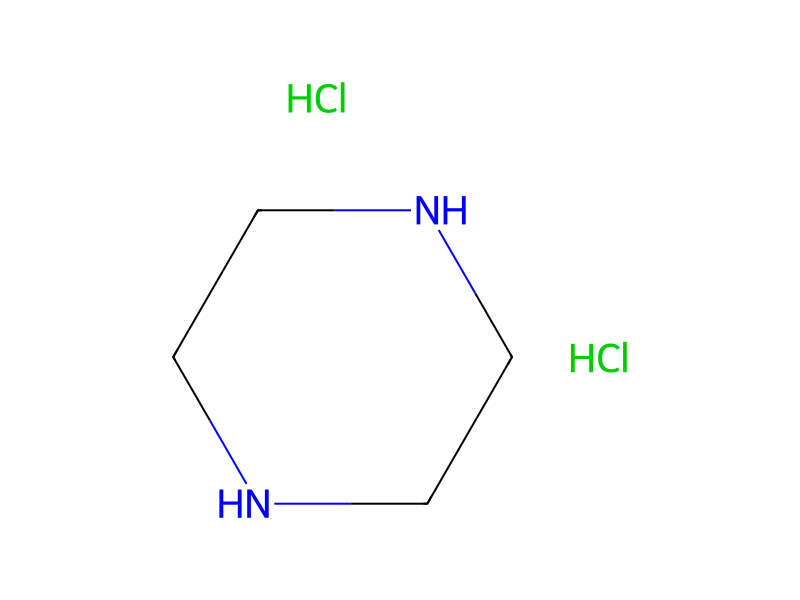
[Br:1][C:2]1[C:3](Cl)=[N:4][CH:5]=[CH:6][CH:7]=1.[NH:9]1[CH2:14][CH2:13][NH:12][CH2:11][CH2:10]1.Cl.Cl.N1CCNCC1>O>[Br:1][C:2]1[C:3]([N:9]2[CH2:14][CH2:13][NH:12][CH2:11][CH2:10]2)=[N:4][CH:5]=[CH:6][CH:7]=1Add 3-bromo-2-chloro-pyridine (10.08 g, 52.4 mmol) to piperazine (45 g) and piperazine dihydrochloride (83.4 g). Heat the mixture to 190° C. with stirring for one hr. Allow the mixture to cool to about 80° C. then pour the material into water and extract 5 times with DCM. Dry the solution (sodium sulfate), filter and concentrate. Purify using silica gel chromatography, eluting with 15:85 methanol (with 2 M ammonia): DCM to give 1-(3-bromo-pyridin-2-yl)-piperazine as a white solid (8.98 g, 71%).