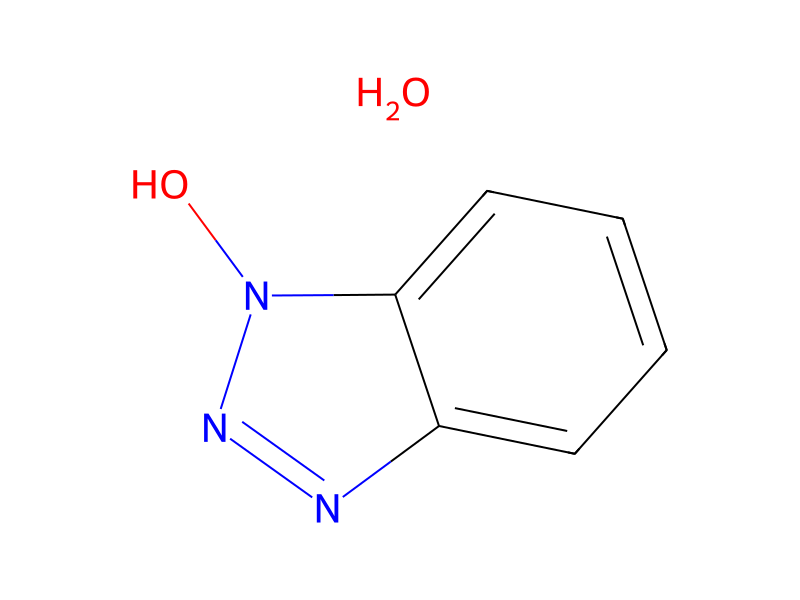
[N:1]1[CH:6]=[CH:5][CH:4]=[CH:3][C:2]=1[C:7]1[CH:12]=[CH:11][C:10]([CH2:13][C:14]([OH:16])=O)=[CH:9][CH:8]=1.O.ON1C2C=CC=CC=2N=N1.CNCC1[S:32][C:33]([S:36]([NH2:39])(=[O:38])=[O:37])=CN=1.Cl.CN(C)CC[CH2:45][N:46]=[C:47]=[N:48][CH2:49][CH3:50]>CN(C)C=O>[NH2:39][S:36]([C:33]1[S:32][C:47]([N:46]([CH3:45])[C:14](=[O:16])[CH2:13][C:10]2[CH:9]=[CH:8][C:7]([C:2]3[CH:3]=[CH:4][CH:5]=[CH:6][N:1]=3)=[CH:12][CH:11]=2)=[N:48][C:49]=1[CH3:50])(=[O:38])=[O:37]At room temperature, 300 mg (1.41 mmol) of [4-(2-pyridinyl)phenyl]acetic acid and 190 mg (1.41 mmol) of 1-hydroxy-1H-benzotriazole hydrate are initially charged in 4 ml of dimethylformamide. 307 mg (1.48 mmol) of 2-methylaminomethyl-1,3-thiazole-5-sulphonamide and 284 mg (1.48 mmol) of N′-(3-dimethylaminopropyl)-N-ethylcarbodiimide hydrochloride are added, and the mixture is stirred at room temperature for 18 h. The solvent is then removed under reduced pressure, the residue is taken up in toluene and the solvent is once more removed under reduced pressure. The residue is stirred with 15 ml of water and 3 ml of methanol and then filtered off, and the filtrate is re-extracted with 20 ml of dichloromethane. Solid and dichloromethane phase are combined and the solvent is removed under reduced pressure. This gives the compound of Example 38 in the form of a white solid.