HomeMCPWorkbenchSkills
HomeWorkbenchNotificationsMe
llms.txt · MCP GuidePrivacy Policy · Terms of Service · Supportv1.8.3
  1. Home
  2. /Reaction

Triethylamine → Ethyl N-(3,5-dichlorobenzoyl)-N-isopropylaminoacetate

HRID 223413
Print

Reaction equation

HRID 223413 reaction equation
[Cl-].[Ca+2].[Cl-].[CH:4]([NH:7][CH2:8][C:9]([O:11][CH2:12][CH3:13])=[O:10])([CH3:6])[CH3:5].C(N(CC)CC)C.[Cl:21][C:22]1[CH:23]=[C:24]([CH:28]=[C:29]([Cl:31])[CH:30]=1)[C:25](Cl)=[O:26]>ClCCl>[Cl:21][C:22]1[CH:23]=[C:24]([CH:28]=[C:29]([Cl:31])[CH:30]=1)[C:25]([N:7]([CH2:8][C:9]([O:11][CH2:12][CH3:13])=[O:10])[CH:4]([CH3:6])[CH3:5])=[O:26]
ParticipantsProcedureWorkupSources & evidenceReaction notes

Participants

6

Reactant 4

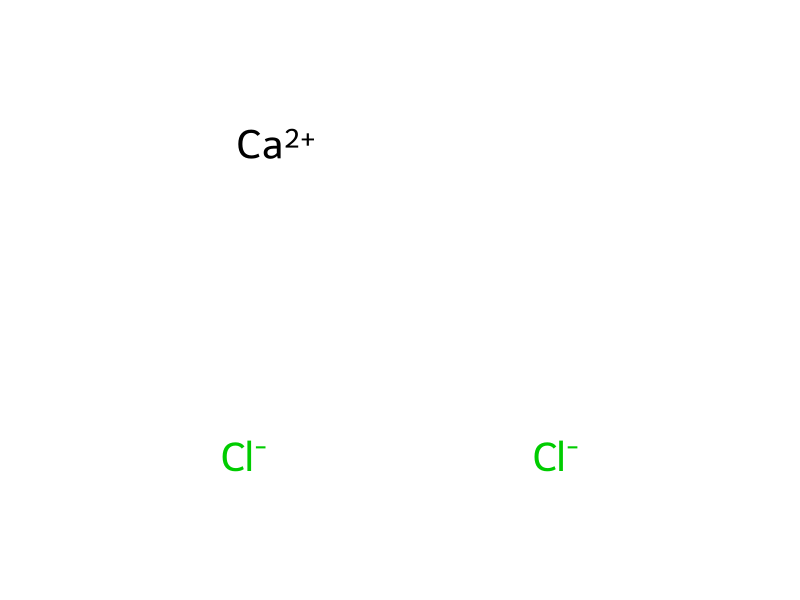
HCID 8471TriethylamineHCID 761913,5-Dichlorobenzoyl chlorideHCID 351625Ethyl 2-((propan-2-yl)amino)acetateHCID 5284359Calcium Chloride

Product 1

HCID 13050497Ethyl N-(3,5-dichlorobenzoyl)-N-isopropylaminoacetate

Reagents, catalysts & solvents 1

HCID 6344
Dichloromethane
Solvent
2×

Procedure

A 250 milliliter round-bottom, 3-neck flask was equipped with a condenser, a thermometer, a dropping funnel, and a Teflon® spin-bar magnet for stirring. The outlets were protected from moisture by calcium chloride drying tubes, and the flask was immersed in an ice-water cooling mixture. The flask was charged with an 80 milliliter dichloromethane solution containing 0.015 mole (2.2 grams) of the ethyl N-isopropylaminoacetate (described above) and 0.015 mole (1.5 grams) of triethylamine. The solution was stirred while cooling in an ice-water bath. A 20 milliliter solution of dichloromethane containing 0.015 mole (3.14 grams) of 3,5-dichlorobenzoylchloride was added dropwise over a period of 1.0 hour with stirring and the stirring was continued for several hours followed by allowing the mixture to warm to room temperature. The reaction solution was washed four times with water (25 milliliters) to remove the triethylamine hydrochloride. The washed organic solution was filtered to remove the phase water and concentrated first by rotary evaporation (house vacuum, water bath to 65° C.) to 4.9 grams of a dull yellow syrup (nD20 1.5257) and then, using a vacuum pump (<1 mm, oil bath to 50° to 60° C.) for 1.0 hour, to 4.5 grams (94 percent crude yield) nD20 (1.5280) ethyl N-3,5-dichlorobenzoyl-N-isopropylaminoacetate. It had a mass spectra (m/e) of molecular weight of 317, an infrared spectra (neat) mull technique with ester C=O band at 1745 centimeters-1 and amide (C=O) band at 1635 centimeters-1. It had the following nuclear magnetic resonance values δ (CDCl3) of 1.1 (doublet, 6H, (CH3)2C--), 1.3 (triplet, 3H, CH3--), 3.7-4.5 (4.0 broad singlet, 4.2 quartet, (overlap), 5H, CH2N, CH2, CH (heptet obscured)), and 7.3-7.5 (multiplets, 3H, aromatic).


Workup

  1. customA 250 milliliter round-bottom, 3-neck flask was equipped with a condenser
  2. temperaturewhile cooling in an ice-water bath
  3. stirringwith stirring
  4. waitthe stirring was continued for several hours
  5. washThe reaction solution was washed four times with water (25 milliliters)
  6. customto remove the triethylamine hydrochloride
  7. filtrationThe washed organic solution was filtered
  8. customto remove the phase water
  9. concentrationconcentrated first by rotary evaporation (house vacuum, water bath to 65° C.) to 4.9 grams of a dull yellow syrup (nD20 1.5257)
  10. customa vacuum pump (<1 mm, oil bath to 50° to 60° C.)
  11. customfor 1.0 hour

Sources & evidence

ORD record
ord-f47cb793f16346c09f06e450478ef49e
Source dataset
uspto-grants-1982_10
DOI
10.6084/m9.figshare.5104873.v1
Patent number
US04354032

Reaction notes

On this pageParticipantsProcedureWorkupSources & evidenceReaction notes