Reaction equation
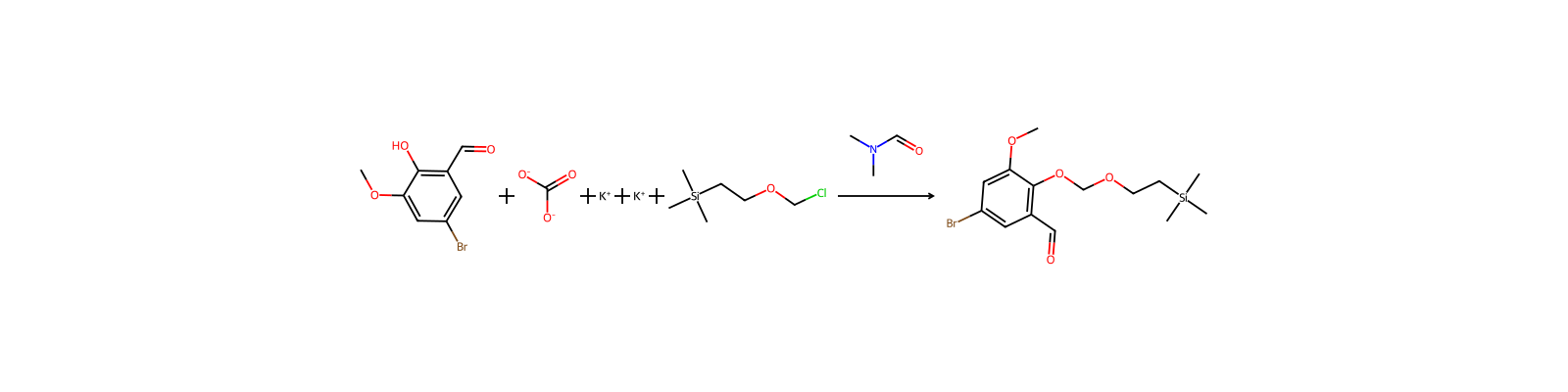
[Br:1][C:2]1[CH:3]=[C:4]([O:11][CH3:12])[C:5]([OH:10])=[C:6]([CH:9]=1)[CH:7]=[O:8].C(=O)([O-])[O-].[K+].[K+].[CH3:19][Si:20]([CH3:27])([CH3:26])[CH2:21][CH2:22][O:23][CH2:24]Cl>CN(C=O)C>[Br:1][C:2]1[CH:3]=[C:4]([O:11][CH3:12])[C:5]([O:10][CH2:24][O:23][CH2:22][CH2:21][Si:20]([CH3:27])([CH3:26])[CH3:19])=[C:6]([CH:9]=1)[CH:7]=[O:8]Participants
5



Procedure
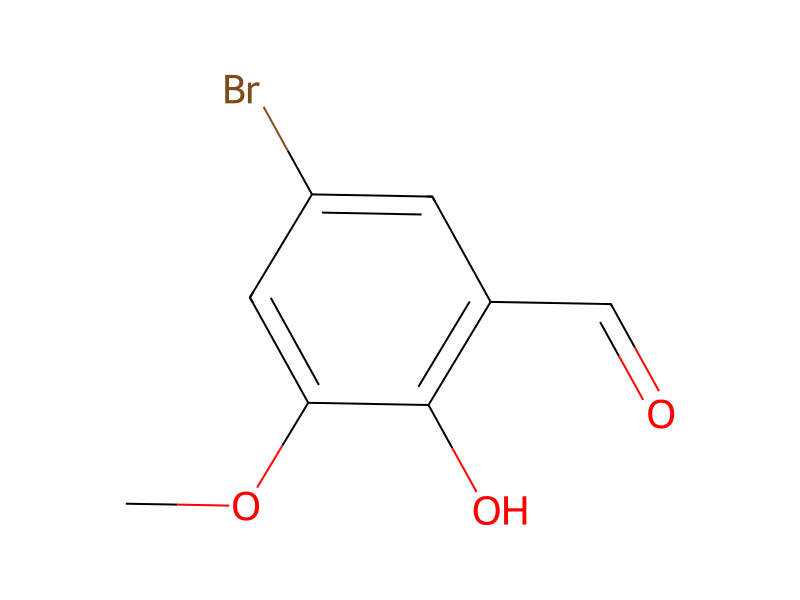
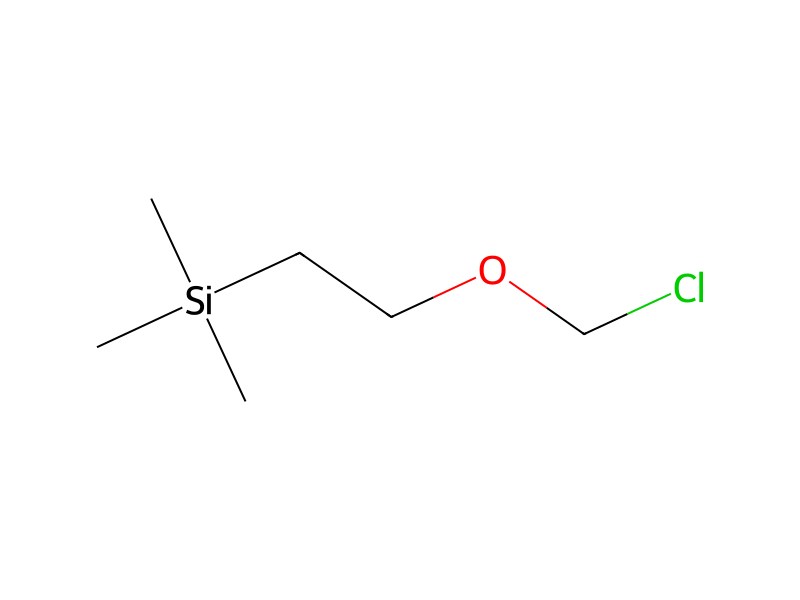
2 g of 5-Bromo-2-hydroxy-3-methoxy-benzaldehyde is dissolved in 200 ml of DMF and 4.78 g of potassium carbonate and 2.3 g of 2-trimethylsilyl-ethoxymethyl chloride are added. The reaction is stirred at RT for 18 h. The solvents are removed under reduced pressure, the residue is dissolved in ethyl acetate and washed with water. After drying over magnesium sulfate, filtration and evaporation, the product is purified by silica gel chromatography eluting with a gradient of ethyl acetate in heptane. Yield 1.8 g.
Workup
- customThe solvents are removed under reduced pressure
- dissolutionthe residue is dissolved in ethyl acetate
- washwashed with water
- dry with materialAfter drying over magnesium sulfate, filtration and evaporation
- customthe product is purified by silica gel chromatography
- washeluting with a gradient of ethyl acetate in heptane
Sources & evidence
- ORD record
- ord-35f46b2b9c7c4815a4434cf1b50f9ace
- Source dataset
- uspto-grants-2010_05
- Patent number
- US07709466B2
Linked notes
Loading…