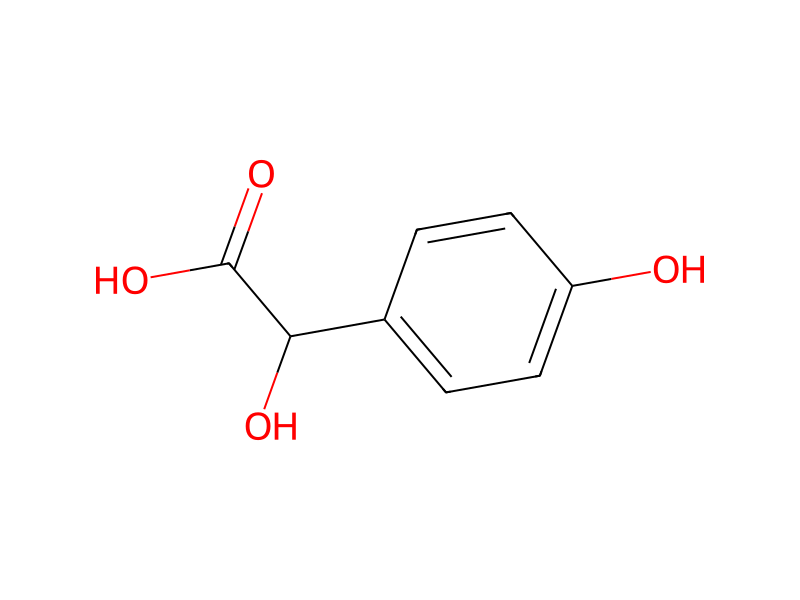
(+-)-4-Hydroxymandelic acid → p-Nitrobenzyl 4-hydroxymandelate
Reaction equation
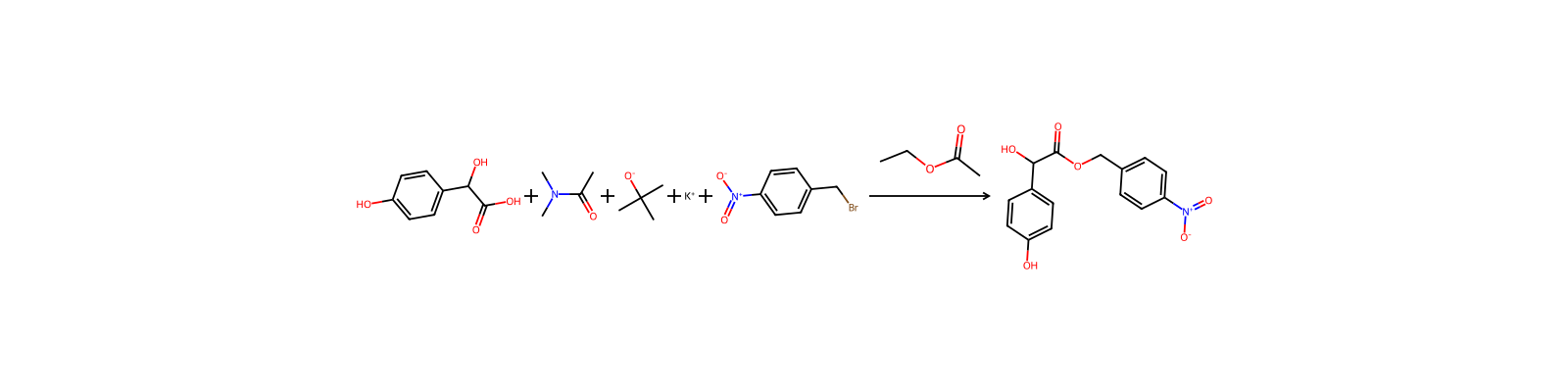
[OH:1][C:2]1[CH:12]=[CH:11][C:5]([CH:6]([OH:10])[C:7]([OH:9])=[O:8])=[CH:4][CH:3]=1.CC(N(C)C)=O.CC(C)([O-])C.[K+].[N+:25]([C:28]1[CH:35]=[CH:34][C:31]([CH2:32]Br)=[CH:30][CH:29]=1)([O-:27])=[O:26]>C(OCC)(=O)C>[OH:1][C:2]1[CH:12]=[CH:11][C:5]([CH:6]([OH:10])[C:7]([O:9][CH2:32][C:31]2[CH:34]=[CH:35][C:28]([N+:25]([O-:27])=[O:26])=[CH:29][CH:30]=2)=[O:8])=[CH:4][CH:3]=1Participants
6
Reactant 4



Product 1

Reagents, catalysts & solvents 1
