HomeMCPWorkbenchSkills
HomeWorkbenchNotificationsMe
llms.txt · MCP GuidePrivacy Policy · Terms of Service · Supportv1.8.3
  1. Home
  2. /Reaction

Cesium carbonate → 2-Bromo-6-[6-(1,1-dimethyl-2-oxo-ethyl)-1-oxo-3,4-dihydro-1H-isoquinolin-2-yl]-benzaldehyde

HRID 2245720
Print

Reaction equation

HRID 2245720 reaction equation
[CH3:1][C:2]([C:6]1[CH:7]=[C:8]2[C:13](=[CH:14][CH:15]=1)[C:12](=[O:16])[NH:11][CH2:10][CH2:9]2)([CH3:5])[CH:3]=[O:4].[Br:17][C:18]1[CH:25]=[CH:24][CH:23]=[C:22](Br)[C:19]=1[CH:20]=[O:21].C(=O)([O-])[O-].[Cs+].[Cs+]>O1CCOCC1.C1C=CC(/C=C/C(/C=C/C2C=CC=CC=2)=O)=CC=1.C1C=CC(/C=C/C(/C=C/C2C=CC=CC=2)=O)=CC=1.[Pd].CC1(C)C2C(=C(P(C3C=CC=CC=3)C3C=CC=CC=3)C=CC=2)OC2C(P(C3C=CC=CC=3)C3C=CC=CC=3)=CC=CC1=2>[Br:17][C:18]1[CH:25]=[CH:24][CH:23]=[C:22]([N:11]2[CH2:10][CH2:9][C:8]3[C:13](=[CH:14][CH:15]=[C:6]([C:2]([CH3:1])([CH3:5])[CH:3]=[O:4])[CH:7]=3)[C:12]2=[O:16])[C:19]=1[CH:20]=[O:21]
ParticipantsConditionsProcedureWorkupSources & evidenceReaction notes

Participants

7

Reactant 3

HCID 10796Cesium carbonateHCID 126486412,6-DibromobenzaldehydeHCID 592163912-Methyl-2-(1-oxo-1,2,3,4-tetrahydro-isoquinolin-6-yl)-propionaldehyde

Product 1

HCID 592164702-Bromo-6-[6-(1,1-dimethyl-2-oxo-ethyl)-1-oxo-3,4-dihydro-1H-isoquinolin-2-yl]-benzaldehydeYield 73.3%

Reagents, catalysts & solvents 3

HCID 636044
1,1'-(9,9-Dimethyl-9H-xanthene-4,5-diyl)bis(1,1-diphenylphosphine)
Catalyst
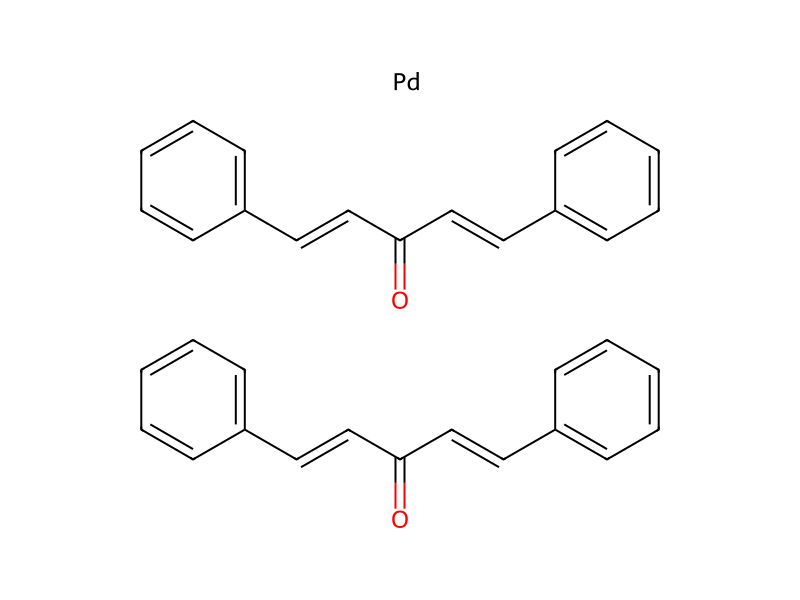
HCID 6505921(1E,4E)-1,5-diphenylpenta-1,4-dien-3-one; palladiumCatalyst
HCID 312751,4-DioxaneSolvent

Conditions

Temperature
100 °C

Procedure

2-Methyl-2-(1-oxo-1,2,3,4-tetrahydro-isoquinolin-6-yl)-propionaldehyde (224 mg, 1.03 mmol), 2,6-Dibromo-benzaldehyde (1.09 g, 4 eq), xanthphos (27 mg, 0.03 eq) and cesium carbonate (470 mg, 1.4 eq) were taken up in dioxane (2 mL) and argon was bubbled through the mixture for 10 minutes, before adding bis(dibenzylideneacetone)palladium (18 mg, 0.03 eq). The resulting mixture was placed under an argon atmosphere and heated to 100° C. with stirring for 2.5 hours by which time all of the starting material had been consumed by TLC and LC/MS analysis. After cooling to room temperature, ethyl acetate (175 mL) and water (50 mL) were added and the layers were partitioned and separated. The ethyl acetate layer was washed with brine (1×50 mL) and then dried over magnesium sulfate, filtered and concentrated to give the crude product. Purification on silica gel eluting with a gradient ranging from 5% ethyl acetate to 40% ethyl acetate in hexanes gave the title compound as a light yellow powder (302 mg). MS (ESI) 400.0 (M+H)+.

Workup

  1. customargon was bubbled through the mixture for 10 minutes
  2. customhad been consumed by TLC and LC/MS analysis
  3. temperatureAfter cooling to room temperature
  4. additionethyl acetate (175 mL) and water (50 mL) were added
  5. customthe layers were partitioned
  6. customseparated
  7. washThe ethyl acetate layer was washed with brine (1×50 mL)
  8. dry with materialdried over magnesium sulfate
  9. filtrationfiltered
  10. concentrationconcentrated
  11. customto give the crude product
  12. customPurification on silica gel eluting with a gradient

Sources & evidence

ORD record
ord-1c01b6f8e0464e27b4b571c7ca9e6952
Source dataset
uspto-grants-2010_03
DOI
10.6084/m9.figshare.5104873.v1
Patent number
US07683064B2

Reaction notes

On this pageParticipantsConditionsProcedureWorkupSources & evidenceReaction notes