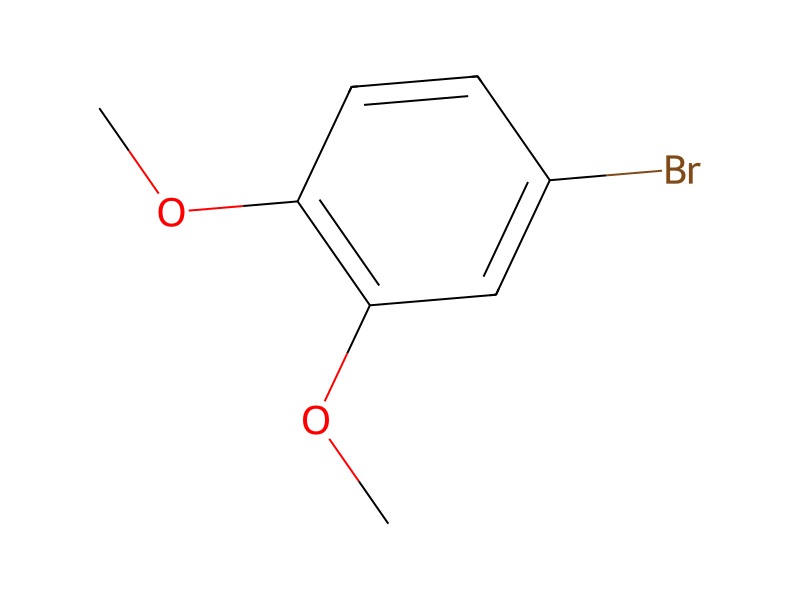
Magnesium (2.18 g, 0.091M) was placed in a 3-necked flask containing dry THF (10 ml) and 1,2-dibromoethane (0.2 ml). A solution of 4-bromoveratrole (18.0 g, 0.086M) in THF (50 ml) was added dropwise, with warming to initiate reaction. The resulting solution was heated at reflux for 0.75 h then cooled to room temperature and cannulated into a 1M solution of ZnBr2 in THF (50 ml, 0.05M) and stirred for 0.5 h at room temperature. A solution of 2-benzenesulphonyl-5-methoxytetrahydrofuran (10.0 g, 0.041M) in THF (50 ml) was added dropwise to the pale yellow suspension and the mixture allowed to stir at room temperature for 20 h. Reaction was quenched by addition of 1N HCl (50 ml), and extracted with ether (2×100 ml). The organics were combined washed with water (50 ml) dried over anhydrous sodium sulphate, filtered and evaporated. Column chromatography (flash silica gel; 3:2 hexane/ethyl acetate) gave 2-(3,4-dimethoxyphenyl)-5-methoxytetrahydrofuran (8.0 g, 82%) as a yellow oil (rf 0.28).