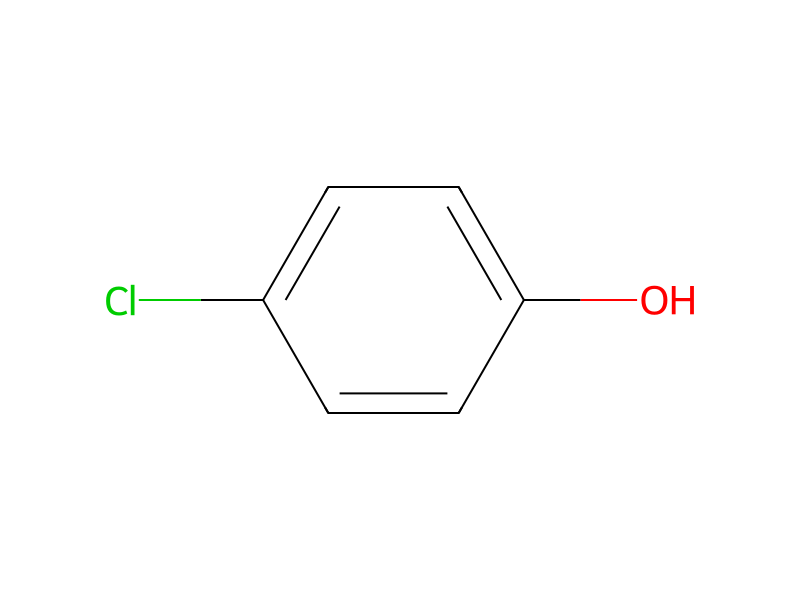
Cl[C:2]1[C:7]([Cl:8])=[CH:6][C:5]([C:9]([F:12])([F:11])[F:10])=[CH:4][N:3]=1.CS(C)=O.C(=O)([O-])[O-].[K+].[K+].[Cl:23][C:24]1[CH:29]=[CH:28][C:27]([OH:30])=[CH:26][CH:25]=1>O>[Cl:23][C:24]1[CH:29]=[CH:28][C:27]([O:30][C:2]2[C:7]([Cl:8])=[CH:6][C:5]([C:9]([F:12])([F:11])[F:10])=[CH:4][N:3]=2)=[CH:26][CH:25]=1In a falsk, 4.0 g of 2,3-dichloro-5-trifluoromethyl pyridine, 10 ml of dimethyl sulfoxide, 5.1 g of anhydrous potassium carbonate and 2.9 g of p-chlorophenol were charged. The flask was heated in an oil bath at 110° C. to react them with stirring for 2 hours. The completion of the reaction was confirmed by a gas chromatography. The reaction mixture was cooled and poured into suitable amount of water. The reaction product was extracted with methylene chloride and the extracted phase was washed with a diluted sodium hydroxide aqueous solution and then, with water and dried over anhydrous sodium sulfate. Methylene chloride was distilled off under a reduced pressure and the oily residue was distilled to obtain 4.4 g of the object compound having a boiling point of 124°-127° C./2.5 mmHg.