Reaction equation

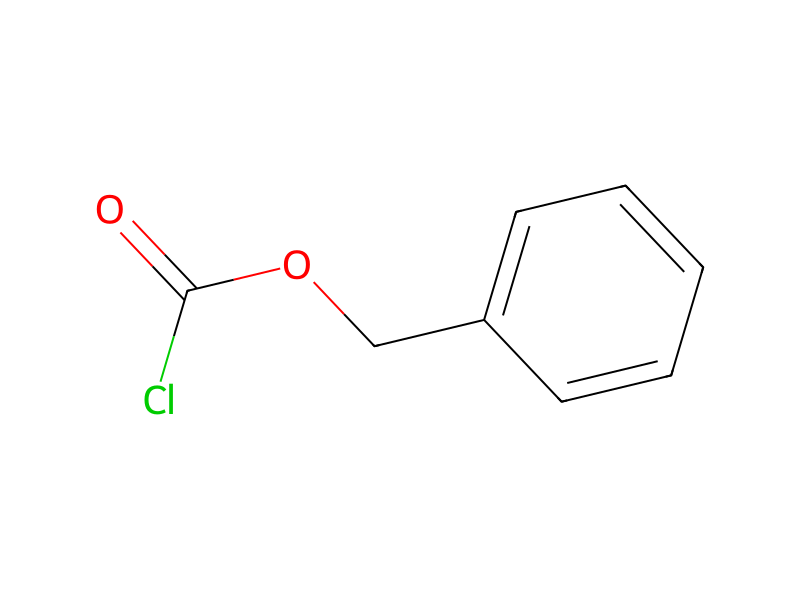
[NH2:1][C:2]1[CH:7]=[C:6]([NH2:8])[N:5]=[CH:4][N:3]=1.[OH-].[Na+].Cl.[CH2:12]([O:19][C:20](Cl)=[O:21])[C:13]1[CH:18]=[CH:17][CH:16]=[CH:15][CH:14]=1>O.C(O)C>[CH2:12]([O:19][C:20]([N:3]1[C:2]([NH2:1])=[CH:7][C:6]([NH2:8])=[N:5][CH2:4]1)=[O:21])[C:13]1[CH:18]=[CH:17][CH:16]=[CH:15][CH:14]=1Participants
7






Procedure
To a mixture of 4,6-diaminopyrimidine (4.7 g), ethanol (500 ml) and water (200 ml) was added 1N sodium hydroxide (13.25 ml) while cooling with ice water. After the dropwise addition of 1N hydrochloric acid (26.5 ml) thereto, benzyloxycarbonyl chloride (4.5 g) was dropwise added thereto. After being stirred at room temperature for 2 hours, the mixture was concentrated under reduced pressure to give crystals. The crystals were collected by filtration and recrystallized from chloroform:methanol=5:1 to give 2.4 g of N-benzyloxycarbonyl-4,6-diaminopyrimidine, melting point 194° C.
Workup
- concentrationthe mixture was concentrated under reduced pressure
- customto give crystals
- filtrationThe crystals were collected by filtration
- customrecrystallized from chloroform
Sources & evidence
- ORD record
- ord-c1a138af9c1841a4a3c5349e166eb593
- Source dataset
- uspto-grants-1995_12
- Patent number
- US05478838
Linked notes
Loading…