Reaction equation

N[C:2]1[C:15]2[C:14](=[O:16])[C:13]3[C:8](=[C:9](N)[CH:10]=[CH:11][C:12]=3[OH:17])[C:7](=[O:19])[C:6]=2[C:5]([OH:20])=[CH:4][CH:3]=1.S([O-])(O)=[O:22].[Na+].Cl.[OH-:27].[Na+]>>[CH2:4]1[C:5](=[O:20])[C:6]2[C:15](=[C:14]([OH:16])[C:13]3[C:8]([C:7]=2[OH:19])=[C:9]([OH:22])[CH:10]=[CH:11][C:12]=3[OH:17])[C:2](=[O:27])[CH2:3]1Participants
5


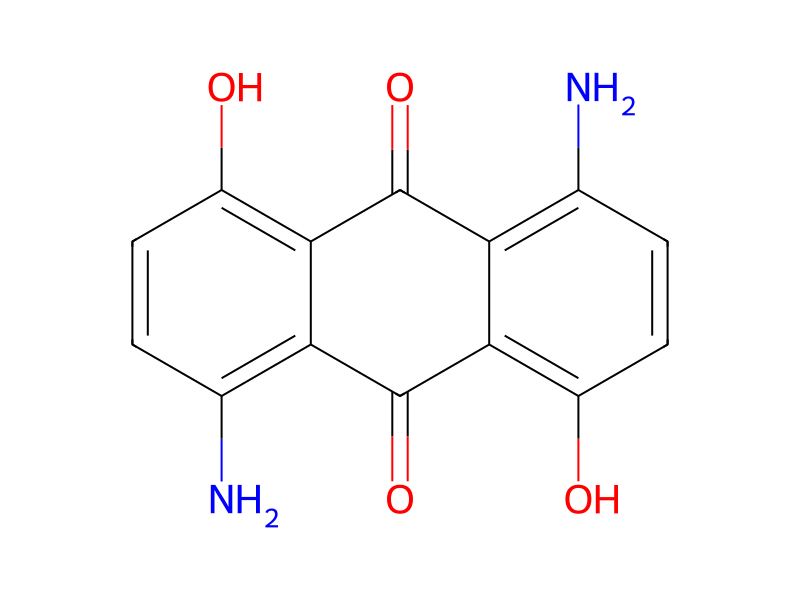


Procedure
To crude 1,5-diamino-4,8-dihydroxyanthraquinone (11 g, 0.041 mol) was added NaOH (2.5 M, 200 mL) and the suspension was refluxed gently for 3 hours before it was allowed to cool down to room temperature. Sodium hydrogen sulphite (31.74 g, 0.182 mol) was added portionwise and the reaction mixture was refluxed again for 3 hours. It was cooled down to room temperature and was acidified with concentrated hydrochloric acid until pH 3. The precipitate was isolated by filtration and washed successively with cold water and then hot water. After lyophilisation overnight, the title compound was afforded as a crude brown solid (8 g, 73%). FAB MS, m/z(M+H)+ 251.
Workup
- temperaturethe suspension was refluxed gently for 3 hours before it
- temperaturethe reaction mixture was refluxed again for 3 hours
- temperatureIt was cooled down to room temperature
- customThe precipitate was isolated by filtration
- washwashed successively with cold water
Sources & evidence
- ORD record
- ord-bfbc5450904d47cd921314288f591e6c
- Source dataset
- uspto-grants-2009_07
- Patent number
- US07557215B2
Linked notes
Loading…