4-Chlorobenzaldehyde → 1,2-Bis(4-chlorophenyl)-2-hydroxyethanone
HRID 2264049
Reaction equation

[Cl:1][C:2]1[CH:9]=[CH:8][C:5]([CH:6]=[O:7])=[CH:4][CH:3]=1.[C-]#N.[K+]>CO.O>[Cl:1][C:2]1[CH:9]=[CH:8][C:5]([C:6]([CH:6]([C:5]2[CH:8]=[CH:9][C:2]([Cl:1])=[CH:3][CH:4]=2)[OH:7])=[O:7])=[CH:4][CH:3]=1Participants
5
Reactant 2
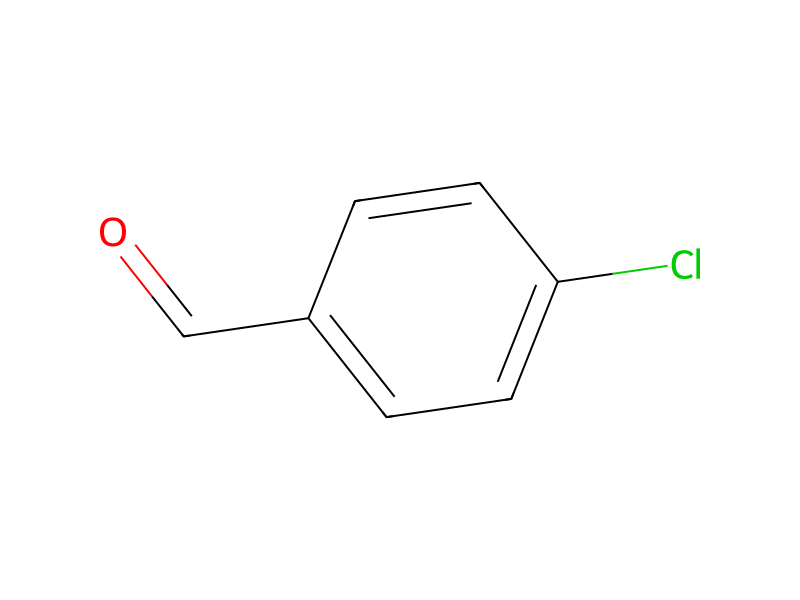

Product 1

Reagents, catalysts & solvents 2


Procedure
To a solution of 4-chlorobenzaldehyde (240 g, 1.707 mol) in 144 mL of methanol was added 2.40 g of potassium cyanide in 4.8 mL water over 6 min. The mixture was refluxed for another 50 min (mixture became deep red), cooled, then concentrated under reduced pressure. The red residue was taken up in 1500 mL of hexane-ethyl acetate (1:1), and washed successively with water (1×150 mL), 20% sodium bisulfite (6×150 mL), brine (1×150 mL) and dried over anhydrous sodium sulfate. After filtration and concentration under reduced pressure, the product was boiled in 400 mL of hexane to remove small amounts of 4-chlorobenzaldehyde. The mixture was cooled and the white solid was collected by suction filtration to give 183.94 g of 4,4′-dichlorobenzoin (76%). This procedure was adapted from Lutz et al. J. Am. Chem. Soc. 1949, 71, 478.