HomeMCPWorkbenchSkills
HomeWorkbenchNotificationsMe
llms.txt · MCP GuidePrivacy Policy · Terms of Service · Supportv1.8.3
  1. Home
  2. /Reaction

Hexamethylphosphoramide → Ethyl 2-((2-methyl-1,3-dioxolan-2-yl)methyl)pentanoate

HRID 2276336
Print

Reaction equation

HRID 2276336 reaction equation
C(N[CH:5]([CH3:7])[CH3:6])(C)C.[Li].CN(C)P(N(C)C)(N(C)C)=O.[CH3:20][C:21]1([CH2:26][CH2:27][C:28]([O:30][CH2:31][CH3:32])=[O:29])[O:25][CH2:24][CH2:23][O:22]1.C(I)CC>C1COCC1>[CH3:20][C:21]1([CH2:26][CH:27]([CH2:7][CH2:5][CH3:6])[C:28]([O:30][CH2:31][CH3:32])=[O:29])[O:22][CH2:23][CH2:24][O:25]1
ParticipantsProcedureWorkupSources & evidenceReaction notes

Participants

6

Reactant 4

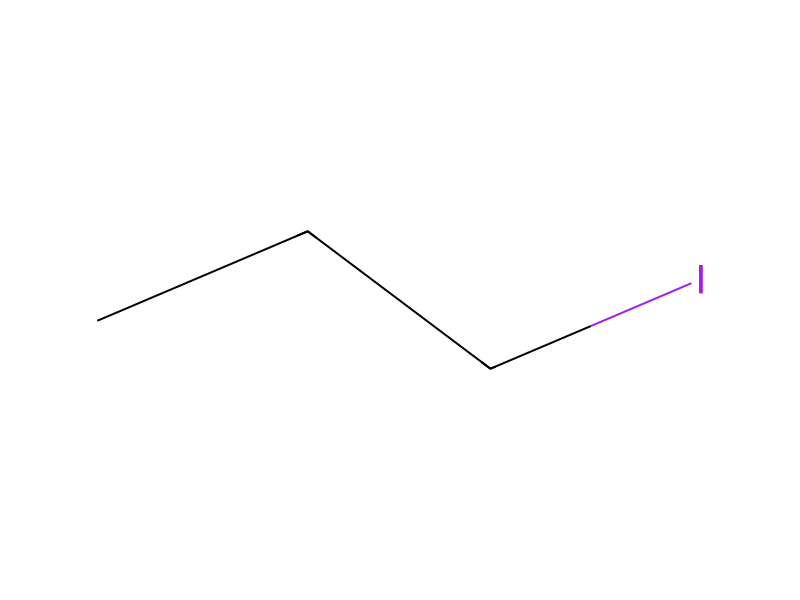
HCID 12679HexamethylphosphoramideHCID 336431-IodopropaneHCID 70332Ethyl 2-methyl-1,3-dioxolane-2-propionateHCID 45051747Lithium diisopropylamine

Product 1

HCID 58725309Ethyl 2-((2-methyl-1,3-dioxolan-2-yl)methyl)pentanoateYield 85.1%

Reagents, catalysts & solvents 1

HCID 8028
Tetrahydrofuran
Solvent
2×

Procedure

To a cooled (−78° C.) solution of lithium diisopropylamine (30 mL; 60 mmol; 2N in THF) in THF (8 mL) was added hexamethylphosphoramide (12 mL) and the solution was stirred for 30 min. A solution of ethyl 3-(2-methyl-1,3-dioxolan-2-yl)propanoate (9.4 g; 50 mmol), in tetrahydrofurane (9 mL), was added over 30 min and stirring was continued for 1 h. Propyl iodide (6.84 mL; 70 mmol) was slowly added and the solution was allowed to warm to room temperature for 4 h. the reaction was quenched by adding a saturated aqueous solution of ammonium chloride. The two phases were separated and the aqueous layer was extracted with ethyl acetate (50 mL) and the combined organic layers were dried with sodium sulfate, filtered and concentrated under reduced pressure. The crude residue was purified by flash-chromatography on silica gel using a gradient of ethyl acetate (0-40%) in heptane to furnish 9.8 g (85%) of ethyl 2-((2-methyl-1,3-dioxolan-2-yl)methyl)pentanoate as an oil. ESI/APCI(+): 231 (M+H).

Workup

  1. stirringstirring
  2. waitwas continued for 1 h
  3. customwas quenched
  4. additionby adding a saturated aqueous solution of ammonium chloride
  5. customThe two phases were separated
  6. extractionthe aqueous layer was extracted with ethyl acetate (50 mL)
  7. dry with materialthe combined organic layers were dried with sodium sulfate
  8. filtrationfiltered
  9. concentrationconcentrated under reduced pressure
  10. customThe crude residue was purified by flash-chromatography on silica gel using a gradient of ethyl acetate (0-40%) in heptane

Sources & evidence

ORD record
ord-fd8c823b307d4e839e5045cae5217768
Source dataset
uspto-grants-2015_09
DOI
10.6084/m9.figshare.5104873.v1
Patent number
US09132129B2

Reaction notes

On this pageParticipantsProcedureWorkupSources & evidenceReaction notes