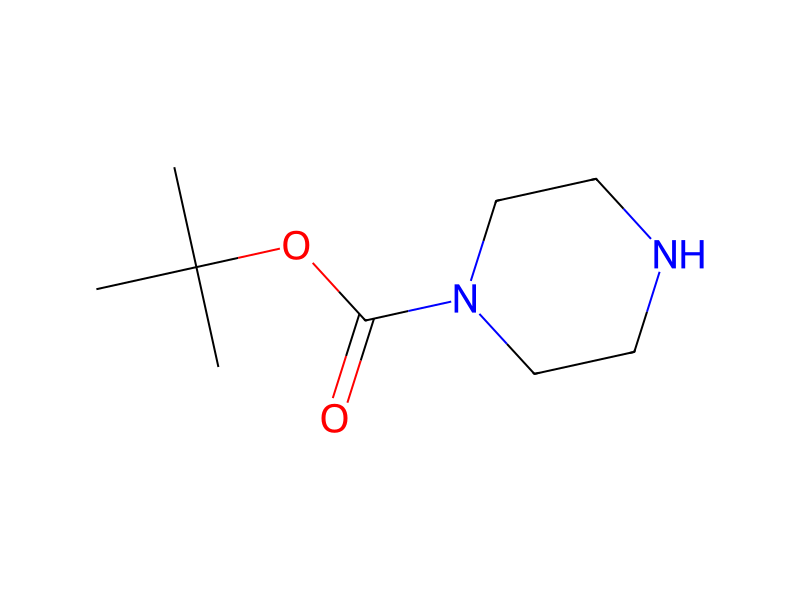
[N:1]1([C:7]2[CH:14]=[CH:13][C:10]([CH:11]=O)=[C:9]([O:15][C:16]([F:19])([F:18])[F:17])[CH:8]=2)[CH2:6][CH2:5][O:4][CH2:3][CH2:2]1.[N:20]1([C:26]([O:28][C:29]([CH3:32])([CH3:31])[CH3:30])=[O:27])[CH2:25][CH2:24][NH:23][CH2:22][CH2:21]1.ClCCCl.[Na]>O>[N:1]1([C:7]2[CH:14]=[CH:13][C:10]([CH2:11][N:23]3[CH2:22][CH2:21][N:20]([C:26]([O:28][C:29]([CH3:32])([CH3:31])[CH3:30])=[O:27])[CH2:25][CH2:24]3)=[C:9]([O:15][C:16]([F:19])([F:18])[F:17])[CH:8]=2)[CH2:6][CH2:5][O:4][CH2:3][CH2:2]1A 40 mL vial was charged with 4-(morpholin-4-yl)-2-(trifluoromethoxy)benzaldehyde (400 mg, 1.45 mmol, 1.00 equiv), tert-butyl piperazine-1-carboxylate (270 mg, 1.45 mmol, 1.00 equiv), 1,2-dichloroethane (15 mL). The resulting solution was stirred for 1 h at room temperature. Sodium triacetoxyhydroborate (925 mg, 4.36 mmol, 3.00 equiv) was added. The resulting solution was stirred for 15 hours at room temperature. The reaction progress was monitored by LCMS. The resulting solution was diluted with 15 mL of water. The resulting solution was extracted with dichloromethane (3×15 mL) and the organic layers combined, dried over anhydrous sodium sulfate, filtered and concentrated under reduced pressure. The residue was chromatographed on a silica gel column with ethyl acetate/petroleum ether (1/3) to provide 590 mg (91% yield) of tert-butyl 4-[[4-(morpholin-4-yl)-2-(trifluoromethoxy)phenyl]methyl]piperazine-1-carboxylate as yellow oil. LCMS (ESI, m/z): 446 [M+H]+.