HomeMCPWorkbenchSkills
HomeWorkbenchNotificationsMe
llms.txt · MCP GuidePrivacy Policy · Terms of Service · Supportv1.8.0
  1. Home
  2. /Reaction

Potassium Carbonate → HCID 71621532, compound

HRID 2278849
Notes
Print preview

Reaction equation

HRID 2278849 reaction equation
Cl[C:2]1[N:7]=[N:6][C:5]([C:8]2[C:16]3[C:11](=[N:12][CH:13]=[CH:14][CH:15]=3)[N:10]([CH2:17][C:18]3[CH:23]=[CH:22][CH:21]=[CH:20][C:19]=3[F:24])[N:9]=2)=[N:4][C:3]=1[NH2:25].[CH3:26][N:27]1[CH:31]=[C:30](B2OC(C)(C)C(C)(C)O2)[CH:29]=[N:28]1.C(=O)([O-])[O-].[K+].[K+].C1(P(C2CCCCC2)C2CCCCC2)CCCCC1>O1CCOCC1.C1C=CC(P(C2C=CC=CC=2)[C-]2C=CC=C2)=CC=1.C1C=CC(P(C2C=CC=CC=2)[C-]2C=CC=C2)=CC=1.Cl[Pd]Cl.[Fe+2]>[F:24][C:19]1[CH:20]=[CH:21][CH:22]=[CH:23][C:18]=1[CH2:17][N:10]1[C:11]2=[N:12][CH:13]=[CH:14][CH:15]=[C:16]2[C:8]([C:5]2[N:6]=[N:7][C:2]([C:30]3[CH:29]=[N:28][N:27]([CH3:26])[CH:31]=3)=[C:3]([NH2:25])[N:4]=2)=[N:9]1
ParticipantsProcedureWorkupSources & evidenceReaction notes

Participants

7

Reactant 4

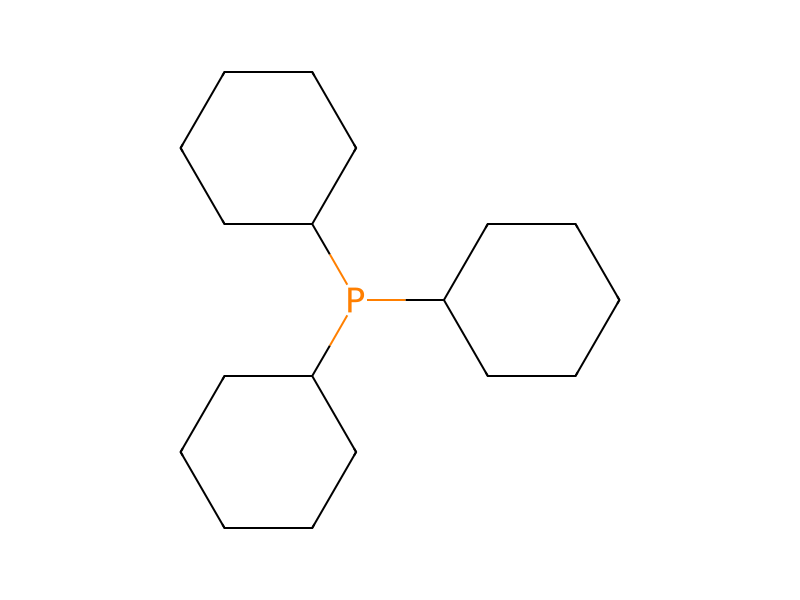
HCID 11430Potassium CarbonateHCID 75806TricyclohexylphosphineHCID 27739871-Methyl-4-(4,4,5,5-tetramethyl-1,3,2-dioxaborolan-2-yl)-1H-pyrazoleHCID 89690930HCID 89690930, compound

Product 1

HCID 71621532HCID 71621532, compoundYield 64.2%

Reagents, catalysts & solvents 2

HCID 44119782
Bis(cyclopenta-1,4-dien-1-yl(diphenyl)phosphane);dichloropalladium;iron(2+)
Catalyst
HCID 312751,4-DioxaneSolvent

Procedure

Under an argon atmosphere, 140 mg (purity 65%, 0.256 mmol) of 6-chloro-3-[1-(2-fluorobenzyl)-1H-pyrazolo[3,4-b]pyridin-3-yl]-1,2,4-triazine-5-amine were suspended in 5 ml of absolute dioxane. 160 mg (0.767 mmol) of 1-methyl-4-(4,4,5,5-tetramethyl-1,3,2-dioxaborolan-2-yl)-1H-pyrazole, 1.023 ml (1.023 mmol) of 1N aqueous potassium carbonate solution and 14 mg (0.051 mmol) of tricyclohexylphosphine were added and argon was passed through the suspension for 10 min with stirring. Then, 28 mg (0.038 mmol) of 1,1′-bis(diphenylphosphino)ferrocenepalladium(II) chloride were added and the reaction mixture was stirred for 30 min in the microwave at 140° C. The reaction mixture was again stirred for 15 min in the microwave at 140° C. After cooling, the mixture was filtered over an Extrelut cartridge and after-washed with a mixture of dichloromethane/methanol (v/v=20:1). The filtrate was concentrated and the residue was purified by preparative HPLC (mobile phase: acetonitrile/water, gradient 20:80→100:0). 66 mg of the target compound were obtained (47% of theory).

Workup

  1. stirringthe reaction mixture was stirred for 30 min in the microwave at 140° C
  2. stirringThe reaction mixture was again stirred for 15 min in the microwave at 140° C
  3. temperatureAfter cooling
  4. filtrationthe mixture was filtered over an Extrelut cartridge
  5. washafter-washed with a mixture of dichloromethane/methanol (v/v=20:1)
  6. concentrationThe filtrate was concentrated
  7. customthe residue was purified by preparative HPLC (mobile phase: acetonitrile/water, gradient 20:80→100:0)

Sources & evidence

ORD record
ord-9adbb67bf30342d086e47e4e7403f7b2
Source dataset
uspto-grants-2015_09
DOI
10.6084/m9.figshare.5104873.v1
Patent number
US09133191B2

Reaction notes

Loading…

On this pageParticipantsProcedureWorkupSources & evidenceReaction notes