HomeMCPWorkbenchSkills
HomeWorkbenchNotificationsMe
llms.txt · MCP GuidePrivacy Policy · Terms of Service · Supportv1.8.3
  1. Home
  2. /Reaction

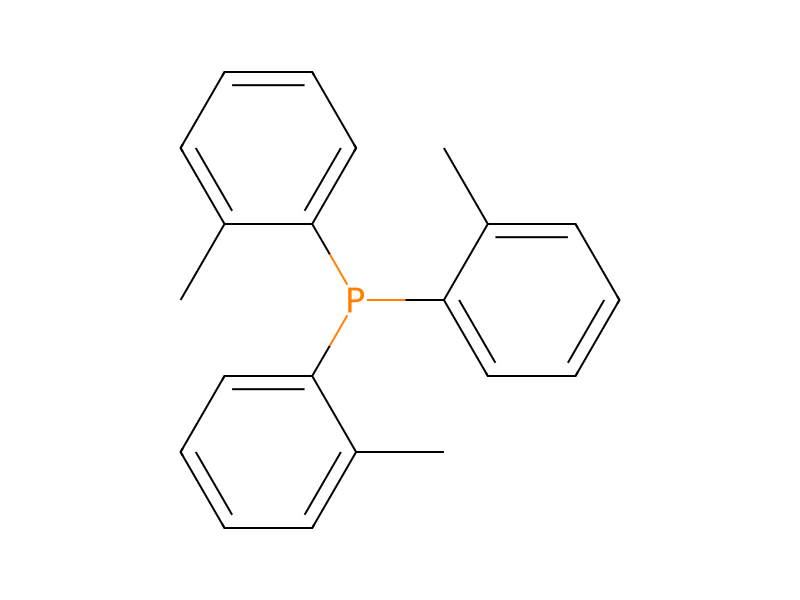
Tri-o-tolylphosphine → (E)-(R)-4-[2-((R)-1-Acetoxy-ethyl)-quinolin-7-yl]-2-[(R)-1-(tert-butyl-dimethyl-silanyloxy)-ethyl]-but-3-enoic acid

HRID 2285361
Print

Reaction equation

HRID 2285361 reaction equation
[C:1]([Si:5]([CH3:16])([CH3:15])[O:6][C@@H:7]([C@@H:9]([CH:13]=[CH2:14])[C:10]([OH:12])=[O:11])[CH3:8])([CH3:4])([CH3:3])[CH3:2].Br[C:18]1[CH:27]=[C:26]2[C:21]([CH:22]=[CH:23][C:24]([C@H:28]([O:30][C:31](=[O:33])[CH3:32])[CH3:29])=[N:25]2)=[CH:20][CH:19]=1.C1(C)C=CC=CC=1P(C1C=CC=CC=1C)C1C=CC=CC=1C.C1(CNCC2CCCCC2)CCCCC1>O1CCOCC1.C([O-])(=O)C.[Pd+2].C([O-])(=O)C>[C:31]([O:30][C@@H:28]([C:24]1[CH:23]=[CH:22][C:21]2[C:26](=[CH:27][C:18](/[CH:14]=[CH:13]/[C@H:9]([C@H:7]([O:6][Si:5]([C:1]([CH3:4])([CH3:3])[CH3:2])([CH3:16])[CH3:15])[CH3:8])[C:10]([OH:12])=[O:11])=[CH:19][CH:20]=2)[N:25]=1)[CH3:29])(=[O:33])[CH3:32]
ParticipantsConditionsProcedureWorkupSources & evidenceReaction notes

Participants

7

Reactant 4

HCID 80271Tri-o-tolylphosphineHCID 4594378Bis(cyclohexylmethyl)amineHCID 86709645acetic acid (R)-1-(7-bromo-quinolin-2-yl)-ethyl esterHCID 86709657(R)-2-[(R)-1-(tert-Butyl-dimethyl-silanyloxy)-ethyl]-but-3-enoic acid

Product 1

HCID 86709658
(E)-(R)-4-[2-((R)-1-Acetoxy-ethyl)-quinolin-7-yl]-2-[(R)-1-(tert-butyl-dimethyl-silanyloxy)-ethyl]-but-3-enoic acid
Yield 31%

Reagents, catalysts & solvents 2

HCID 167845palladium(II) acetateCatalystHCID 312751,4-DioxaneSolvent

Conditions

Temperature
100 °C

Procedure

A solution of (R)-2-[(R)-1-(tert-butyl-dimethyl-silanyloxy)-ethyl]-but-3-enoic acid (200 mg, 0.82 mmol), acetic acid (R)-1-(7-bromo-quinolin-2-yl)-ethyl ester (241 mg, 0.82 mmol), palladium(II) acetate (37 mg, 0.16 mmol), tri-(o-tolyl)phosphine (50 mg, 0.16 mmol) in anhydrous 1,4-dioxane (10 mL) was treated with N,N-dicylohexylmethylamine (280 μL, 1.31 mmol). After stirring at 100° C. for 6 h, the reaction was cooled to room temperature, filtered off and the volatiles were removed in vacuo. The residue was partitioned between ethyl acetate and hydrochloric acid (1 M). The organics were combined and the volatiles were removed in vacuo. The residue was purified by silica gel chromatography using a 25 g Biotage cartridge eluted with a continuous gradient of dichloromethane/methanol 1:0 to 9:1 to afford the title compound (115 mg, 31%) as a colourless oil. 1H NMR (300 MHz, CDCl3) δ 0.10 (s, 3H), 0.11 (s, 3H), 0.89 (s, 9H), 1.25 (d, J=6.0 Hz, 3H), 1.68 (d, J=6.4 Hz, 3H), 2.17 (s, 3H), 3.22-3.37 (m, 1H), 3.65-3.80 (m, 1H), 4.26 (pentet, J=6.7 Hz, 1H), 6.08 (q, J=6.7 Hz, 1H), 6.40 (dd, J=15.8, 9.1 Hz, 1H), 6.76 (d, J=15.8 Hz, 1H), 7.42 (d, J=8.7 Hz, 1H), 7.40-7.55 (m, 1H), 7.55-7.75 (m, 1H), 8.03 (s, 1H), 8.11 (d, J=8.5 Hz, 1H). LCMS (m/z) 458.2 [M+H], Tr=3.45 min.

Workup

  1. temperaturethe reaction was cooled to room temperature
  2. filtrationfiltered off
  3. customthe volatiles were removed in vacuo
  4. customThe residue was partitioned between ethyl acetate and hydrochloric acid (1 M)
  5. customthe volatiles were removed in vacuo
  6. customThe residue was purified by silica gel chromatography
  7. washeluted with a continuous gradient of dichloromethane/methanol 1:0 to 9:1

Sources & evidence

ORD record
ord-b28085bcb4814c6cb7fc5d551077639e
Source dataset
uspto-grants-2015_09
DOI
10.6084/m9.figshare.5104873.v1
Patent number
US09145441B2

Reaction notes

On this pageParticipantsConditionsProcedureWorkupSources & evidenceReaction notes

