Reaction equation

[NH2:1][C:2]1[C:7]([CH:8]=O)=[CH:6][CH:5]=[CH:4][N:3]=1.Br.Br[CH2:12][C:13]([C:15]1[CH:20]=[CH:19][CH:18]=[CH:17][N:16]=1)=O.[OH-:21].[Na+].Cl>ClCCl>[N:16]1[CH:17]=[CH:18][CH:19]=[CH:20][C:15]=1[C:13]1[C:12]([OH:21])=[CH:8][C:7]2[C:2](=[N:3][CH:4]=[CH:5][CH:6]=2)[N:1]=1Participants
6


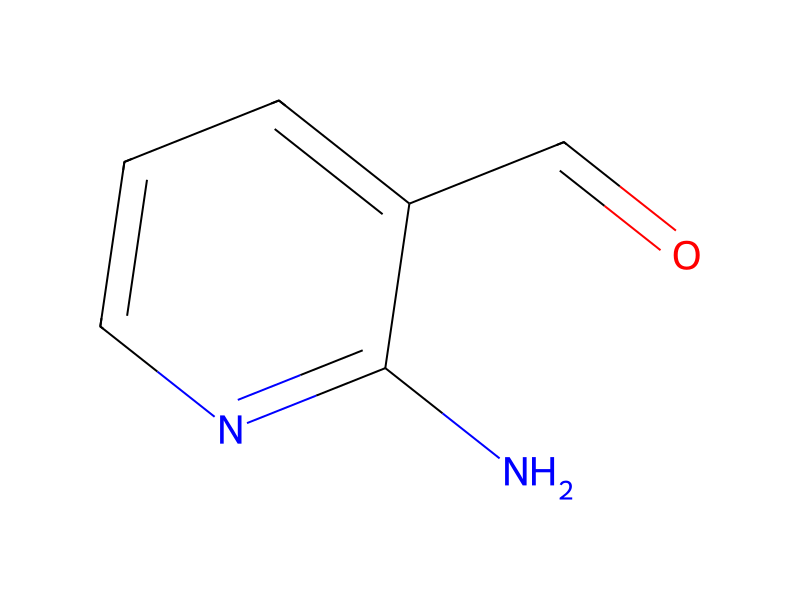



Procedure
2-Amino-pyridine-3-carbaldehyde (200 mg) and 2-(bromoacetyl)pyridine hydrobromide (506 mg) were suspended in a 5 N aqueous sodium hydroxide solution (1 ml), and the suspension was hermetically sealed and, in this state, was allowed to stand for 2 days. The reaction solution was neutralized with 10% hydrochloric acid, dichloromethane was then added thereto, and the mixture was extracted. The dichloromethane layer was washed with water and saturated brine and was dried over magnesium sulfate. The solvent was removed by distillation under the reduced pressure, and the residue was purified by column chromatography using chloroform-methanol to give 2-pyridin-2-yl-[1,8]naphthyridin-3-ol (48 mg, yield 13%).
Workup
- customthe suspension was hermetically sealed and, in this state
- additionwas then added
- extractionthe mixture was extracted
- washThe dichloromethane layer was washed with water and saturated brine
- dry with materialwas dried over magnesium sulfate
- customThe solvent was removed by distillation under the reduced pressure
- customthe residue was purified by column chromatography
Sources & evidence
- ORD record
- ord-e888ea269f514af298f9e08656f3d610
- Source dataset
- uspto-grants-2009_07
- Patent number
- US07560558B2
Linked notes
Loading…