HomeMCPWorkbenchSkills
HomeWorkbenchNotificationsMe
llms.txt · MCP GuidePrivacy Policy · Terms of Service · Supportv1.8.0
  1. Home
  2. /Reaction

Hydrochloric Acid → 2,3-Dichloro-3-phenylsulphonyl-acrylonitrile

HRID 2295251
Notes
Print preview

Reaction equation

HRID 2295251 reaction equation
[C:1]1([S:7]([CH2:10][CH2:11][C:12]#[N:13])(=[O:9])=[O:8])[CH:6]=[CH:5][CH:4]=[CH:3][CH:2]=1.P(Cl)(Cl)[Cl:15].ClCl.[ClH:20]>N1C=CC=CC=1.P(Cl)(Cl)Cl.O>[Cl:20][C:11](=[C:10]([Cl:15])[S:7]([C:1]1[CH:2]=[CH:3][CH:4]=[CH:5][CH:6]=1)(=[O:8])=[O:9])[C:12]#[N:13]
ParticipantsProcedureWorkupSources & evidenceReaction notes

Participants

8

Reactant 4

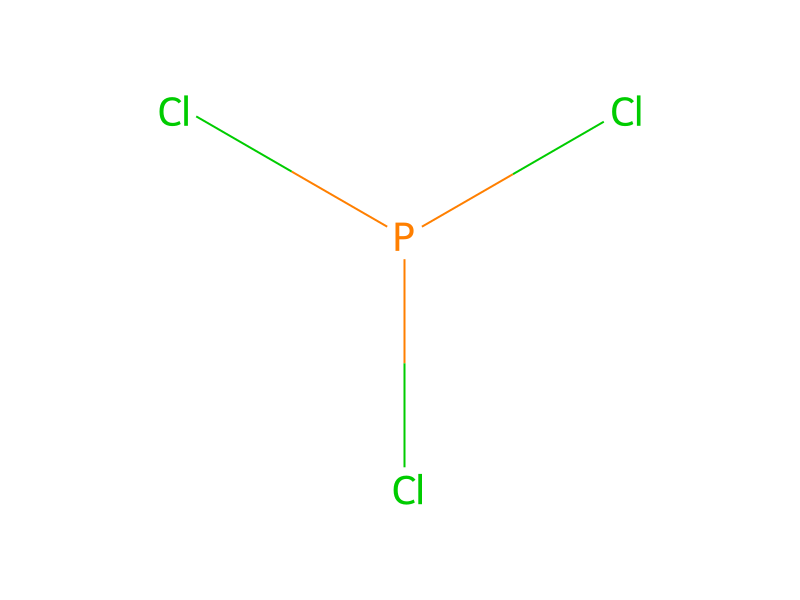
HCID 313Hydrochloric AcidHCID 24387Phosphorus trichlorideHCID 24526Chlorine3×HCID 824133-(Phenylsulphonyl)propiononitrile

Product 1

HCID 30191802,3-Dichloro-3-phenylsulphonyl-acrylonitrileYield 87%

Reagents, catalysts & solvents 3

HCID 1049
Pyridine
Catalyst
2×
HCID 24387Phosphorus trichlorideCatalyst
HCID 962WaterSolvent

Procedure

195 g (1 mol) of 3-phenylsulphonyl-propionitrile were melted at 100° C. in a 500 ml four-necked flask and 14 g of PCl3 and 4.2 g of pyridine were added as catalysts. 150 g (2.1 mols) of chlorine at 100° to 90° C. were then introduced during the course of 9 hours. 7 g of PCl3 and 2 g of pyridine were then added once more, and 160 g (2.25 mols) of chlorine was again introduced at 80° C. during the course of 12 hours, a part of the chlorine being entrained with the escaping HCl gas. 200 ml of water were now added dropwise at 20° C., whilst cooling. The phases were separated at 90° C. and the washing operation was repeated with 200 ml of water. In order to eliminate benzenesulphonyl chloride, the mixture was now boiled for 5 hours with 200 ml of water, and the organic phase was separated off and dried in vacuo. 227 g (87%) of a dark brown crude oil was obtained, which solidified on standing overnight. After warming the solid and dissolving it in 50 ml of ethanol, cooling the solution with ice and filtering off the precipitate under suction, 135 g (51%) of pale crystals, melting point 72° C., were obtained.


Workup

  1. temperaturewhilst cooling
  2. customThe phases were separated at 90° C.
  3. customthe organic phase was separated off
  4. customdried in vacuo

Sources & evidence

ORD record
ord-a7ee6371138343aa94c6ae1c91f9c0b5
Source dataset
uspto-grants-1984_01
DOI
10.6084/m9.figshare.5104873.v1
Patent number
US04424167

Reaction notes

Loading…

On this pageParticipantsProcedureWorkupSources & evidenceReaction notes