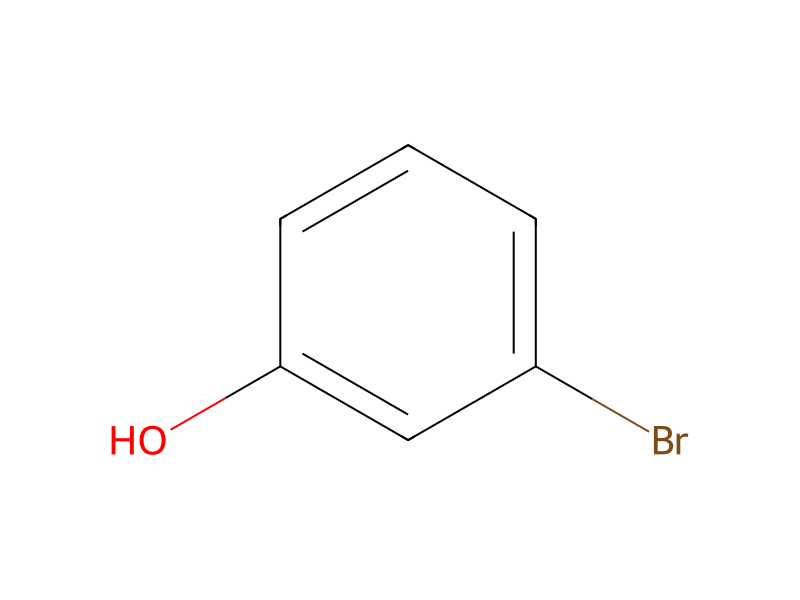
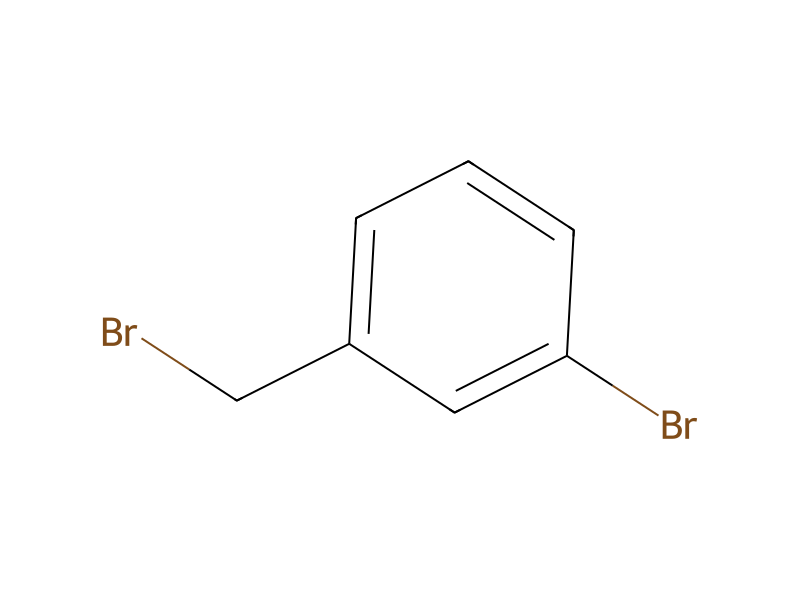
[Br:1][C:2]1[CH:3]=[C:4]([OH:8])[CH:5]=[CH:6][CH:7]=1.[Br:9][C:10]1[CH:11]=[C:12]([CH:15]=[CH:16][CH:17]=1)[CH2:13]Br.C([O-])([O-])=O.[K+].[K+].[Na+].[I-]>CC(C)=O>[Br:9][C:10]1[CH:11]=[C:12]([CH2:13][O:8][C:4]2[CH:3]=[C:2]([Br:1])[CH:7]=[CH:6][CH:5]=2)[CH:15]=[CH:16][CH:17]=1A mixture of 3-bromophenol (13.8 g, 80 mmol), 3-bromobenzyl bromide (10 g, 40 mmol), K2CO3 (16.6 g. 120 mmol) and NaI (300 mg, 2 mmol) in acetone (100 mL) was heated to reflux for 12 hours. The reaction mixture was cooled to rt, concentrated in vacuo and partitioned between Et2O (300 mL) and water (300 mL). The organic phase was washed with aqueous NaOH (1 M, 300 mL), dried (Na2SO4), filtered and concentrated in vacuo to give 3-[(m-bromophenyl)methoxy]bromobenzene as a clear oil. MS (APCI) m/z 339 (M+−3, 50%), 341 (M+−1, 100%), 343 (M++3, 50%), 13C NMR (50 MHz, CDCl3); δ 68.9, 113.4, 117.9, 122.5, 122.6, 124.1, 125.6, 129.9, 130.0, 130.4, 130.9, 138.4, 158.9.