Reaction equation

Br[C:2]1[CH:8]=[CH:7]C=[CH:5][C:3]=1N.[CH3:9][S:10][C:11]1[CH:16]=[CH:15][C:14]([C:17]2[CH:23]=[CH:22][CH:21]=[CH:20][C:18]=2[NH2:19])=[CH:13][CH:12]=1.BrC(Br)(CC)CC>C(N(CC)CC)C>[CH3:9][S:10][C:11]1[CH:12]=[CH:13][C:14]([C:17]2[CH:23]=[CH:22][CH:21]=[CH:20][C:18]=2[N:19]2[CH2:7][CH2:8][CH2:2][CH2:3][CH2:5]2)=[CH:15][CH:16]=1Participants
Reactant 3
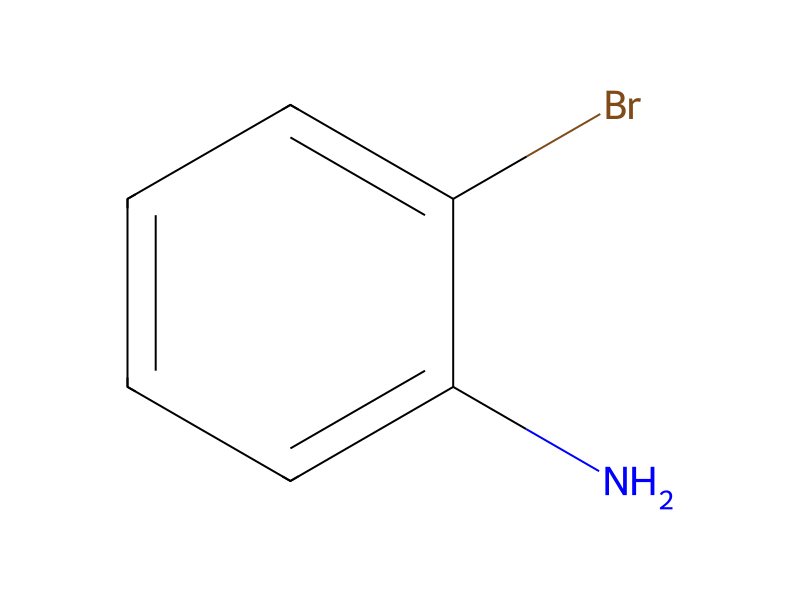


Product 1

Reagents, catalysts & solvents 1

Procedure
Compounds of Formula I wherein X is a single bond and R1 is 1-piperidinyl or 1-pyrrolyl can be prepared from 2-bromoaniline as shown in Scheme 15. Suzuki coupling of 2-bromoaniline with 4-thiomethylphenylboronic acid using the method described above followed by condensation of the resulting 2-(4-methylthiophenyl)aniline with dibromopentane in the presence of an amine base, such as triethylamine, affords the corresponding 1-[2-(4-methylthiophenyl)phenyl]piperidine. Oxidation if the methylthio to the methylsulfonyl using methods described above provides compounds of Formula I wherein R1 is 1-piperidinyl. Alternately the starting 2-bromoaniline can be converted to the 1-[(2-bromophenyl)phenyl]pyrrole by treatment with 2,5-dimethoxytetrahydrofuran in glacial acetic acid. Suzuki coupling of the resulting intermediate with 4-methylthiophenylboronic acid followed by oxidation, as described above, gives the 1-[2-(4-methylsulfonylphenyl)phenyl]pyrrole. ##STR26##
Sources & evidence
- ORD record
- ord-67cce953bb674678b39c794817cc2e3c
- Source dataset
- uspto-grants-1997_01
- Patent number
- US05593994
Linked notes
Loading…