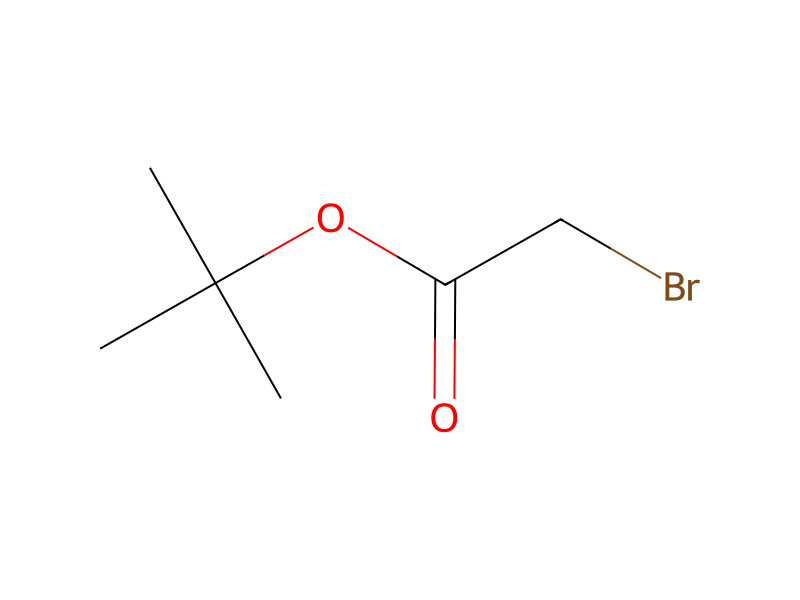
A suspended solution of activated zinc (118 mg), a small crystal of iodine, and tetrahydrofuran (3 ml) was stirred under refluxing. To the mixture was added a solution of tert-butyl bromoacetate (312 mg) and 13-methyltetradecanal (226 mg) in tetrahydrofuran (3 ml), and the reactants were stirred under refluxing for 1 hour. Anhydrous conditions were maintained throughout this experiment. The cooled solution was poured into 0.1N hydrochloric acid (5.6 ml) and the resultant solution was adjusted to pH 2.0 with 2N hydrochloric acid. The excess of zinc was filtered off and the crude products were extracted with ethyl acetate. The ethyl acetate layer was washed with aqueous sodium hydrogen carbonate solution and brine, and then dried over magnesium sulfate. The ethyl acetate was evaporated off under reduced pressure to give the crude ester, which was purified by column chromatography on silica gel (Merck) and eluted with a mixture of cyclohexane and ethyl acetate (19:1). The fractions containing the object compound were combined and concentrated under reduced pressure. The residue was dried by high vacuum pump to afford an oil of tert-butyl 3-hydroxy-15-methylhexadecanoate (180 mg).