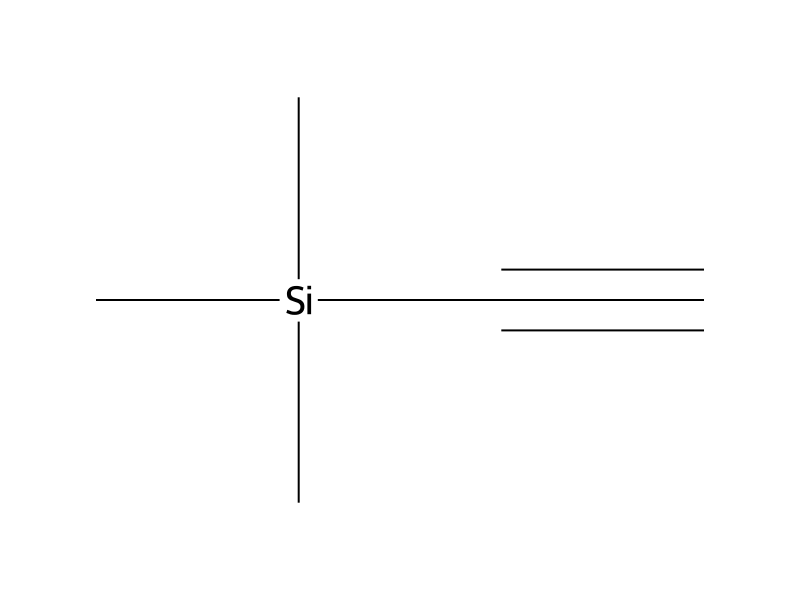
Trimethylsilylacetylene → Benzenamine, N,N-dibutyl-4-[(trimethylsilyl)ethynyl]-
HRID 2369631
Reaction equation

I[C:2]1[CH:16]=[CH:15][C:5]([N:6]([CH2:11][CH2:12][CH2:13][CH3:14])[CH2:7][CH2:8][CH2:9][CH3:10])=[CH:4][CH:3]=1.[CH3:17][Si:18]([C:21]#[CH:22])([CH3:20])[CH3:19]>CCN(CC)CC.C1C=CC=CC=1.Cl[Pd](Cl)([P](C1C=CC=CC=1)(C1C=CC=CC=1)C1C=CC=CC=1)[P](C1C=CC=CC=1)(C1C=CC=CC=1)C1C=CC=CC=1>[CH3:17][Si:18]([C:21]#[C:22][C:2]1[CH:16]=[CH:15][C:5]([N:6]([CH2:11][CH2:12][CH2:13][CH3:14])[CH2:7][CH2:8][CH2:9][CH3:10])=[CH:4][CH:3]=1)([CH3:20])[CH3:19]Participants
6