Reaction equation
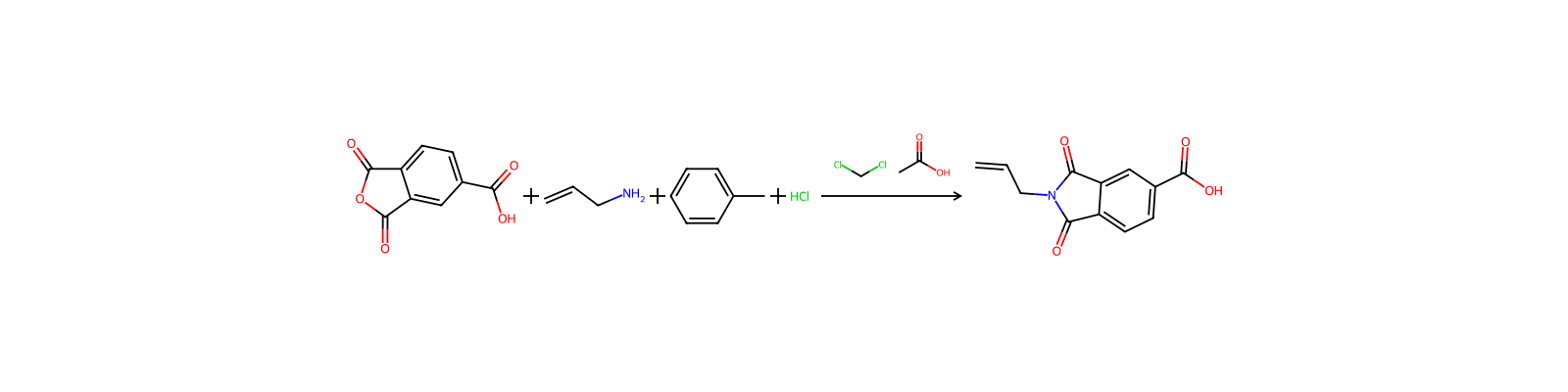
O=[C:2]1[C:10]2[C:5](=[CH:6][C:7]([C:11]([OH:13])=[O:12])=[CH:8][CH:9]=2)[C:4](=[O:14])[O:3]1.[CH2:15]([NH2:18])[CH:16]=[CH2:17].C1(C)C=CC=CC=1.Cl>C(Cl)Cl.CC(O)=O>[CH2:15]([N:18]1[C:4](=[O:14])[C:5]2[C:10](=[CH:9][CH:8]=[C:7]([C:11]([OH:13])=[O:12])[CH:6]=2)[C:2]1=[O:3])[CH:16]=[CH2:17]Participants
7






Procedure
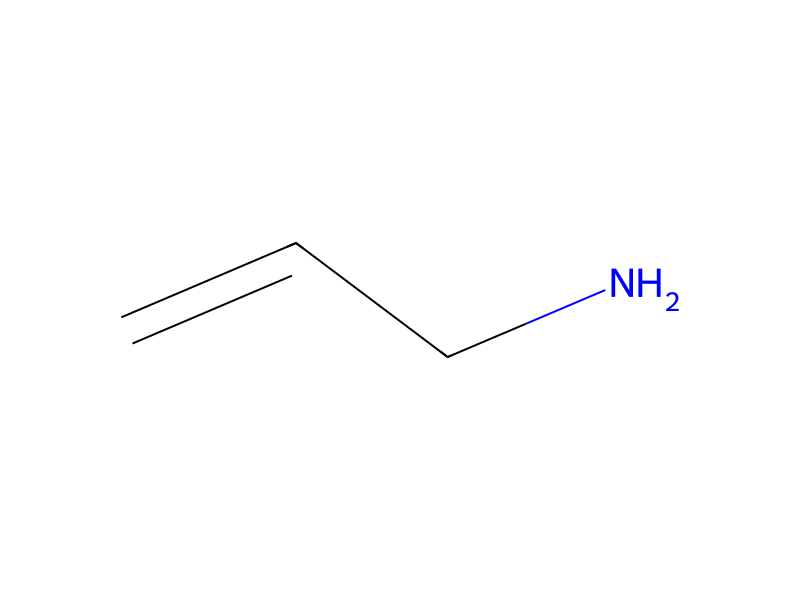
To a 25 mL pear-shaped flask was added solid 1,3-dioxo-1,3-dihydro-isobenzofuran-5-carboxylic acid (200 mg, 1.041 mmol) and allylamine (234 μL, 3.12 mmol, 3 eq) via syringe. Toluene (2 mL) and AcOH (1 mL) were added via syringes and the flask was refluxed for 12 h. The flask was allowed to cool and then subjected to a DCM (75 mL) and HCl (1N, 50 mL) work up. The aqueous layer was extracted with DCM (3×25 mL). The combined organic layers were washed with brine, dried with sodium sulfate, filtered and concentrated. The residue thus obtained was azeotropically dried with toluene (2×, 5 mL) and heptane (2×5 mL). The resulting reside was placed on a high vacuum for 3 to give 2-allyl-1,3-dioxoisoindoline-5-carboxylic acid.
Workup
- temperaturethe flask was refluxed for 12 h
- temperatureto cool
- extractionThe aqueous layer was extracted with DCM (3×25 mL)
- washThe combined organic layers were washed with brine
- dry with materialdried with sodium sulfate
- filtrationfiltered
- concentrationconcentrated
- customThe residue thus obtained
- dry with materialwas azeotropically dried with toluene (2×, 5 mL) and heptane (2×5 mL)
Sources & evidence
- ORD record
- ord-7b9e4b49b07f474682e023a335402950
- Source dataset
- uspto-grants-2014_04
- Patent number
- US08710043B2
Linked notes
Loading…