HomeMCPWorkbenchSkills
HomeWorkbenchNotificationsMe
llms.txt · MCP GuidePrivacy Policy · Terms of Service · Supportv1.8.3
  1. Home
  2. /Reaction

Cesium carbonate → 3-Cyclopropyl-2-fluoro-5-nitroaniline

HRID 2370958
Print

Reaction equation

HRID 2370958 reaction equation
Br[C:2]1[C:3]([F:12])=[C:4]([CH:6]=[C:7]([N+:9]([O-:11])=[O:10])[CH:8]=1)[NH2:5].B1([CH:24]2[CH2:26][CH2:25]2)OC(=O)CN(C)CC(=O)O1.P(C1CCCCC1)(C1CCCCC1)C1CCCCC1.C([O-])([O-])=O.[Cs+].[Cs+]>C1(C)C=CC=CC=1.O.CC([O-])=O.CC([O-])=O.[Pd+2]>[CH:24]1([C:2]2[C:3]([F:12])=[C:4]([CH:6]=[C:7]([N+:9]([O-:11])=[O:10])[CH:8]=2)[NH2:5])[CH2:26][CH2:25]1
ParticipantsConditionsProcedureWorkupSources & evidenceReaction notes

Participants

7

Reactant 4

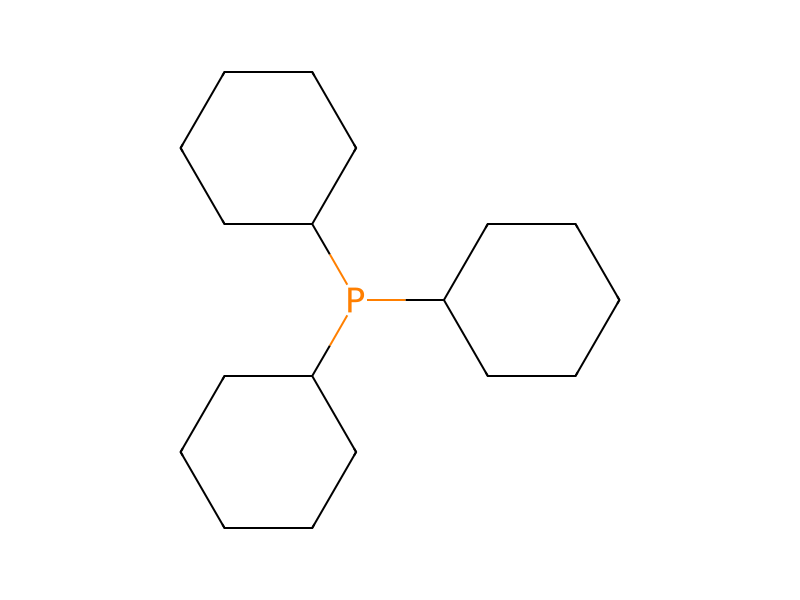
HCID 10796Cesium carbonateHCID 75806TricyclohexylphosphineHCID 441383422-Cyclopropyl-6-methyl-1,3,6,2-dioxazaborocane-4,8-dioneHCID 580658073-Bromo-2-fluoro-5-nitroaniline

Product 1

HCID 580658083-Cyclopropyl-2-fluoro-5-nitroanilineYield 69.2%

Reagents, catalysts & solvents 2

HCID 167845palladium(II) acetateCatalyst
HCID 22272177Toluene waterSolvent

Conditions

Temperature
100 °C

Procedure

A mixture of 3-bromo-2-fluoro-5-nitroaniline (2.20 g, 9.36 mmol, 1 equiv), cyclopropylboronic acid MIDA ester (Aldrich; 11.07 g, 56.17 mmol, 6 equiv), Cy3P (1.05 g, 3.74 mmol, 0.4 equiv), Cs2CO3 (54.90 g, 168.50 mmol, 18 equiv) in toluene/H2O (5:1; 450 mL:90 mL) followed by Pd(OAc)2 (0.420 g, 1.87 mmol. 0.20 equiv) was de-gassed by sonicating under vacuum for 10 minutes and back-filled with N2. The mixture was then heated at 100° C. overnight. After allowing to cool to room temperature, the mixture was concentrated to dryness. The residue was taken in DCM, and silica gel was added at this stage so that the residue was absorbed directly on to silica gel. After removing the solvent under vacuum, the crude product was purified by column chromatography on silica gel using DCM to give the product 3-cyclopropyl-2-fluoro-5-nitroaniline (1.27 g, 69%) as a yellow solid.

Workup

  1. customwas de-gassed
  2. customby sonicating under vacuum for 10 minutes
  3. additionback-filled with N2
  4. temperatureto cool to room temperature
  5. concentrationthe mixture was concentrated to dryness
  6. additionsilica gel was added at this stage so that the residue
  7. customwas absorbed directly on to silica gel
  8. customAfter removing the solvent under vacuum
  9. customthe crude product was purified by column chromatography on silica gel

Sources & evidence

ORD record
ord-2ea526f3ade240e4aac6ff5ad1cf0295
Source dataset
uspto-grants-2014_04
DOI
10.6084/m9.figshare.5104873.v1
Patent number
US08710223B2

Reaction notes

On this pageParticipantsConditionsProcedureWorkupSources & evidenceReaction notes