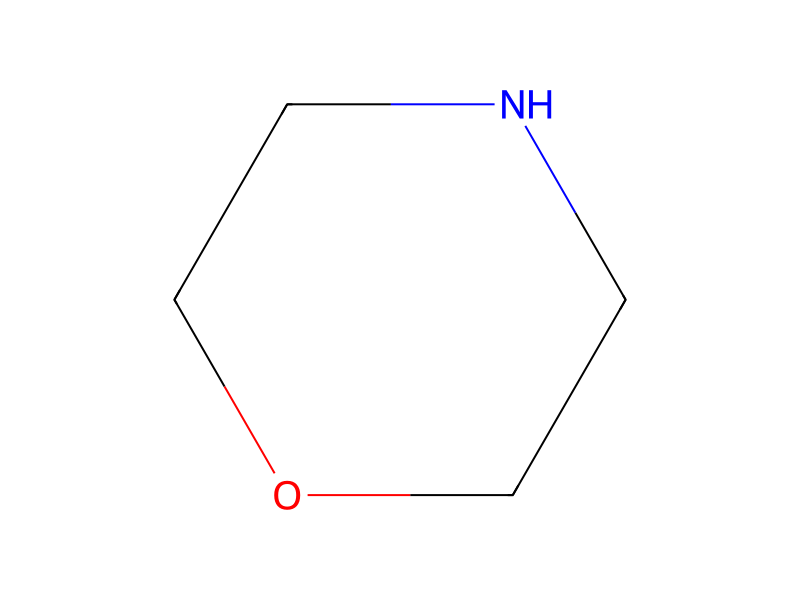
The obtained 2,4-dichloro-6-dimethylamino-1,3,5-triazine (1.96 g, 10.2 mmol) was dissolved in DMF (20 ml), added with anhydrous potassium carbonate (1.45 g, 10.5 mmol) and cooled to -5° C.-0° C. This mixture was gradually added dropwise with morpholine (0.96 g, 11.0 mmol) dissolved in DMF (5 ml). The reaction mixture was stirred at room temperature for 17 hours and was evaporated under reduced pressure. The residue obtained was added with dichloromethane and water, and then shaken for mixing. The organic layer was separated from the mixture, sufficiently washed with water, dried over anhydrous magnesium sulfate and evaporated. The residue obtained was purified by silica gel column chromatography, using n-hexane and ethyl acetate (8: 2) as eluant, to obtain 1.37 g (yield: 55.4%) of 2-chloro-4-dimethylamino-6-morpholino-1,3,5-triazine as colorless crystals having melting point of 96° C. -97° C.