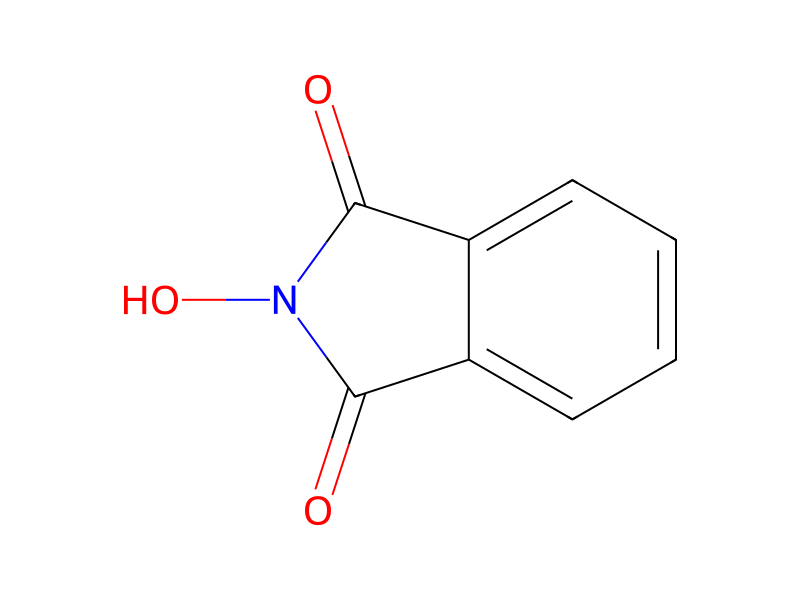
[OH:1][N:2]1[C:6](=[O:7])[C:5]2=[CH:8][CH:9]=[CH:10][CH:11]=[C:4]2[C:3]1=[O:12].Cl.[N:14]1[CH:19]=[CH:18][C:17]([CH2:20]Cl)=[CH:16][CH:15]=1.C(N(CC)CC)C>C(#N)C>[N:14]1[CH:19]=[CH:18][C:17]([CH2:20][O:1][N:2]2[C:3](=[O:12])[C:4]3[C:5](=[CH:8][CH:9]=[CH:10][CH:11]=3)[C:6]2=[O:7])=[CH:16][CH:15]=1Under anhydrous conditions (positive nitrogen pressure, presence of 3Å molecular sieves), a mixture of N-hydroxyphthalimide (15.0g, 0.091mole), 4-picolylchloride hydrochloride (15.0g, 0.091mole), and triethylamine (27.7g, 0.273 mol) in 125 ml of anhydrous acetonitrile was refluxed for 2 hours. After stirring overnight at ambient temperature, TLC showed that the starting materials were practically consumed. Ethyl acetate (500 ml) was added, mixture stirred for 15 min and filtered. The solvent was evaporated and the residue dissolved in 1L of EtOAc. The filtrate was washed with water (2×500 ml), brine (1×500 ml), dried (MgSO4), and evaporated to a smaller volume (100ml). The mixture was cooled down to -18° C., precipitate filtered and recrystallized from EtOAc/hexane to afford 13.2g (56.8%) of title product.