HomeMCPSkillsWorkbenchOpenChem
HomeWorkbenchNotificationsMe
llms.txt · skill.md · MCP GuidePrivacy Policy · Terms of Service · Supportv1.8.4
  1. Home
  2. /Reaction

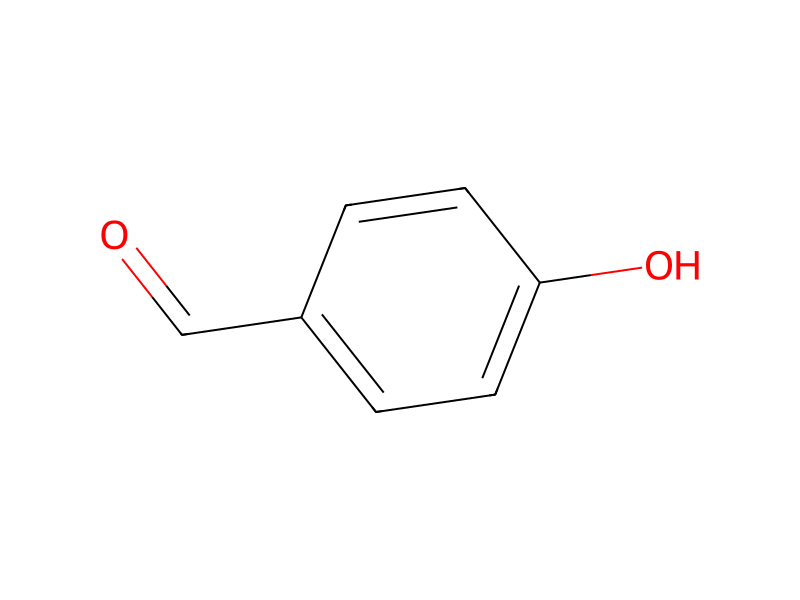
4-Hydroxybenzaldehyde → 4-(Propargyloxy)benzaldehyde

HRID 2397019
Print

Reaction equation

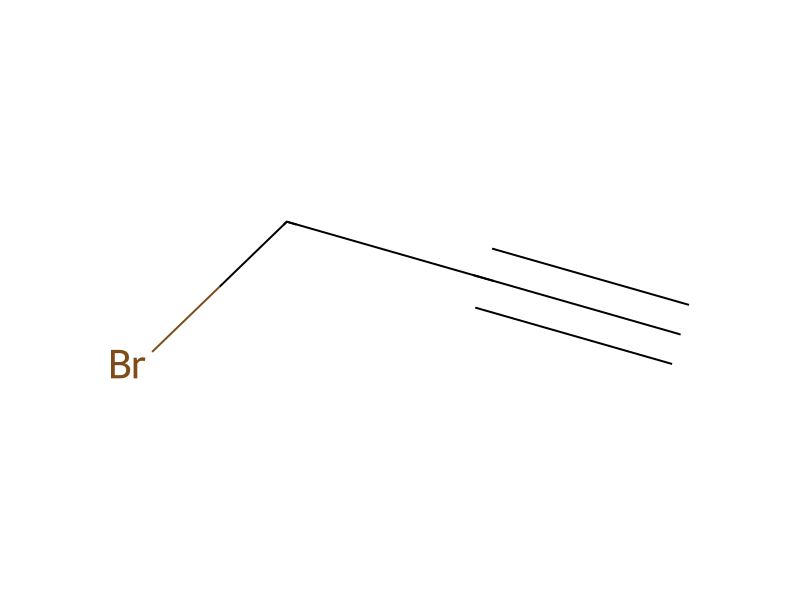
[OH:1][C:2]1[CH:9]=[CH:8][C:5]([CH:6]=[O:7])=[CH:4][CH:3]=1.C([O-])([O-])=O.[K+].[K+].Br[CH2:17][C:18]#[CH:19]>CC(C)=O>[CH2:19]([O:1][C:2]1[CH:9]=[CH:8][C:5]([CH:6]=[O:7])=[CH:4][CH:3]=1)[C:18]#[CH:17]
ParticipantsConditionsProcedureWorkupSources & evidenceReaction notes

Participants

5

Reactant 3

HCID 1264-HydroxybenzaldehydeHCID 7842Propargyl bromideHCID 11430Potassium Carbonate

Product 1

HCID 18975334-(Propargyloxy)benzaldehydeYield 83%

Reagents, catalysts & solvents 1

HCID 180AcetoneSolvent

Conditions

Temperature
60 °C

Procedure

To a stirred suspension of 4-hydroxybenzaldehyde (425.8 g) and K2CO3 (807.6 g) in acetone (2,960 ml) at reflux temper-ature of about 60° C. under a nitrogen atmosphere, was added dropwise 3-bromo-propyne (502.4 g) over a period of 2 hours. The reaction was heated at reflux for 3 more hours. After cooling to room temperature the reaction mixture was filtered and the excess of K2CO3 removed and washed several times with acetone. The filtrate was washed with saturated aqueous solution of NaHCO2 and NaCl. The aqueous phase was extracted with diethyl ether. The combined organic extracts were dried over Na2SO4, filtered and concentrated to a volume of 1 liter. The solution was kept in the refrigerator overnight. The crystals were filtered out and washed with cold diethyl ether. The filtrate was kept in the refrigerator and some more crystals were formed and removed. This procedure was repeated 3 times resulting in 1,385.26 g of 4-(2-propynyloxy) benzaldehyde in 83% yield. The material was analysed by gas chromatography, and shown to be 99.9% pure. Infrared and mass spectroscopic analysis confirmed the structure.

Workup

  1. temperatureThe reaction was heated
  2. temperatureat reflux for 3 more hours
  3. temperatureAfter cooling to room temperature the reaction mixture
  4. filtrationwas filtered
  5. customthe excess of K2CO3 removed
  6. washwashed several times with acetone
  7. washThe filtrate was washed with saturated aqueous solution of NaHCO2 and NaCl
  8. extractionThe aqueous phase was extracted with diethyl ether
  9. dry with materialThe combined organic extracts were dried over Na2SO4
  10. filtrationfiltered
  11. concentrationconcentrated to a volume of 1 liter
  12. customwas kept in the refrigerator overnight
  13. filtrationThe crystals were filtered out
  14. washwashed with cold diethyl ether
  15. customsome more crystals were formed
  16. customremoved

Sources & evidence

ORD record
ord-e0821c5a00d147f8a46a279a3d22d96a
Source dataset
uspto-grants-1996_02
DOI
10.6084/m9.figshare.5104873.v1
Patent number
US05495039

Reaction notes

On this pageParticipantsConditionsProcedureWorkupSources & evidenceReaction notes