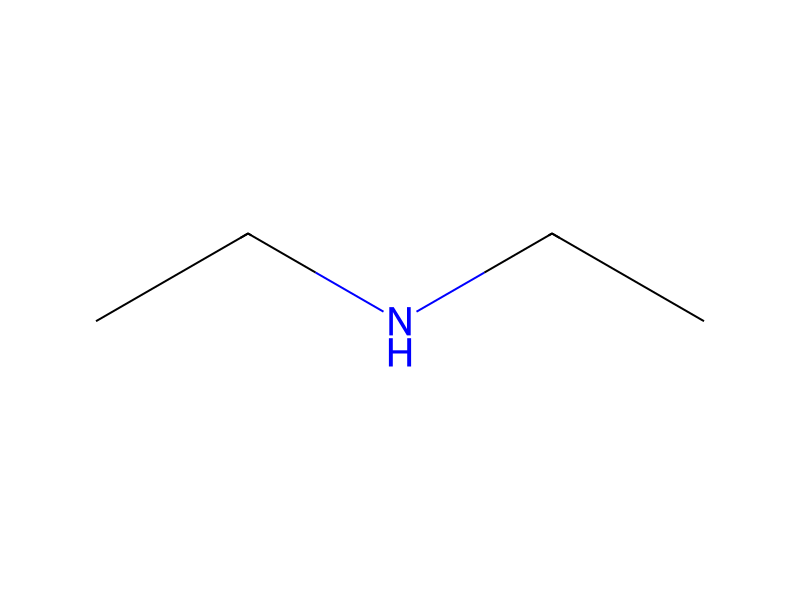
Cl[CH2:2][C:3]([NH:5][CH:6]1[C:11]2=[C:12]([C:20]3[CH:25]=[CH:24][CH:23]=[CH:22][CH:21]=3)[C:13]3[CH:14]=[C:15]([Cl:19])[CH:16]=[CH:17][C:18]=3[N:10]2[CH2:9]CN1)=[O:4].[CH2:26]([NH:28][CH2:29][CH3:30])[CH3:27].[I-].[Na+].[CH2:33](O)C>>[Cl:19][C:15]1[CH:16]=[CH:17][C:18]2[N:10]3[CH2:9][CH2:33][N:5]([C:3](=[O:4])[CH2:2][N:28]([CH2:29][CH3:30])[CH2:26][CH3:27])[CH2:6][C:11]3=[C:12]([C:20]3[CH:25]=[CH:24][CH:23]=[CH:22][CH:21]=3)[C:13]=2[CH:14]=1A mixture of 2-chloroacetamido-8-chloro-10-phenyl-1,2,3,4-tetrahydropyrazino[1,2-a]indole (6.80 g, 0.0189 mole), diethylamine (3.46 g, 0.0473 mole) and sodium iodide (2.85 g, 0.019 mole) in ethanol (250 ml) is refluxed for 10 hours, then cooled to room temperature. The solid is removed by filtration and the filtrate is concentrated. The residue is taken up in dichloromethane (350 ml) and extracted with 10% hydrochloric acid (300 ml) in 4 portions. The dichloromethane solution is concentrated to a brown gummy residue. This is extracted with boiling water (500 ml), filtering off the insoluble material. The aqueous solution is basified to pH 10 with excess solid potassium carbonate. A solid is formed which is collected by filtration and is recrystallized from heptane to give the above titled product, 5.30 g (70.9% yield) melting at 117°-119° C.