HomeMCPWorkbenchSkills
HomeWorkbenchNotificationsMe
llms.txt · MCP GuidePrivacy Policy · Terms of Service · Supportv1.8.3
  1. Home
  2. /Reaction

Ammonium Chloride → 4-(4-Hydroxytetrahydro-2H-pyran-4-yl)benzenecarbonitrile

HRID 2400536
Print

Reaction equation

HRID 2400536 reaction equation
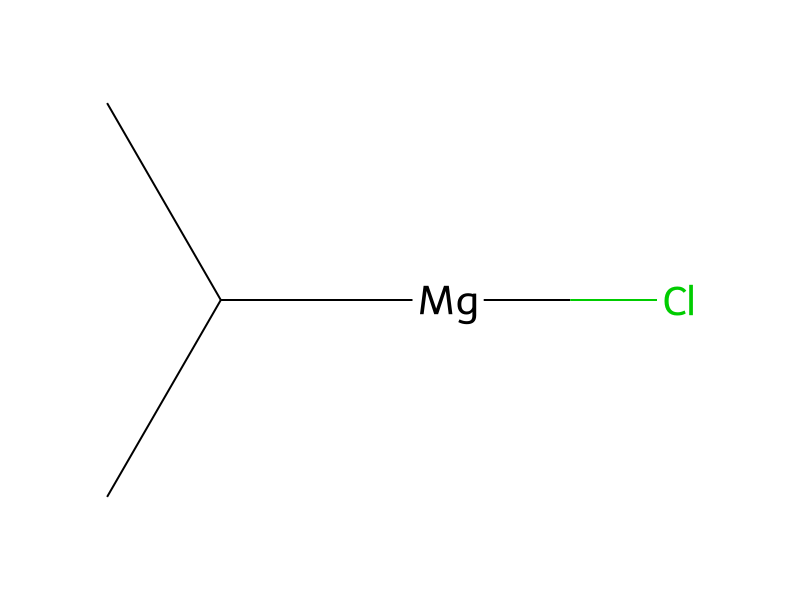
I[C:2]1[CH:9]=[CH:8][C:5]([C:6]#[N:7])=[CH:4][CH:3]=1.CC([Mg]Cl)C.[O:15]=[C:16]1[CH2:21][CH2:20][O:19][CH2:18][CH2:17]1.[NH4+].[Cl-]>C1COCC1>[OH:15][C:16]1([C:2]2[CH:9]=[CH:8][C:5]([C:6]#[N:7])=[CH:4][CH:3]=2)[CH2:21][CH2:20][O:19][CH2:18][CH2:17]1
ParticipantsConditionsProcedureWorkupSources & evidenceReaction notes

Participants

6

Reactant 4

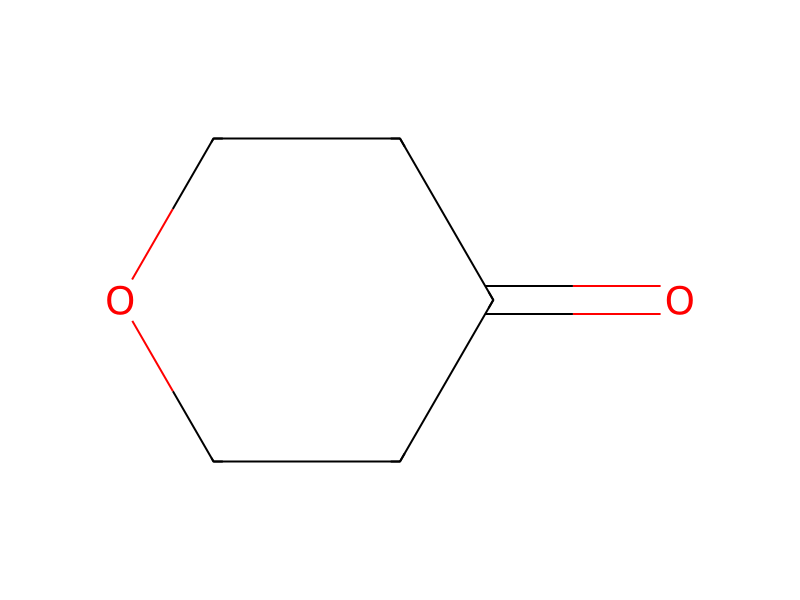
HCID 25517Ammonium ChlorideHCID 764674-IodobenzonitrileHCID 121599Tetrahydro-4H-pyran-4-oneHCID 178418918HCID 178418918, compound

Product 1

HCID 595046634-(4-Hydroxytetrahydro-2H-pyran-4-yl)benzenecarbonitrile

Reagents, catalysts & solvents 1

HCID 8028
Tetrahydrofuran
Solvent
2×

Conditions

Temperature
-78 °C

Procedure

To a solution of 4-iodobenzonitrile (5.0 g, 21.8 mmol) in dry THF (100 mL) was added 2-propyl magnesium chloride (2M solution in diethyl ether, 11 mL, 21.8 mmol) dropwise at −40° C. After stirring for 1.5 h at this temperature, the reaction mixture was cooled to −78° C. before it was canulated to a solution of 4-oxotetrahydro-2H-pyrane (3.28 g, 32.8 mmol) in dry THF (100 mL) which was likewise cooled to −78° C. After the slow addition of the Grignard reagent was completed, the reaction mixture was stirred at −78° C. for additional 10 minutes, then at 0° C. for 2 h, and finally at rt for 30 minutes. A few mL saturated aqueous NH4Cl were added, and then most of the solvent was evaporated. The residue was partitioned between water and ethyl acetate (200 mL each). After separation, the aqueous layer was extracted using ethyl acetate. The combined organic layers were successively washed with water and brine. After drying over anhydrous magnesium sulfate, the solvent was evaporated and the crude material was purified by MPLC (silica, cyclohexane/ethyl acetate 2:1→1:1). The title compound was obtained as a highly viscous oil (1.19 g, 27%): 1H NMR (400 MHz, DMSO-d6) δ 7.80 (d, 2H), 7.70 (d, 2H), 5.30 (s, 1H), 3.81-3.70 (m, 4H), 2.02-1.94 (m, 2H), 1.51-1.48 (m, 2H); DCI(NH3)-MS m/z 204 (MH)+, 221 (M+NH4)+; HPLC RT (Method I) 3.35 min.


Workup

  1. temperaturewas likewise cooled to −78° C
  2. stirringthe reaction mixture was stirred at −78° C. for additional 10 minutes
  3. waitat 0° C. for 2 h
  4. waitfinally at rt for 30 minutes
  5. custommost of the solvent was evaporated
  6. customThe residue was partitioned between water and ethyl acetate (200 mL each)
  7. customAfter separation
  8. extractionthe aqueous layer was extracted
  9. washThe combined organic layers were successively washed with water and brine
  10. dry with materialAfter drying over anhydrous magnesium sulfate
  11. customthe solvent was evaporated
  12. customthe crude material was purified by MPLC (silica, cyclohexane/ethyl acetate 2:1→1:1)

Sources & evidence

ORD record
ord-5712460599854827b7eb310b8fa60d47
Source dataset
uspto-grants-2014_08
DOI
10.6084/m9.figshare.5104873.v1
Patent number
US08796253B2

Reaction notes

On this pageParticipantsConditionsProcedureWorkupSources & evidenceReaction notes