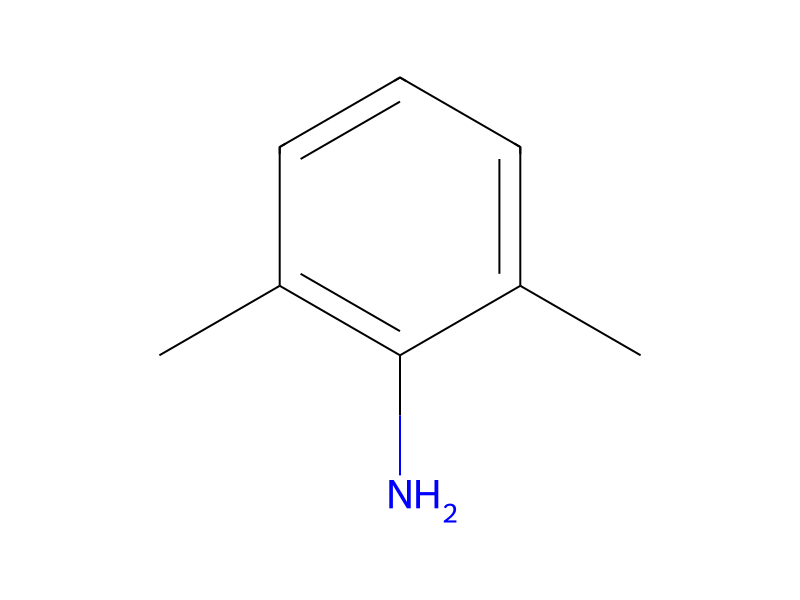
[N+:1]([C:4]1[CH:14]=[C:8]2[C:9]([O:11][C:12](=[O:13])[C:7]2=[CH:6][CH:5]=1)=O)([O-])=O.[CH3:15][C:16]1[CH:22]=[CH:21][CH:20]=[C:19]([CH3:23])[C:17]=1[NH2:18].[Sn](Cl)Cl.[OH-].[Na+]>C(O)(=O)C.C(OCC)(=O)C>[NH2:1][C:4]1[CH:14]=[C:8]2[C:7](=[CH:6][CH:5]=1)[C:12](=[O:13])[N:18]([C:17]1[C:19]([CH3:23])=[CH:20][CH:21]=[CH:22][C:16]=1[CH3:15])[C:9]2=[O:11]A mixture of 5-nitrophthalic anhydride (1.0 g, 5.2 mmol) and 2,6-dimethylaniline (0.65 mL, 5.3 mmol) in acetic acid (50 mL) was heated at 100° C. overnight (14 h). The reaction mixture was cooled, diluted with ethyl acetate and washed with saturated sodium bicarbonate. The organic phase was dried over anhydrous sodium sulfate, filtered and concentrated. The product was dissolved in ethanol (50 mL), tin (II) chloride (1.4 g, 6.2 mmol) was added and the mixture was heated to reflux for 5 h. The reaction mixture was cooled and made basic by adding aqueous 2 N sodium hydroxide. Ethyl acetate was added and the layers were separated. The organic layer was washed with water and saturated sodium chloride, dried over anhydrous sodium sulfate, filtered and concentrated on a rotary evaporator to give 5-amino-2-(2,6-dimethylphenyl)isoindoline-1,3-dione (0.93 g, 67%), which was used without further purification.