HomeMCPWorkbenchSkills
HomeWorkbenchNotificationsMe
llms.txt · MCP GuidePrivacy Policy · Terms of Service · Supportv1.8.3
  1. Home
  2. /Reaction

Hydrochloric Acid → 2-Bromo-3-(2-thienyl)-1-propene

HRID 2413188
Print

Reaction equation

HRID 2413188 reaction equation
[Br:1][C:2]([CH2:4]Br)=[CH2:3].[S:6]1[CH:10]=[CH:9][CH:8]=[C:7]1[Mg]Br.[Mg].BrC1SC=CC=1.Cl>CC(C)=O.C(=O)=O.CCOCC>[Br:1][C:2]([CH2:4][C:7]1[S:6][CH:10]=[CH:9][CH:8]=1)=[CH2:3]
ParticipantsProcedureWorkupSources & evidenceReaction notes

Participants

8

Reactant 5

HCID 313Hydrochloric AcidHCID 105522,3-DibromopropeneHCID 138512-BromothiopheneHCID 5462224MagnesiumHCID 178418438HCID 178418438, compound

Product 1

HCID 118305032-Bromo-3-(2-thienyl)-1-propene

Reagents, catalysts & solvents 2

HCID 3283Diethyl EtherSolvent2×
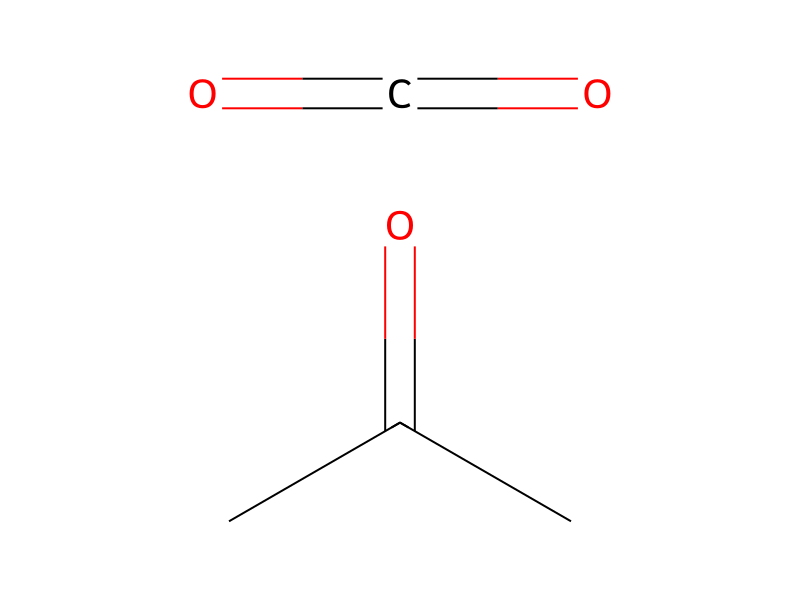
HCID 18522661Acetone cardiceSolvent2×

Procedure

A 1000 ml 3-necked round-bottomed flask was fitted with a mechanical stirrer through a mineral oil sealed bearing, a reflux condenser and a 1000 ml addition funnel. A mixture of 70 g of 2,3-dibromopropene and 100 ml of dry ethyl ether was added. The flask was now cooled to 0° C. in acetone/dry-ice and a solution of thienyl magnesium bromide, prepared from 7.8 of magnesium 50 g of 2-bromothiophene (0.31 mol) and 260 ml of dry ether was added at such a rate so that the temperature did not exceed 38° C. The addition took about 1.5 hrs. Stirring was continued and the acetone/dry-ice bath was replaced with a heating mantle. The mixture was gently refluxed for 1.5 hrs. after which time the flask was again cooled and a solution of 5 ml of 36% hydrochloric acid and 200 g of ice were added. The contents of the flask were then transferred to a separatory funnel, and the ether layer was separated and dried over anhydrous sodium sulfate. The ether was distilled off and the residue was fractionated under reduced pressure (65°-78° C./0.5 mm) yielding 41.8 g (67 percent of theory). The residue, 26 g, consisted mainly of diphenyl, m.p. 69°-71° C.


Workup

  1. customA 1000 ml 3-necked round-bottomed flask was fitted with a mechanical stirrer through a mineral oil
  2. customsealed
  3. additiona reflux condenser and a 1000 ml addition funnel
  4. additionwas added
  5. additionwas added at such a rate so that the temperature
  6. customdid not exceed 38° C
  7. additionThe addition
  8. temperatureThe mixture was gently refluxed for 1.5 hrs
  9. temperatureafter which time the flask was again cooled
  10. customThe contents of the flask were then transferred to a separatory funnel
  11. customthe ether layer was separated
  12. dry with materialdried over anhydrous sodium sulfate
  13. distillationThe ether was distilled off
  14. customwas fractionated under reduced pressure (65°-78° C./0.5 mm)
  15. customyielding 41.8 g (67 percent of theory)

Sources & evidence

ORD record
ord-64516247c33b4a869f0627e0f020b4db
Source dataset
uspto-grants-1985_01
DOI
10.6084/m9.figshare.5104873.v1
Patent number
US04496581

Reaction notes

On this pageParticipantsProcedureWorkupSources & evidenceReaction notes