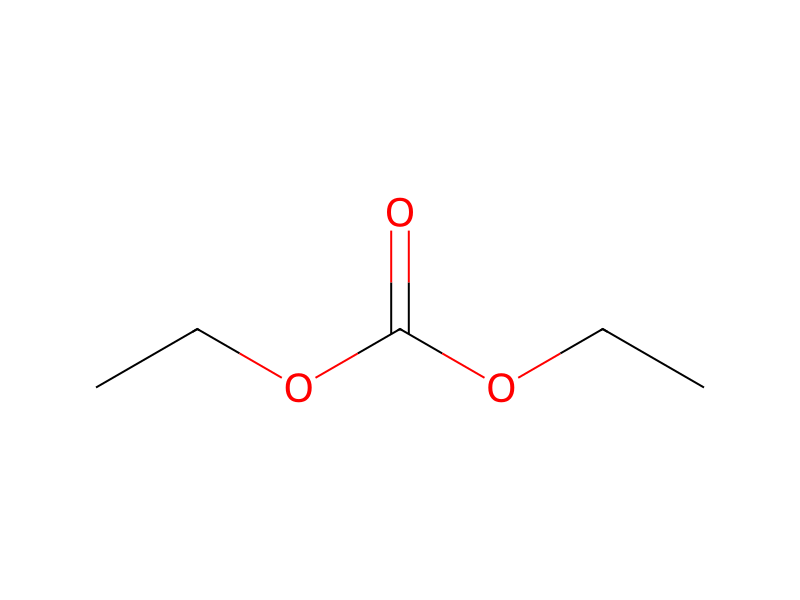
A 60% oil dispersion of sodium hydride 21.7 g (0.543 moles) was placed in a three neck 2 L round bottom flask equipped with an addition funnel, nitrogen inlet, magnetic stirrer, heating mantle, thermocouple and condenser. To this was added 1 liter of dry hexane. The resulting suspension was then stirred for 15 minutes, stirring stopped and the solids allowed to settle. The clear supernatant containing the hexane and dissolved oil was then removed via cannula. Diethyl carbonate (1 L) was added to the solids and the suspension was heated to 120° C. To this suspension a solution of 100 g (0.494 moles) of 4′-cyclohexyl acetophenone dissolved in 250 mL of diethyl carbonate was cautiously added dropwise, over 40 minutes. As addition proceeded a reaction initiated, hydrogen was evolved and the color changed to tan. After the acetophenone derivative addition was complete, the mixture was heated for 1 additional hour. The reaction was cooled and was poured into a 2 L separatory funnel. The diethyl carbonate layer was recovered, washed twice with 10% acetic acid solution and dried over MgSO4. The diethyl carbonate solution was then filtered and concentrated on a rotary evaporator followed by pumping under high vacuum at 70° C. for 18 hr. Upon cooling over 24 hrs a colorless solid crystallized. The title compound obtained was used without further purification. Yield 133 g (98%). 1H NMR revealed that the b-keto ester product actually exists as a keto-enol tautomer mixture in solution, with the keto form predominant in the solid.