HomeMCPWorkbenchSkills
HomeWorkbenchNotificationsMe
llms.txt · MCP GuidePrivacy Policy · Terms of Service · Supportv1.8.0
  1. Home
  2. /Reaction

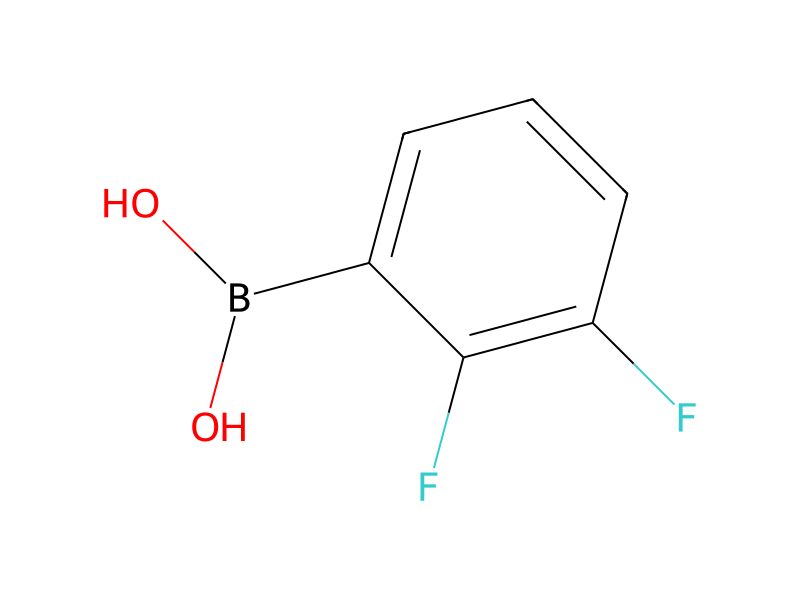
Tetrahydrofuran → (2,3-Difluorophenyl)boronic acid

HRID 241476
Notes
Print preview

Reaction equation

HRID 241476 reaction equation
[F:1][C:2]1[CH:7]=[CH:6][CH:5]=[CH:4][C:3]=1[F:8].O1CCCC1.C([Li])CCC.C([O:22][B:23](OCCC)[O:24]CCC)CC>CCCCCC>[F:1][C:2]1[C:3]([F:8])=[CH:4][CH:5]=[CH:6][C:7]=1[B:23]([OH:24])[OH:22]
ParticipantsConditionsProcedureWorkupSources & evidenceReaction notes

Participants

6

Reactant 4

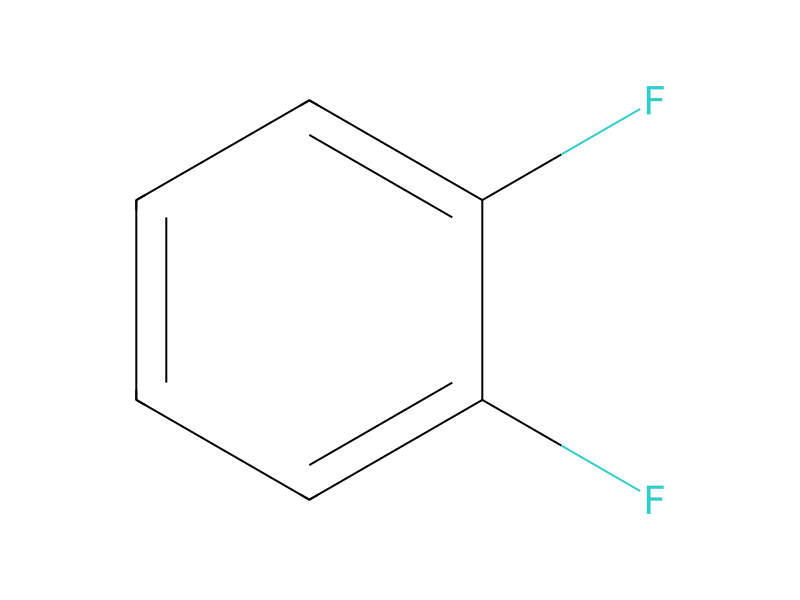
HCID 8028TetrahydrofuranHCID 97061,2-DifluorobenzeneHCID 12711Boric acid (H3BO3), tripropyl ester2×HCID 178418339Butyllithium2×

Product 1

HCID 2734333(2,3-Difluorophenyl)boronic acidYield 85%

Reagents, catalysts & solvents 1

HCID 8058
Hexane
Solvent

Conditions

Temperature
-78 °C

Procedure

1,2-Difluorobenzene (40 g, 0.35 mol) and dry tetrahydrofurane (400 ml) were placed in 1 L flask equipped with mechanical stirrer, nitrogen inlet and outlet, pressure-equilibrated dropping funnel and thermometer. The reaction flask was flushed with nitrogen and minor flow was held during whole reaction time. The mixture was cooled down to −78° C. with dry ice/acetone bath and 2.5 mol/L hexane solution of n-butyllithium (140 ml; 0.35 mol) was added dropwise, keeping the reaction temperature below −70° C. After addition of all butyllithium solution the mixture was stirred at −78° C. for 2 h and then tripropylborate (66 g, 0.35 mol) was added dropwise keeping the reaction temperature below −70° C. After addition of tripropyl borate the cooling bath was removed and the reaction mixture continuously stirred to reach the room temperature then the solvents were evaporated. The thick liquid residue was acidified and then propanol was evaporated and the remaining solid was filtered off, washed out with hexane and recrystalized from water. The white crystalline product 47 g was obtained, with 85% of theor. yield.


Workup

  1. customequipped with mechanical stirrer, nitrogen inlet and outlet
  2. customThe reaction flask was flushed with nitrogen and minor flow
  3. customthe reaction temperature below −70° C
  4. customthe reaction temperature below −70° C
  5. customwas removed
  6. stirringthe reaction mixture continuously stirred
  7. customthe room temperature
  8. customthe solvents were evaporated
  9. custompropanol was evaporated
  10. filtrationthe remaining solid was filtered off
  11. washwashed out with hexane
  12. customrecrystalized from water

Sources & evidence

ORD record
ord-1c217f3a325e4b0da3dc4b1b100c870b
Source dataset
uspto-grants-2014_02
DOI
10.6084/m9.figshare.5104873.v1
Patent number
US08652353B2

Reaction notes

Loading…

On this pageParticipantsConditionsProcedureWorkupSources & evidenceReaction notes