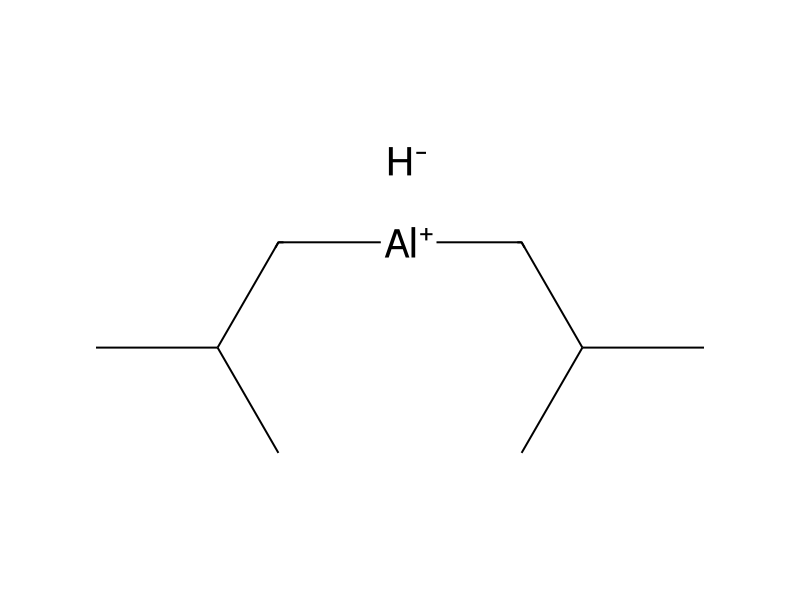
[CH3:1][C:2]1[CH:7]=[CH:6][CH:5]=[C:4]([CH3:8])[C:3]=1[O:9][CH2:10][C:11]1[C:15]([C:16](OC)=[O:17])=[C:14]([CH:20]([CH3:22])[CH3:21])[O:13][N:12]=1.[H-].C([Al+]CC(C)C)C(C)C.C1(C)C=CC=CC=1.[C@H](O)(C([O-])=O)[C@@H](O)C([O-])=O.[Na+].[K+]>O1CCCC1.C(OCC)(=O)C>[CH3:1][C:2]1[CH:7]=[CH:6][CH:5]=[C:4]([CH3:8])[C:3]=1[O:9][CH2:10][C:11]1[C:15]([CH2:16][OH:17])=[C:14]([CH:20]([CH3:22])[CH3:21])[O:13][N:12]=1To a solution of methyl 3-{[(2,6-dimethylphenyl)oxy]methyl}-5-(1-methylethyl)-4-isoxazolecarboxylate (183 mg, 0.603 mmol) in tetrahydrofuran (2 mL) at 0° C. was added a 1.5 M solution of diisobutylaluminum hydride in toluene (1.33 mL, 1.99 mmol) dropwise. The solution was allowed to warm slowly to ambient temperature and after approximately 5 hours was re-cooled to 0° C. Then 10 mL of Rochelle's salt was slowly added followed by ethyl acetate. The mixture was allowed to stir overnight. The layers were separated and the aqueous layer was extracted with ethyl acetate. The combined organic layers were washed with brine, dried over magnesium sulfate and concentrated to afford [3-{[(2,6-dimethylphenyl)oxy]methyl}-5-(1-methylethyl)-4-isoxazolyl]methanol (158 mg, 95%). 1H-NMR (400 MHz, DMSO-d6) δ 7.03-6.91 (m, 3H), 4.98 (t, J=5 Hz, 1H), 4.83 (s, 2H), 4.39 (d, J=5 Hz, 2H), 3.29 (septet, J=7 Hz, 1H), 2.19 (s, 6H), 1.24 (d, J=7 Hz, 6H).