HomeMCPWorkbenchSkills
HomeWorkbenchNotificationsMe
llms.txt · MCP GuidePrivacy Policy · Terms of Service · Supportv1.8.3
  1. Home
  2. /Reaction

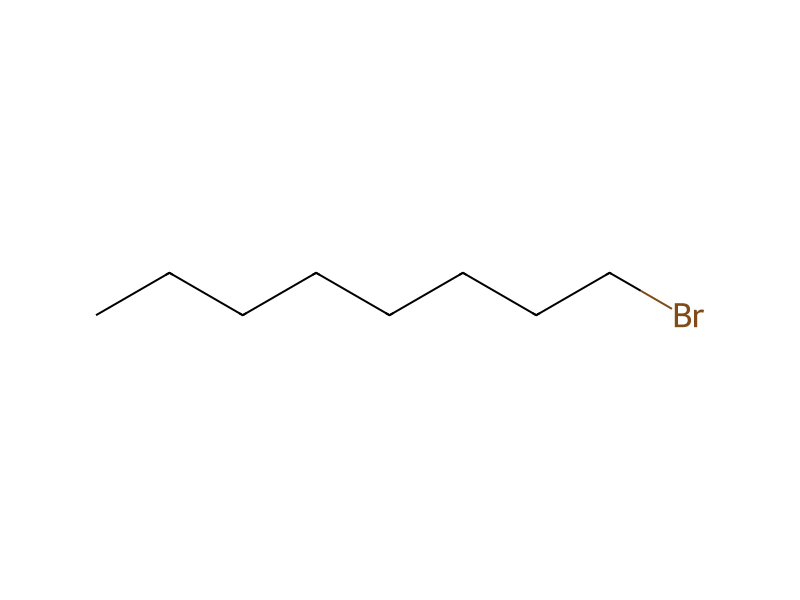
1-Bromooctane → N-Iodopropargyloxycarbonyl glycine n-octyl ester

HRID 248313
Print

Reaction equation

HRID 248313 reaction equation
[I:1][N:2]([C:7]([O:9][CH2:10][C:11]#[CH:12])=[O:8])[CH2:3][C:4]([OH:6])=[O:5].N12CCCN=C1CCCCC2.[CH2:24](Br)[CH2:25][CH2:26][CH2:27][CH2:28][CH2:29][CH2:30][CH3:31]>C(#N)C>[CH2:24]([O:5][C:4](=[O:6])[CH2:3][N:2]([C:7]([O:9][CH2:10][C:11]#[CH:12])=[O:8])[I:1])[CH2:25][CH2:26][CH2:27][CH2:28][CH2:29][CH2:30][CH3:31]
ParticipantsProcedureWorkupSources & evidenceReaction notes

Participants

5

Reactant 3

HCID 81401-BromooctaneHCID 811841,8-Diazabicyclo(5.4.0)undec-7-eneHCID 86746823N-iodopropargyloxycarbonyl glycine2×

Product 1

HCID 86746825N-Iodopropargyloxycarbonyl glycine n-octyl ester

Reagents, catalysts & solvents 1

HCID 6342AcetonitrileSolvent

Procedure

N-Iodopropargyloxycarbonyl glycine (compound 1, 6.50 g., 22.97 mmole) was dissolved in anhydrous acetonitrile (100 ml.), treated with 1,8-diazabicyclo[5.4.0]undec-7-ene (3.5 ml., 23.40 mmole) and stirred at room temperature for 5 minutes. n-Octylbromide (4.00 ml., 23.16 mmole) was added and the reaction mixture was stirred at room temperature for 17 hours, then heated at reflux temperature for 6 hours. The reaction mixture was concentrated under reduced pressure and the resultant residue was dissolved in ethyl acetate. The ethyl acetate solution was washed with water, 5% aqueous citric acid, saturated aqueous sodium bicarbonate, saturated aqueous sodium chloride, dried over magnesium chloride, filtered and concentrated under reduced pressure. The resultant residue was purified utilizing column chromatography (silica gel, 200 g.) and eluted with ethyl acetate/hexane (1:10) to afford N-Iodopropargyloxycarbonyl glycine n-octyl ester (Compound 3) as a clear colorless liquid which crystallized on standing. m.p. 43°-46° C. Elemental Analysis: C14H22NO4 l: Calc'd. C: 42.55, H: 5.61, N: 3.54. Found: C: 43.73, H: 5.62, N: 3.54. (Ethyl acetate was present in 0.5 mole %). 1H-NMR (200 MHz, CDCl3) δppm =0.89, m, 3H (--CH3), 1.30, m, 10H (--(CH2)5 --CH3), 1.64, m, 2H (--CH2 --), 4.0,d, J=3.4 Hz., 2H (--N--CH2 --), 4.1-4.2, m, 2H (--CH2 --), 4.86, s, 2H (C--CH2 --O), 5.32, m, 1H (--NH--). IR (neat) 3460, 2920, 2850, 2200, 1740, 1560, 1480, 1400, 1360, 1200, 1060, 980 cm-1.

Workup

  1. stirringthe reaction mixture was stirred at room temperature for 17 hours
  2. temperatureheated
  3. temperatureat reflux temperature for 6 hours
  4. concentrationThe reaction mixture was concentrated under reduced pressure
  5. dissolutionthe resultant residue was dissolved in ethyl acetate
  6. washThe ethyl acetate solution was washed with water, 5% aqueous citric acid, saturated aqueous sodium bicarbonate, saturated aqueous sodium chloride
  7. dry with materialdried over magnesium chloride
  8. filtrationfiltered
  9. concentrationconcentrated under reduced pressure
  10. customThe resultant residue was purified utilizing column chromatography (silica gel, 200 g.)
  11. washeluted with ethyl acetate/hexane (1:10)

Sources & evidence

ORD record
ord-e2dba957ad084f89aaa9df3415e14bee
Source dataset
uspto-grants-1993_05
DOI
10.6084/m9.figshare.5104873.v1
Patent number
US05209930

Reaction notes

On this pageParticipantsProcedureWorkupSources & evidenceReaction notes

